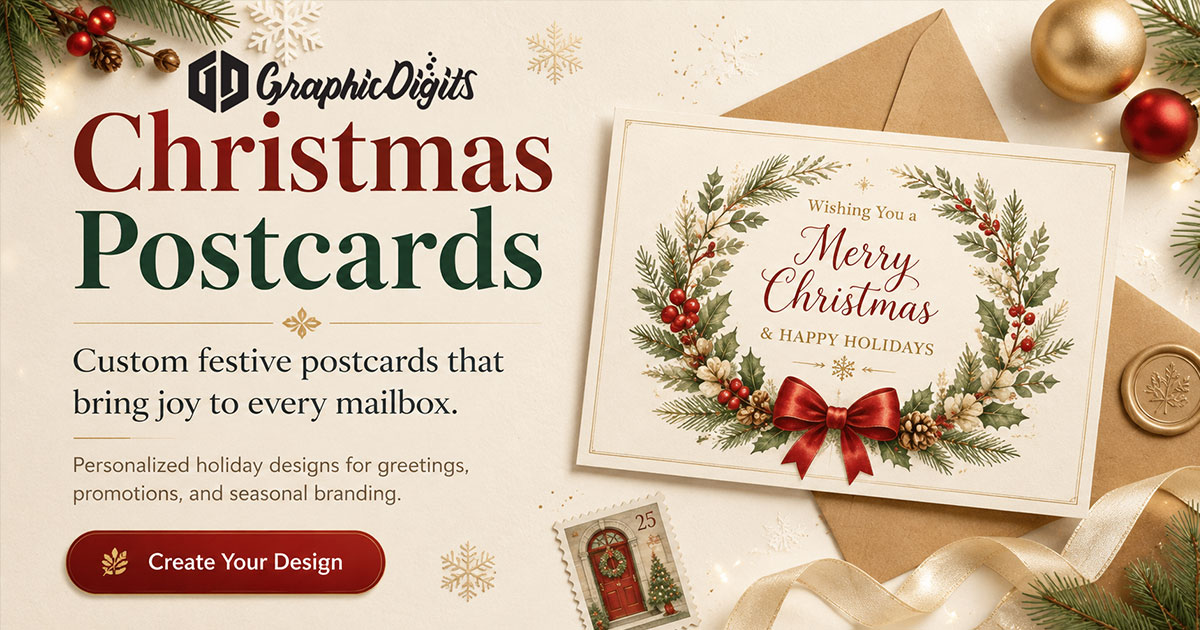
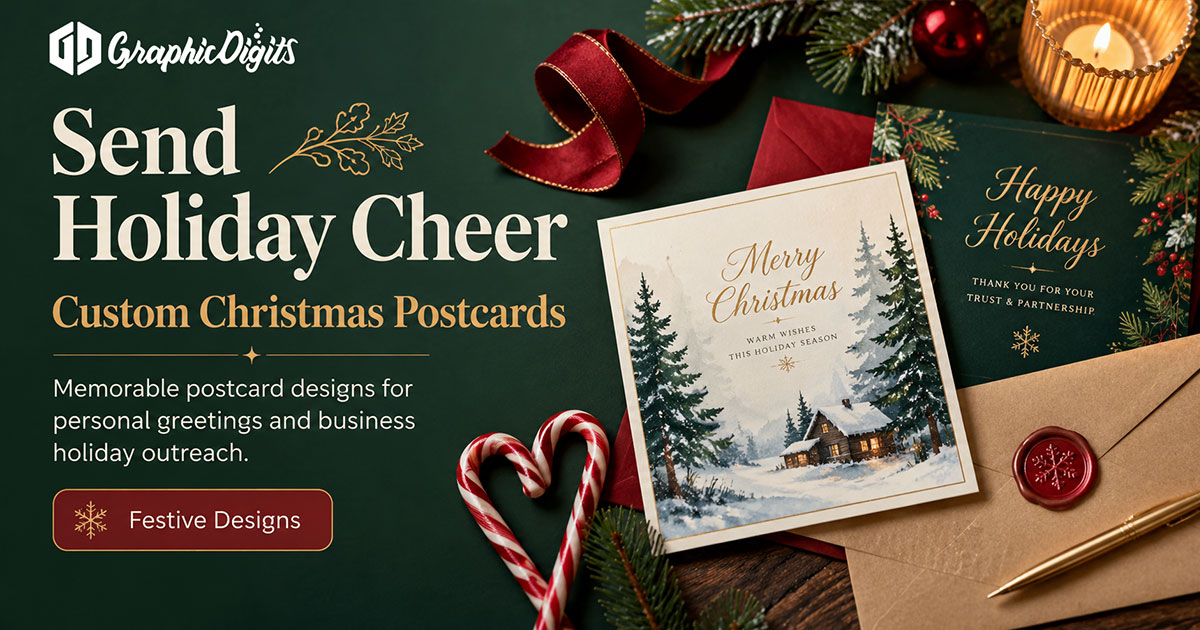
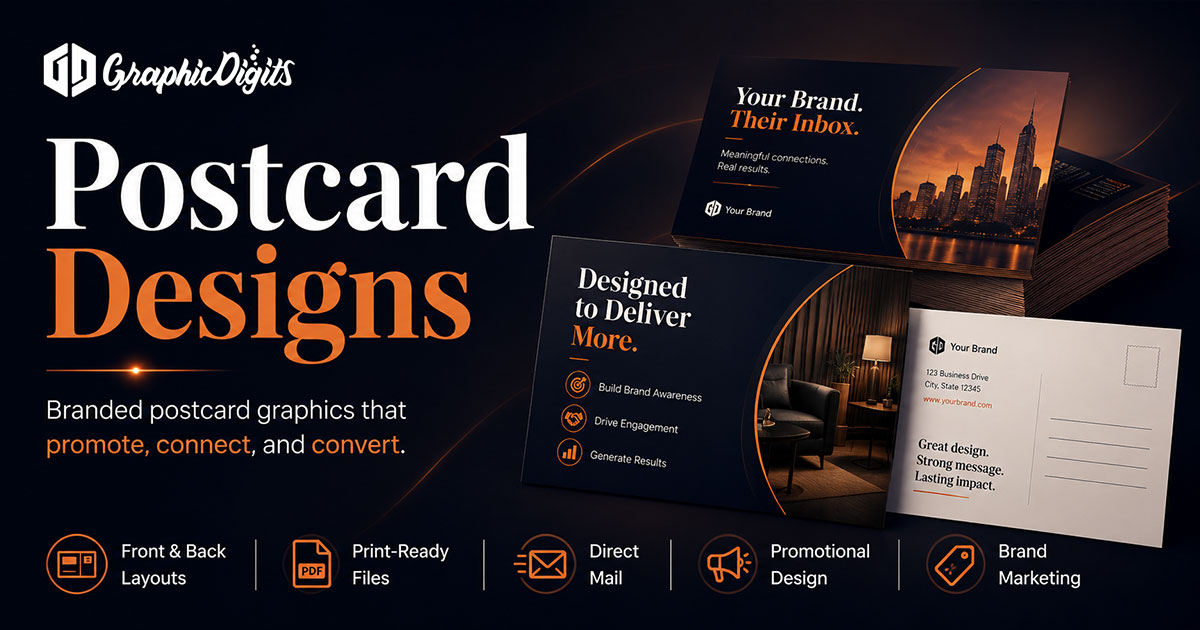
Christmas postcard design is about a seasonal greeting that works on a flat, two-sided card—personal or business—without crowding the message or the mailing side. Plan the Christmas purpose, hierarchy, and style direction first so the finished card stays festive and readable.
Set the seasonal purpose and audience
Decide whether the postcard is a family greeting, client thank-you, event reminder, product note, or community update. Personal cards often lead with a photo, household name, or warm sign-off. Business cards need an approved Christmas message, recognizable sender, and wording that fits the relationship—without turning the card into a sales flyer.
That purpose decides how much copy fits on the front versus the back, whether a date or RSVP belongs on the card, and whether a quiet thank-you is enough. For broader Christmas card planning across folded or digital formats, see Christmas card design. This page stays on postcard execution.
Create a focused message hierarchy
Put the Christmas greeting first. Support it with one short line, then the sender. Keep sizes and weights ranked so the greeting is not competing with a logo, date, and offer at the same scale.
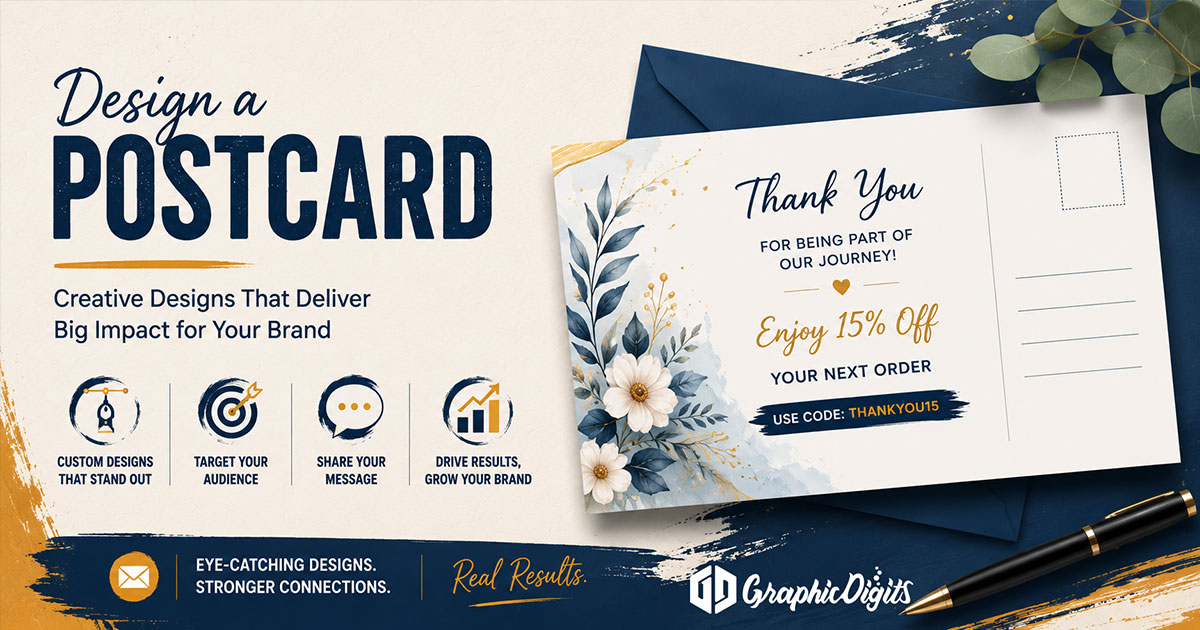
Front role: earn the glance—greeting plus one visual idea. Back role: finish the note, identify the sender, and leave a clear mailing or stamp zone when the card will be posted. Place any call to action after the short message, not on top of the greeting. If you need a full generic front-and-back tutorial, use design a postcard; here the focus is Christmas message placement on that format.
Choose vintage or modern direction deliberately
Imagery and type should follow one seasonal direction. Vintage Christmas postcards often use ornamental lettering, illustrated scenes, paper texture, and muted or limited palettes. Modern directions lean on simplified motifs, cleaner photo crops, restrained type, and contrast that stays readable at mail size.
Pick one approach for the whole card. Mixing heavy script headlines with dense photo collages usually crowds the greeting. Keep display type for the Christmas line and use a quieter supporting face for the message, sender, and any address-side text. For evergreen retro art direction beyond Christmas, see vintage postcard design.
Prepare the layout for its final use
Confirm size, orientation, required Christmas copy, imagery, brand assets, and whether the reverse needs a message area plus address panel. Keep faces, greetings, and contact lines inside safe margins. Do not run art through the stamp or barcode zone when the card will be mailed.
Common mistakes: stacking several greetings at equal size, leaving no room for the address panel, low-contrast script on busy backgrounds, and locking artwork before printer specs are known. When you are ready to hire artwork, review postcard designs or request a scoped quote.
Short checklist:
- One Christmas purpose and one primary audience
- Greeting-first hierarchy on the front; message and sender on the back
- Reserved mailing panel when postage is required
- One visual direction—vintage or modern—not both at full strength
- Printer size, bleed, and safe margins confirmed before final files
Frequently Asked Questions
What should a Christmas postcard include?
Give the front a clear Christmas greeting and one strong visual. Use the back for a short message, sender name, and—if mailing—a reserved address or stamp panel. Add a call to action only when the card’s purpose needs a next step.
How is a vintage Christmas postcard different from a modern one?
Vintage directions use historical cues such as decorative typography, textured illustration, and muted or limited colors. Modern directions favor simplified layouts, contemporary type, cleaner photo crops, and stronger contrast for small text.
How is this different from Christmas card design?
Christmas card design covers broader Christmas card planning across folded and digital formats. This guide is postcard-specific: flat front-and-back Christmas messaging, mailing-side space, and seasonal hierarchy on a single card.
When should seasonal postcard design start?
Start once the audience, Christmas message, distribution timing, assets, and any production requirements are stable enough for a brief. Leave time to confirm size, safe margins, and the address panel before artwork is locked.
GraphicDigits creates agreed design files only; printing, mailing, and fulfillment are not included.