What is vinyl banner design?
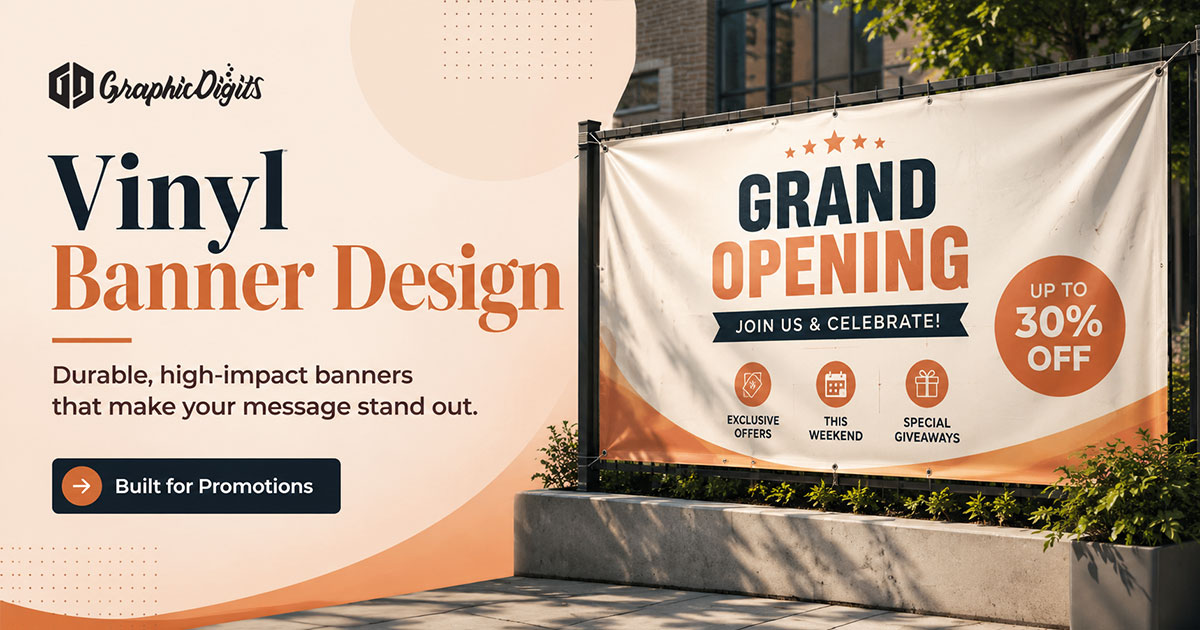
A vinyl banner is a flexible large-format display graphic designed for promotional, event, directional or business communication and produced by a print vendor from prepared artwork. Vinyl banner design is the planning and layout work that makes that artwork clear, brand-consistent and production-ready.
A good vinyl banner design starts with the intended viewing distance, placement, message length and final banner dimensions. The layout then needs clear hierarchy, large readable type, strong contrast, safe spacing and artwork prepared to the printer's actual production specifications.
GraphicDigits provides vinyl banner design and production-ready artwork. Printing, material supply, finishing, installation and physical production are handled by the client's chosen vendor. When you need scoped commercial files, our banner design services handle production-ready artwork separately from this educational guide.
For outdoor creative and readability principles across banner shapes, see our outdoor banner design guide. For vertical feather formats, compare church flag banners.
Common vinyl banner sizes and dimensions
There is no single universal standard vinyl-banner size. Common dimensions depend on application, placement, visibility, mounting method and printer specifications. Use the formats below as a planning starting point—not a global standard—and confirm trim size with your printer.
Use case → typical format → viewing context → layout implication
- Storefront / sidewalk: 2×4 ft — close viewing; short headline with limited support copy; keep type clear of window or fascia edges
- Event / stage backdrop / parking-lot perimeter: 3×6 ft — mid-distance viewing; one dominant offer line plus a brief qualifier
- Fence / outdoor building face / construction hoarding: 4×8 ft — longer viewing distance; fewer words, larger letterforms and stronger contrast
- Wide or modular spans: custom widths or panel sets when a single sheet exceeds printer limits—align hierarchy across panels before export
Average or “standard” search results often point at these common retail and event dimensions, but site constraints and printer capability always come first.
How to choose vinyl banner dimensions
Choose banner size based on:
- Viewing distance
- Available installation space
- Amount of text
- Orientation
- Image requirements
- Mounting method
- Printer specifications
Greater viewing distance generally requires larger type, a shorter message, stronger contrast and simpler hierarchy. Roadside or distance-viewed placements also favor speed of reading: one focal headline, minimal detail and placement that matches how quickly people pass the site. This is planning guidance—not legal or signage-compliance advice.
Material notes that support design planning
Material choice is supporting context for vinyl banner design—not the primary topic of this guide. Substrate can affect visibility, wind exposure, transparency, image reproduction and finishing requirements.
- 13 oz standard vinyl — common for short-to-medium outdoor use with moderate wind
- 18 oz heavy-duty vinyl — longer outdoor life and stiffer drape on large faces
- Mesh vinyl — perforated for high-wind sites; expect slightly softer contrast
- Indoor vinyl — lighter weight when weather exposure is minimal
Ask your printer about UV ink, lamination and wind-slit options before you lock colors or fine details. Mesh and wind gaps can change how edges and small type behave in real installs.
Layout, readability and viewing distance
Vinyl banner design still owns hierarchy, typography, contrast, imagery, CTA placement, brand consistency, whitespace, alignment and message simplicity. Size and specs support that work—they do not replace it.
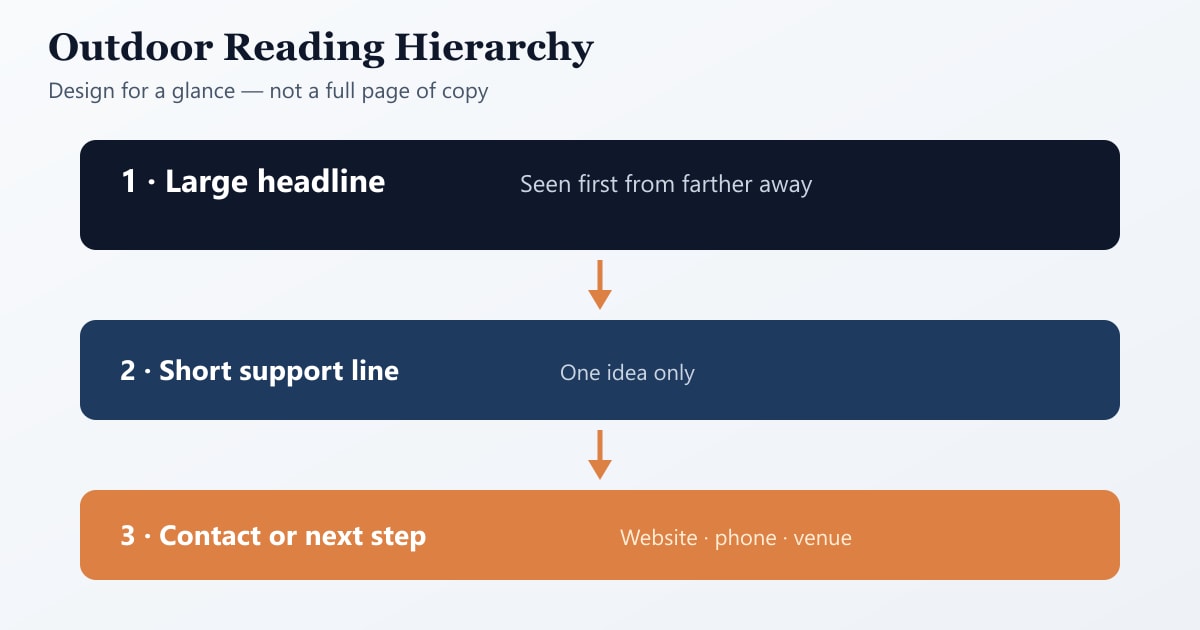
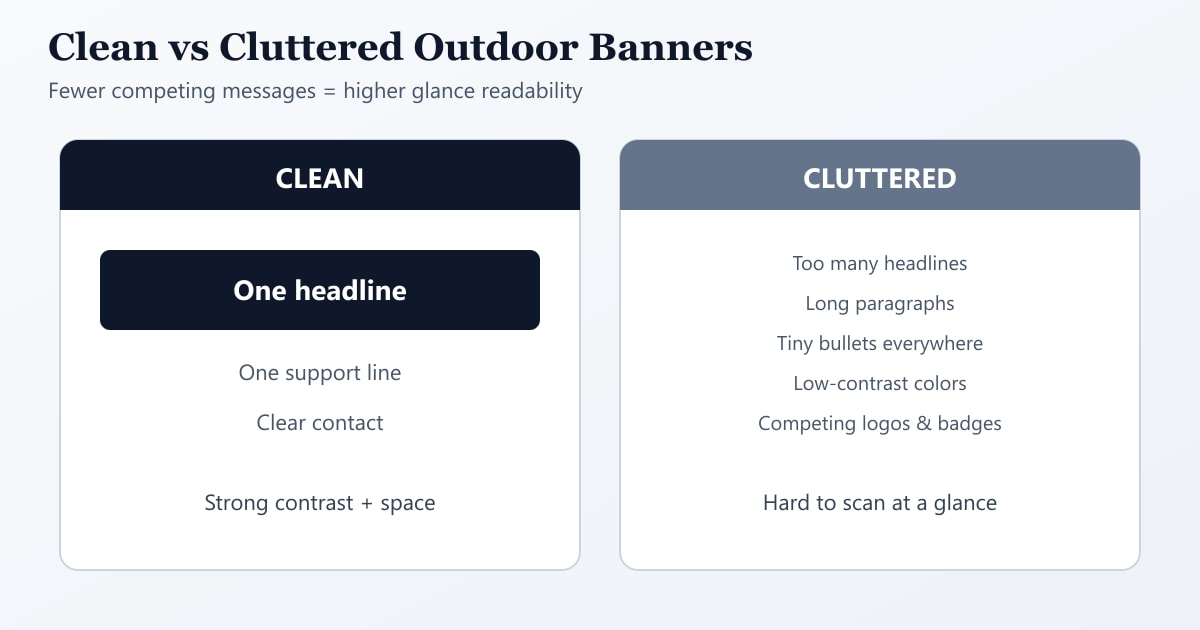
Outdoor vinyl is read in seconds, often from a moving vehicle or walkway. Plan one primary message and treat everything else as optional support.
- Headline: 3–7 words that state the offer, event or brand cue
- Support line: one short phrase—date, location or qualifier
- Contact or next step: phone, URL or QR only if it stays legible at distance
- Logo: visible but secondary to the headline
Font size for outdoor banners
Font size should follow viewing distance. Short headlines outperform dense copy for distant viewing, and contrast and type weight matter along with size. A practical check is to shrink your layout on screen until the banner width matches your phone width. If the headline disappears, increase type size or cut copy before you send files to print. Banners meant for 50+ ft viewing need fewer words and larger letterforms than sidewalk pieces. A printer proof or scaled preview helps validate hierarchy before production.
High contrast beats decorative gradients behind small text. Bold sans-serif or sturdy slab faces usually outperform script or thin serif headlines outdoors. For deeper outdoor creative and readability practices, see the outdoor banner design guide.
Margins, safe areas and install-aware planning
Artwork that looks balanced in a flat mockup can fail once grommets, hems, poles or fence ties enter the frame. Build safe margins before you finalize type placement. GraphicDigits does not manufacture or install banners—these finishing details matter only because they change where design content can safely sit.
- Keep critical text and logos inside a safe zone away from hem and grommet edges
- Leave breathing room around headlines and contact details
- Confirm grommet spacing with your printer or installer—defaults vary
- Account for pole pockets or sleeve tops that may cover the upper edge
- Use the printer template or specifications when supplied—they override generic guidance
- Plan wind gaps on large solid vinyl faces in exposed locations
- Note whether the banner faces daylight, backlight or mixed artificial light
Temporary fence banners, building wraps and storefront fascia each change how flutter, sag and angle affect readability. Photograph the install site when possible so scale and obstruction are visible before design lock.
How to make a vinyl banner (design and planning workflow)
“How to make a vinyl banner” usually means design and print preparation—not fabrication. A concise workflow:
- Define purpose and placement
- Confirm final dimensions
- Obtain printer specs
- Establish hierarchy
- Design artwork
- Check safe areas and finishing zones
- Export production-ready artwork
- Send to your print vendor
Pre-production checklist for vinyl banner design
- Purpose defined
- Final dimensions confirmed
- Orientation confirmed
- Viewing distance considered
- Headline readable at planned distance
- Safe margins checked
- Finishing and grommet zones confirmed
- Printer specifications received
- Artwork exported correctly
- Spelling verified for dates, phone numbers and URLs
- Material choice noted (standard, heavy-duty or mesh) on the proof
Common vinyl banner use cases
Retail and grand openings — short headline, hours or offer, minimal secondary copy
Construction and real estate — brand, project name and contact bar; durable substrate and wind planning matter more than decorative imagery
Events and festivals — date and gate info up front; dense schedules belong on flyers or web, not the banner face
School and community campaigns — high contrast and simple icons; confirm district or venue placement rules early
When to use banner design services
Teams can plan messaging, size and hierarchy using the checklists above. DIY templates or in-house layout tools work when the job is a single banner, the brand assets already exist and the printer accepts your file format without heavy prep.
Professional banner design services become more useful when you need coordinated seasonal sets, multi-location consistency, complex installs or print-ready exports tuned to a specific vendor. This article stays educational; scoped artwork, revisions and production coordination are quoted separately via get a quote.
If your campaign mixes rectangular vinyl with feather flags or wall pieces, align colors and logo placement across formats so the campus or storefront reads as one system—not three unrelated signs.
Frequently asked questions about vinyl banner design
What is a vinyl banner?
A vinyl banner is a flexible large-format display graphic designed for promotional, event, directional or business communication and produced by a print vendor from prepared artwork.
What are common vinyl banner sizes?
Common retail and event dimensions often include 2×4 ft, 3×6 ft and 4×8 ft, but the right size depends on placement, viewing distance and mounting. Confirm trim, bleed and finishing with your printer before locking artwork.
Is there a standard vinyl banner size?
No. There is no single universal standard vinyl-banner size. Common dimensions vary by application, visibility, mounting method and printer specifications. Choose size for the site—not a catalog default.
How do I choose the right vinyl banner dimensions?
Start with viewing distance, available installation space, message length, orientation, imagery needs, mounting method and the printer's production specs. Greater distance generally means larger type, shorter copy and simpler hierarchy.
How much margin should I leave on a vinyl banner?
Keep critical text and logos inside a safe zone away from hem, grommet and finishing edges, and leave breathing room around the message. Exact margin values should follow the printer's template or specifications when supplied.
Does GraphicDigits print vinyl banners?
No. GraphicDigits provides vinyl banner design and production-ready artwork. Printing, material supply, finishing, installation and physical production are handled by the client's chosen vendor.