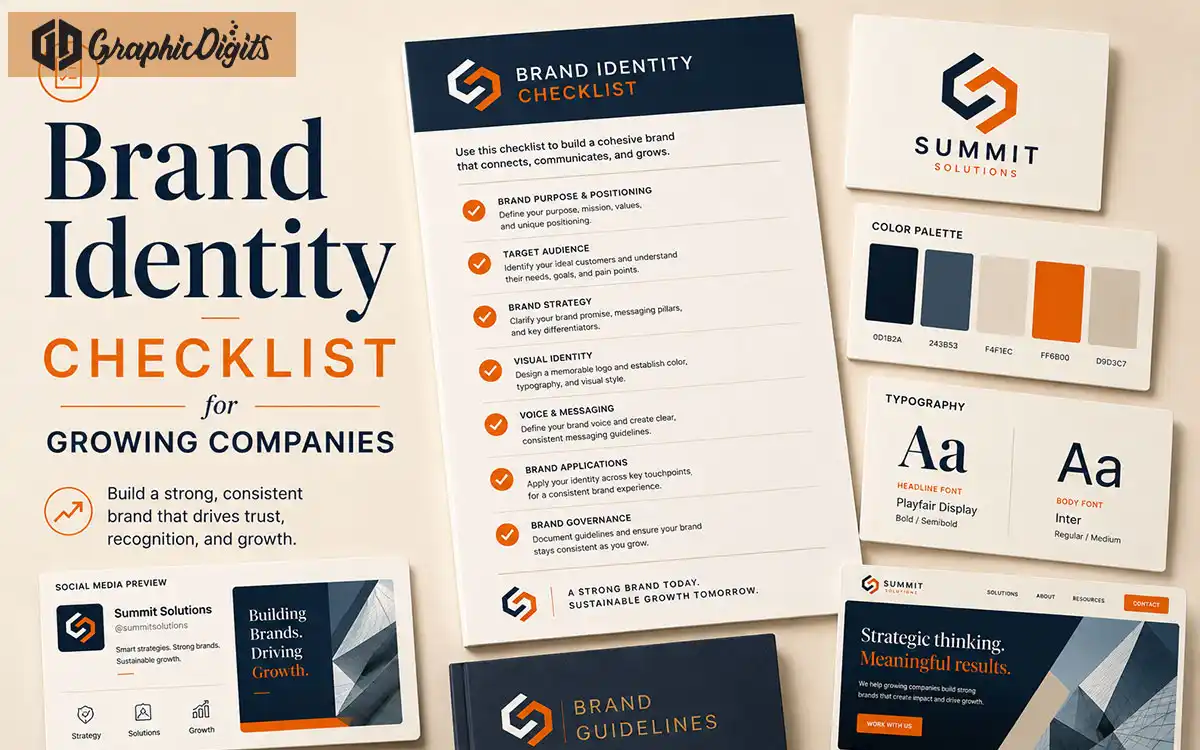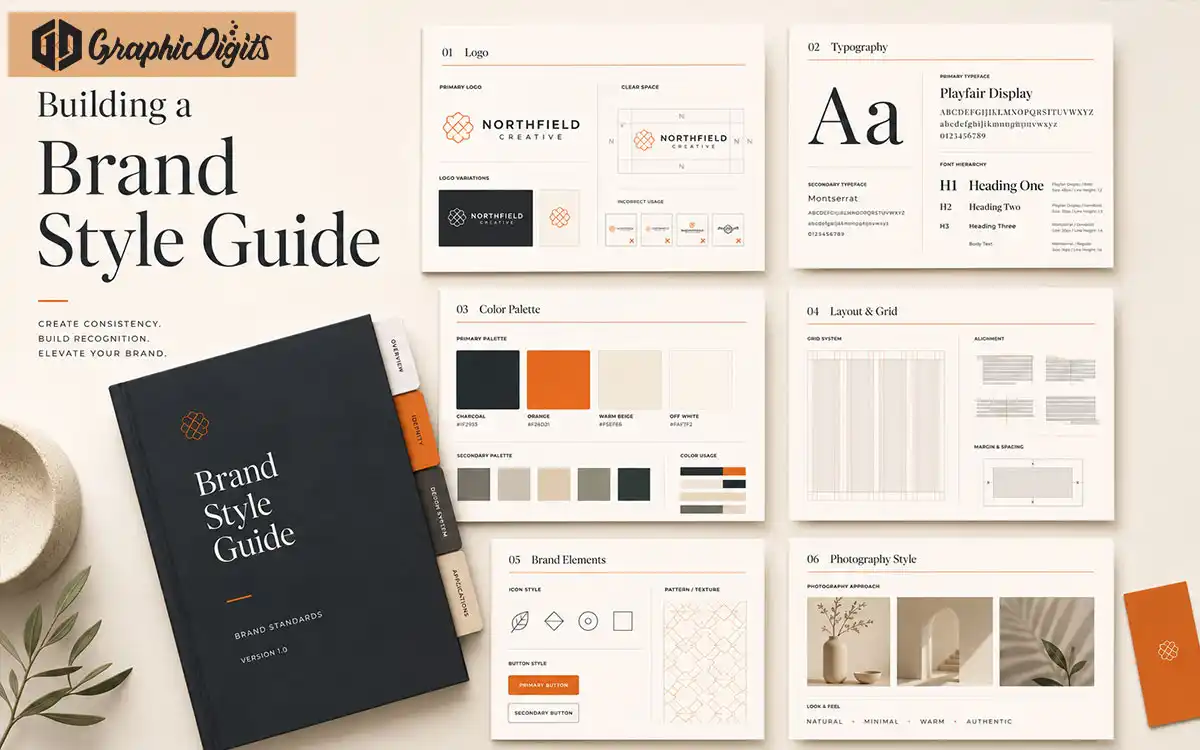
A brand style guide is a practical document that explains how your brand should look, sound, and feel across every platform. It helps your team, designers, marketers, developers, and vendors use your brand consistently.
Without clear guidelines, your logo, colors, fonts, social media graphics, website visuals, and marketing materials can quickly become inconsistent. This makes your business look less professional and harder to recognize.
This guide explains what to include in a brand style guide and how to create one your team can actually use.
- Document the essentialsCover logo, colors, type, imagery, and voice in one place.
- Make it usableKeep rules clear so designers, marketers, and vendors can follow them.
- Stay consistentApply the same standards across web, social, print, and sales assets.
Section 01
What Is a Brand Style Guide?
A brand style guide is a set of rules for using your brand identity. It usually includes logo usage, colors, typography, spacing, imagery, icons, design elements, and messaging guidelines.
The goal is not to make branding complicated. The goal is to make brand decisions clear and repeatable.
A strong style guide helps every design asset feel connected, whether it appears on your website, social media, brochure, business card, presentation, or email campaign.
Section 02
Why Brand Guidelines Matter
Brand consistency builds recognition. When customers see the same visual style across different platforms, your business becomes easier to remember and trust.
Guidelines also save time. Your team does not need to guess which colors, fonts, logo versions, or visual styles to use.
For growing businesses, a style guide helps maintain quality as more people create content for the brand.
Recognition
Consistent visuals make your brand easier to spot and remember.
Efficiency
Clear rules reduce back-and-forth when creating new marketing assets.
Section 03
What to Include in a Brand Style Guide
A complete style guide does not need to be overwhelming. Start with the sections your team uses most often, then expand as your brand grows.
Logo versions
Logo spacing and sizing
Brand colors
Typography
Imagery style
Icon style
Brand voice
Social media rules
Marketing examples
Section 04
Logo Usage Rules
Your style guide should show the correct logo versions, including full-color, black, white, horizontal, vertical, and icon-only versions if available.
It should also explain clear space, minimum size, background usage, and incorrect logo usage.
This prevents your logo from being stretched, recolored, placed on poor backgrounds, or used inconsistently. For logo fundamentals, see our complete guide to logo design.
Section 05
Brand Color Palette
Define your primary, secondary, and neutral colors. Include HEX, RGB, CMYK, or other values depending on your needs.
Colors should be selected for brand personality, readability, accessibility, and practical use across digital and marketing materials.
Section 06
Typography System
Your typography system should define heading fonts, body fonts, button styles, captions, and hierarchy.
Good typography improves readability and makes your brand feel more professional.
Explain when to use each font style and provide simple examples for website headings, social posts, presentations, and printed documents.
Section 07
Imagery and Graphic Style
A style guide should explain what type of images, illustrations, icons, patterns, and graphic elements match your brand.
This may include photo mood, lighting, backgrounds, icon thickness, illustration style, shapes, textures, and layout examples.
Clear visual rules help your marketing materials look connected instead of random.
Section 08
Brand Voice and Messaging
Your brand is not only visual. It also needs a consistent voice.
Define whether your brand sounds professional, friendly, bold, premium, technical, simple, playful, or direct.
Include examples of approved messaging, CTA style, tagline usage, and words to avoid.
Section 09
Social Media and Marketing Rules
Your style guide should include simple rules for social media graphics, ad designs, brochures, presentations, email newsletters, and other marketing visuals.
Add examples for post layouts, cover images, thumbnails, CTA buttons, and branded templates.
This helps your content stay recognizable even when different people create it. GraphicDigits can support social media graphics, presentation design, and website design that follow your guidelines.
Avoid These
Common Style Guide Mistakes
These common issues make style guides harder to use and weaken brand consistency.
Making the guide too complicated
Overly long documents are ignored. Focus on the rules people need most often.
Missing logo usage rules
Without clear logo standards, versions get stretched, recolored, or misused.
Not including color values
Teams guess HEX or RGB values when exact codes are not documented.
Ignoring typography hierarchy
Inconsistent fonts and sizes make content harder to read and recognize.
Forgetting social media examples
Social templates are where inconsistency often appears first.
Not updating the guide as the brand grows
Guidelines should evolve when services, audiences, or visuals change.
Put It to Work
Adoption and Ownership Checklist
A finished PDF is not enough. Guidelines only help when people know where the files live, who approves exceptions, and when the document gets updated.
Treat the guide as a living system: clear ownership, shared assets, and a short review cadence keep logo, color, type, and templates consistent as the team grows.
Partner With Us
How GraphicDigits Can Help
GraphicDigits helps businesses create professional brand style guides that make visual communication consistent and easy to manage.
We can design your logo system, brand colors, typography, visual rules, social media templates, website graphics, marketing examples, and complete brand guidelines through branding design and logo design services.
Whether you are building a new identity or organizing an existing brand, we can help you create a practical style guide your team can use with confidence. Discuss your project to get started.
Need a Brand Style Guide for Your Business?
Get clear brand guidelines that keep your visuals, messaging, and marketing materials consistent everywhere.