For startups, branding is more than a logo or a color palette. It is the way your business explains who you are, what you offer, why you matter, and why customers should trust you.
In the US market, where customers compare options quickly and competitors appear in every search result, a clear brand identity can help your startup look credible from the beginning. Strong branding makes your business easier to recognize, easier to remember, and easier to choose.
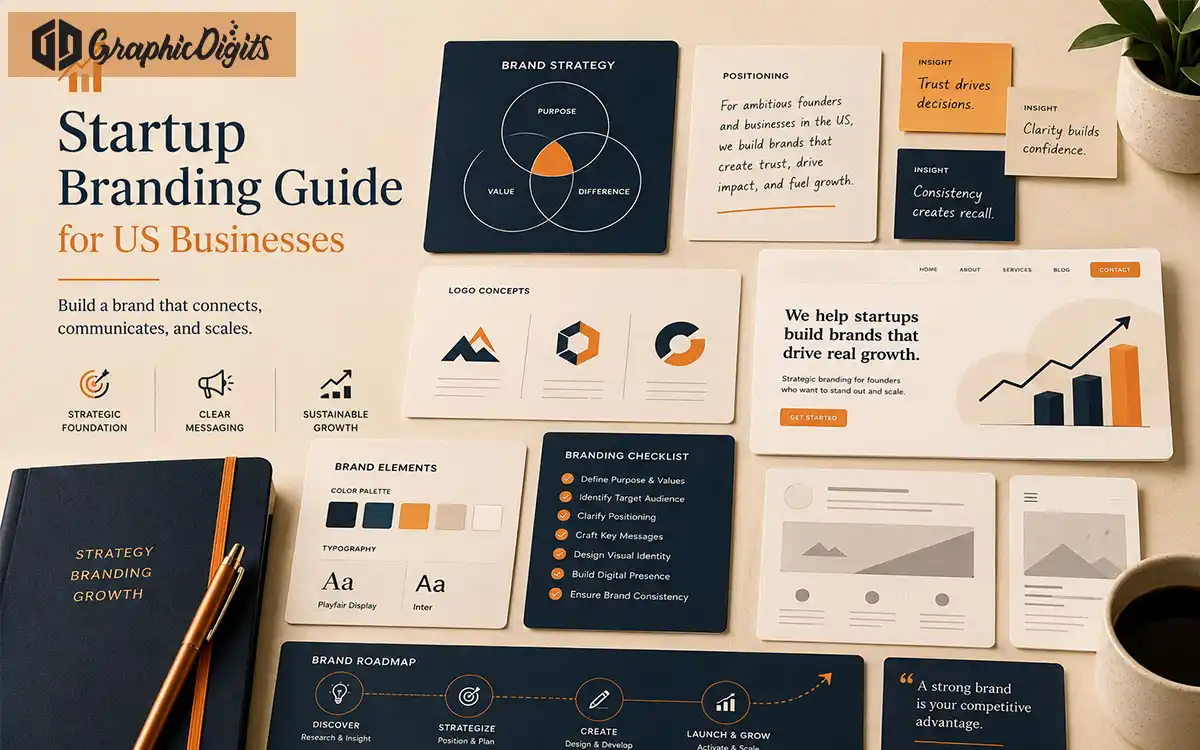
This startup branding guide explains the key steps for building a brand identity that supports trust, growth, marketing, and long-term business positioning.
- Strategy firstDefine positioning, audience, and promise before visual design.
- Consistent identityAlign logo, website, social, and sales materials from day one.
- Launch-ready assetsPrepare guidelines, files, and templates for growth.
Section 01
Why Branding Matters for Startups
Startups often focus heavily on product, pricing, and launch speed. Those things matter, but branding is what helps people understand and remember the business behind the offer.
A professional brand gives your startup a clear visual and verbal identity. It helps your website, pitch deck, social media, ads, emails, and sales material feel connected instead of random.
Good branding can also improve first impressions. When your startup looks polished and consistent, potential customers, partners, and investors are more likely to take your business seriously.
Credibility
A polished brand helps startups look established before the first sales conversation.
Recognition
Consistent visuals make your business easier to remember across every channel.
Clear Messaging
Strong branding connects your offer, audience, and value in one coherent story.
Investor Confidence
Professional identity supports pitch decks, partnerships, and fundraising conversations.
Step 01
Define Your Brand Strategy
Before designing anything visual, define the foundation of your brand. Your brand strategy should answer what your startup does, who it helps, what problem it solves, and what makes it different.
Start by clarifying your mission, values, core offer, customer promise, and business personality. These decisions will guide your logo, messaging, colors, typography, website design, and marketing materials.
Without strategy, branding becomes guesswork. With strategy, every design decision has a clear purpose.
What problem does your startup solve?
Who is your ideal customer?
Why should customers choose you instead of competitors?
What personality should your brand express?
What promise do you want customers to remember?
Step 02
Understand Your Target Audience
Your brand should be built for the people you want to reach. A startup selling to enterprise clients needs a different tone than a lifestyle brand, restaurant concept, SaaS product, medical service, or local business.
Understanding your target audience helps you choose the right visual style, words, benefits, and trust signals. It also helps you avoid creating a brand that only appeals to you but does not connect with customers.
Think about your audience’s needs, fears, expectations, budget, decision-making process, and preferred communication style.
Step 03
Build Your Brand Positioning
Brand positioning defines how your startup should be perceived in the market. It explains where your brand fits and why your offer is different.
Strong positioning helps customers quickly understand whether your startup is premium, affordable, innovative, local, specialized, fast, friendly, technical, or service-focused.
Your positioning should be simple enough to explain in one or two sentences. If people cannot understand what makes your startup different, your design and marketing will struggle to convert.
Step 04
Choose Your Startup Name and Brand Voice
A strong startup name should be easy to pronounce, easy to remember, and suitable for long-term growth. It should also work across domain names, social media handles, logo design, and marketing materials.
Your brand voice defines how your startup communicates. It may be professional, friendly, bold, premium, technical, playful, or direct. The right voice depends on your audience and industry.
Once your name and voice are clear, your content becomes easier to write and your visuals become easier to design.
Step 05
Create Your Visual Identity
Your visual identity includes your logo, colors, typography, imagery style, icons, layout system, and graphic elements. These assets create the visual language people associate with your startup.
A consistent visual identity helps your brand feel more established. It also makes your website, social media graphics, pitch decks, presentations, email campaigns, and ads look connected.
For startups, the goal is not to make everything complicated. The goal is to create a simple, flexible system that can grow with the business through professional branding design.
Step 06
Design a Startup Logo
Your logo is one of the most visible parts of your startup brand. It should be simple, readable, memorable, and flexible enough to work across digital and physical touchpoints.
A startup logo should work on your website header, app icon, social profile, favicon, pitch deck, business card, invoice, proposal, merchandise, and advertising material.
Avoid overly complex logos, generic templates, copied icons, and trendy effects that may become outdated quickly. Work with logo design services that prioritize recognition and trust. See our complete guide to logo design for deeper guidance.
Step 07
Build Website and Marketing Visuals
Your website is often the place where people decide whether your startup feels credible. Even before they contact you, visitors are judging your business based on layout, design quality, clarity, loading speed, and visual consistency.
Startup branding should extend into landing pages, hero sections, service pages, social media posts, pitch decks, email graphics, brochures, and sales materials.
Every customer touchpoint should feel like it belongs to the same brand. A strong website design direction helps your startup look more professional from launch day.
Step 08
Create Brand Guidelines
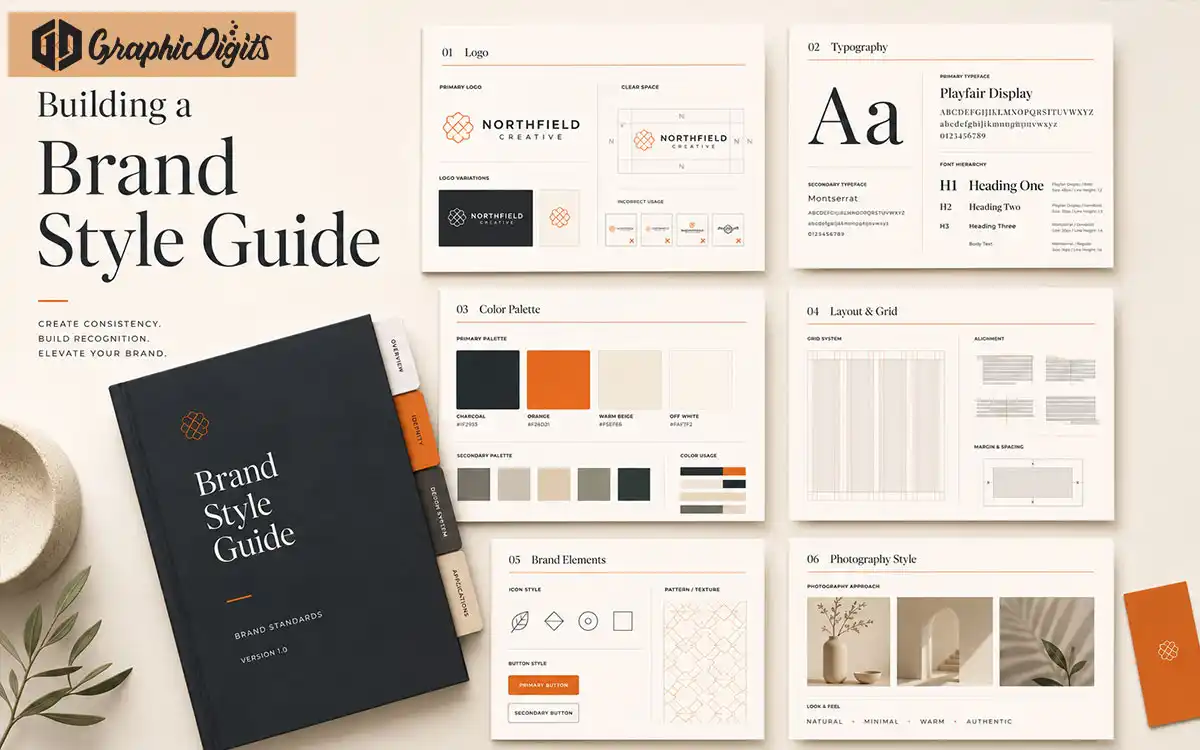
Brand guidelines help your startup stay consistent as you grow. They explain how to use your logo, colors, fonts, imagery, icons, buttons, layouts, and messaging.
Even a simple one-page brand guide is useful in the beginning. It helps founders, designers, marketers, developers, and contractors use the brand correctly.
As your startup grows, your brand guidelines can expand into a full brand style guide with detailed rules and examples.
Roadmap
Your 8-Step Branding Roadmap
Review the full branding journey at a glance—from strategy and positioning through visual identity, logo design, marketing assets, and guidelines.
Define Your Brand Strategy
Clarify your mission, values, core offer, customer promise, and business personality before designing anything visual.
Understand Your Target Audience
Study your audience’s needs, fears, expectations, budget, and communication style so your brand connects with real buyers.
Build Your Brand Positioning
Explain where your startup fits in the market and what makes your offer meaningfully different in one or two sentences.
Choose Your Startup Name and Brand Voice
Pick a memorable name and a voice—professional, friendly, bold, or technical—that matches your audience and industry.
Create Your Visual Identity
Develop logo, colors, typography, imagery, icons, and layout rules that create a recognizable visual language.
Design a Startup Logo
Create a simple, flexible logo that works on websites, apps, social profiles, pitch decks, cards, and ads.
Build Website and Marketing Visuals
Extend branding into landing pages, service pages, social posts, pitch decks, email graphics, and sales materials.
Create Brand Guidelines
Document logo usage, colors, fonts, imagery, and messaging so your team stays consistent as you scale.
Checklist
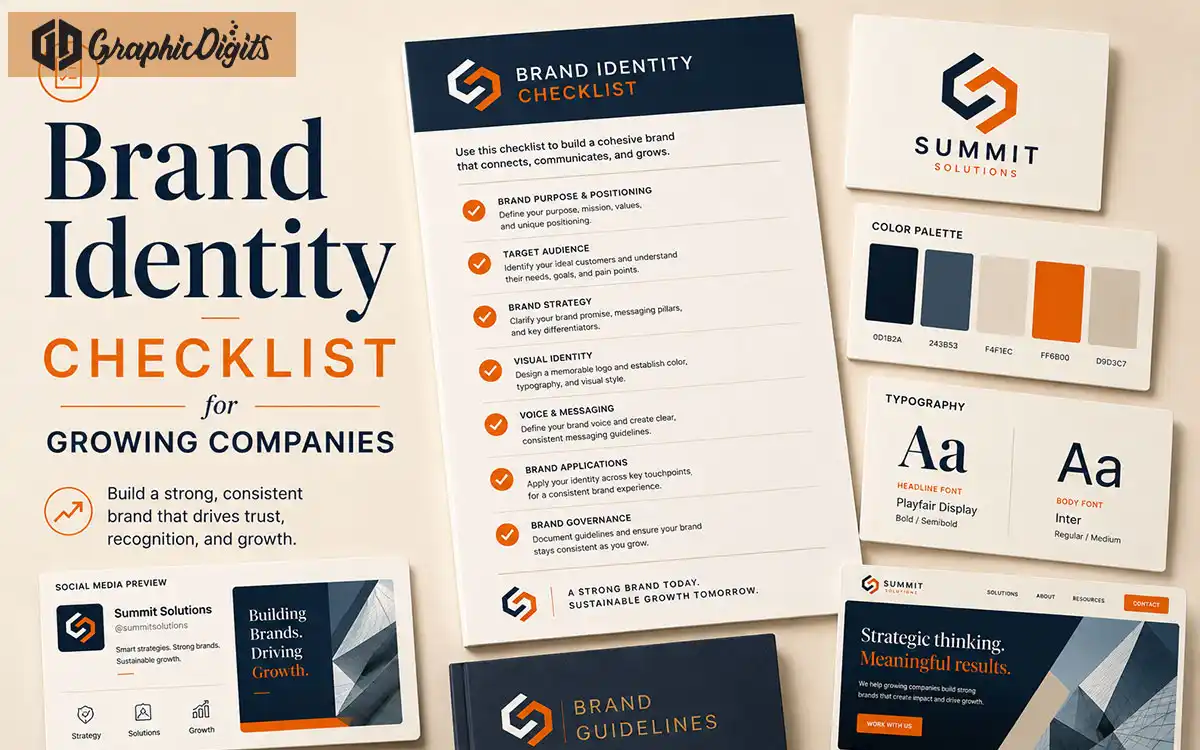
Startup Branding Checklist
Use this checklist to review whether your startup brand is launch-ready.
- Clear mission and customer promise
- Defined target audience
- Simple brand positioning statement
- Memorable startup name
- Consistent brand voice
- Professional logo design
- Primary and secondary color palette
- Typography system
- Website design direction
- Social media visual style
- Pitch deck or presentation style
- Brand guidelines document
- Essential file formats and assets
Avoid These
Common Startup Branding Mistakes
Many startups rush branding and later realize their logo, colors, website, or message no longer fits the business. This creates extra redesign costs and weakens early recognition.
Another common mistake is copying competitors too closely. Inspiration is useful, but your startup needs its own identity if it wants to stand out.
Startups should also avoid inconsistent visuals across platforms. If your website, social media, pitch deck, and ads all look different, customers may feel confused or less confident in your brand.
Rushing the brand before defining strategy
Skipping positioning and audience research leads to visuals that do not support real business goals.
Copying competitors too closely
Inspiration helps, but your startup needs a distinct identity to stand out in the US market.
Using inconsistent visuals across platforms
When your website, social media, and pitch deck look unrelated, trust and recognition suffer.
Choosing trendy design over long-term usability
Trends fade quickly. Prioritize clarity, flexibility, and recognition that can grow with your business.
Partner With Us
How GraphicDigits Can Help With Startup Branding
GraphicDigits helps startups create professional brand identities that are built for clarity, credibility, and growth. We design logos, brand systems, website visuals, social media graphics, pitch decks, and marketing assets that help startups look ready for the market.
Our process focuses on understanding your audience, positioning, offer, and goals before creating visuals. This helps your brand feel strategic, not random.
Whether you are launching a new startup or improving an early-stage brand, we can help you create a visual identity that supports trust, recognition, and long-term growth. Discuss your project to discuss your project.
Need Startup Branding That Looks Ready for Growth?
Get a professional brand identity system designed for your startup’s launch, marketing, and long-term growth.