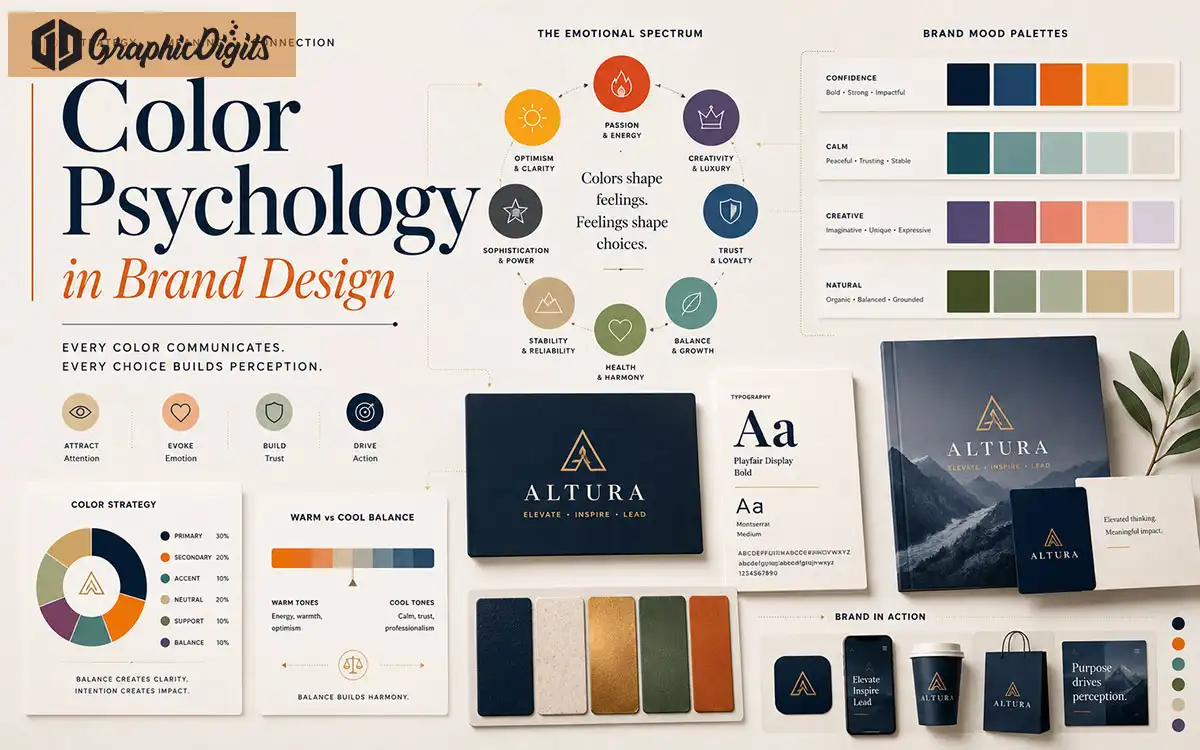
Color is one of the first things people notice about a brand. Before they read your message or explore your services, your colors already create an impression.
The right color palette can make your business feel professional, energetic, trustworthy, premium, friendly, bold, calm, or creative. The wrong palette can confuse your audience or make your brand feel inconsistent.
This guide explains how color psychology works in brand design and how businesses can choose colors that support recognition, emotion, and trust.
- First impressionsColors shape how people feel about your brand before they read a word.
- Strategic palettePrimary, secondary, accent, and neutral colors should work across every channel.
- Readable & consistentStrong contrast and documented color values keep designs usable and on-brand.
Section 01
What Is Color Psychology?
Color psychology is the study of how colors influence emotions, behavior, and perception.
In branding, color psychology helps businesses choose colors that match their personality, audience, and market position.
Color does not work alone. It becomes more powerful when combined with typography, logo design, imagery, layout, and messaging.
Section 02
Why Color Matters in Branding
Brand colors help people recognize your business faster. When used consistently across your logo, website, social media, brochures, presentations, and ads, colors become part of your brand memory.
Colors also shape perception. A finance brand may need trust and stability, while a fitness brand may need energy and motivation.
Strong color choices make your brand feel intentional instead of random.
Section 03
Common Color Meanings
Different colors often carry common associations. Use these as a starting point, then test how they fit your audience and industry.
Blue
Trust, stability, professionalism
Orange
Energy, creativity, confidence
Red
Urgency, passion, action
Green
Growth, health, nature
Black
Luxury, strength, sophistication
Purple
Creativity, imagination, premium feel
Yellow
Optimism, warmth, attention
Gray
Balance, neutrality, modern simplicity
Section 04
Choosing a Primary Brand Color
Your primary color is the main color people associate with your brand. It should match your business personality and be practical across digital and marketing materials.
Before choosing a primary color, consider your audience, competitors, industry, and desired emotional response.
A strong primary color should work well in your logo, website buttons, social media graphics, and important brand assets. Explore logo design services when you are ready to apply your palette.
Section 05
Building a Brand Color Palette
A complete brand palette usually includes primary, secondary, accent, neutral, and background colors.
Your palette should provide enough flexibility without becoming too complicated.
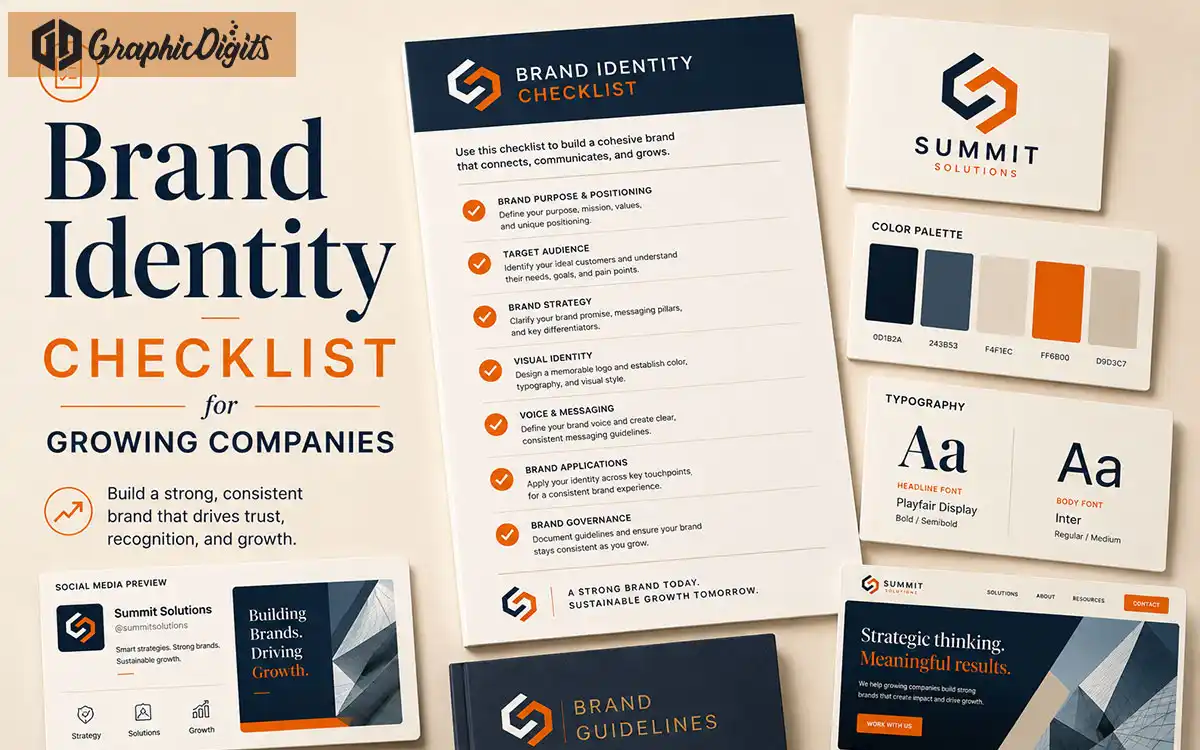
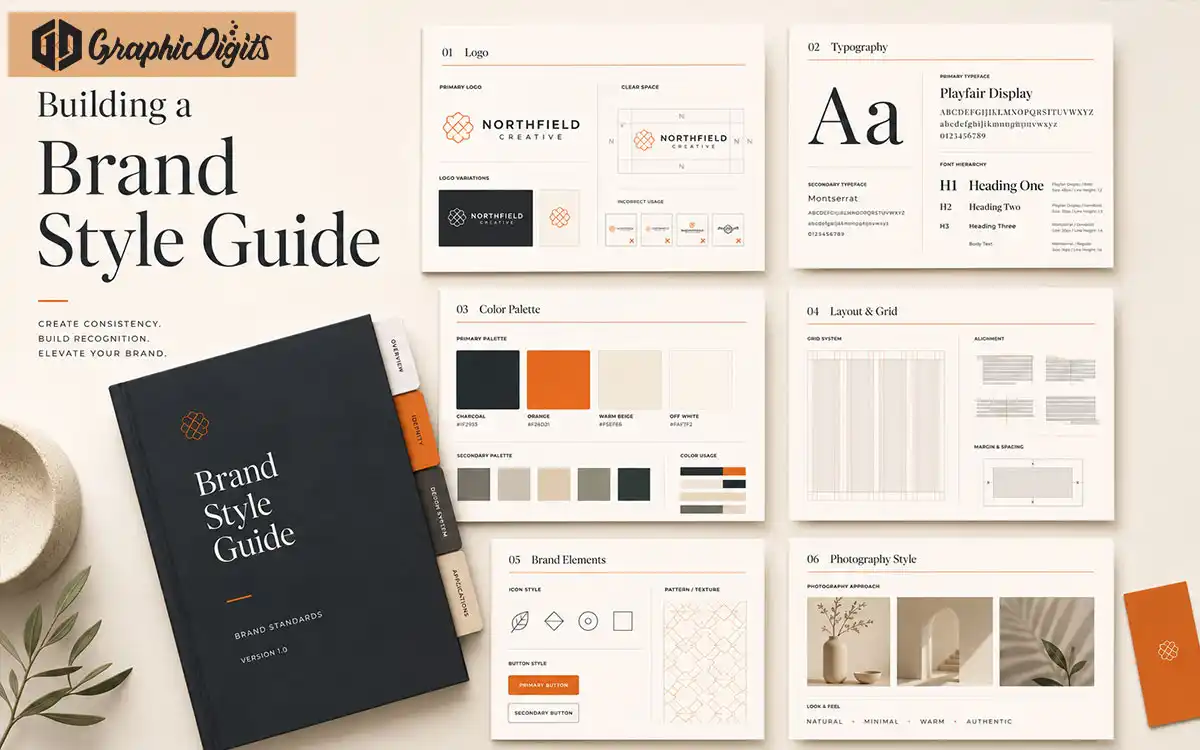
Document your palette in a brand style guide so your team uses the same values everywhere.
Section 06
Color Contrast and Accessibility
Color should look good, but it must also be readable. Low contrast can make text hard to read and hurt the user experience.
Use strong contrast between text and background, especially for buttons, headings, forms, and call-to-action areas.
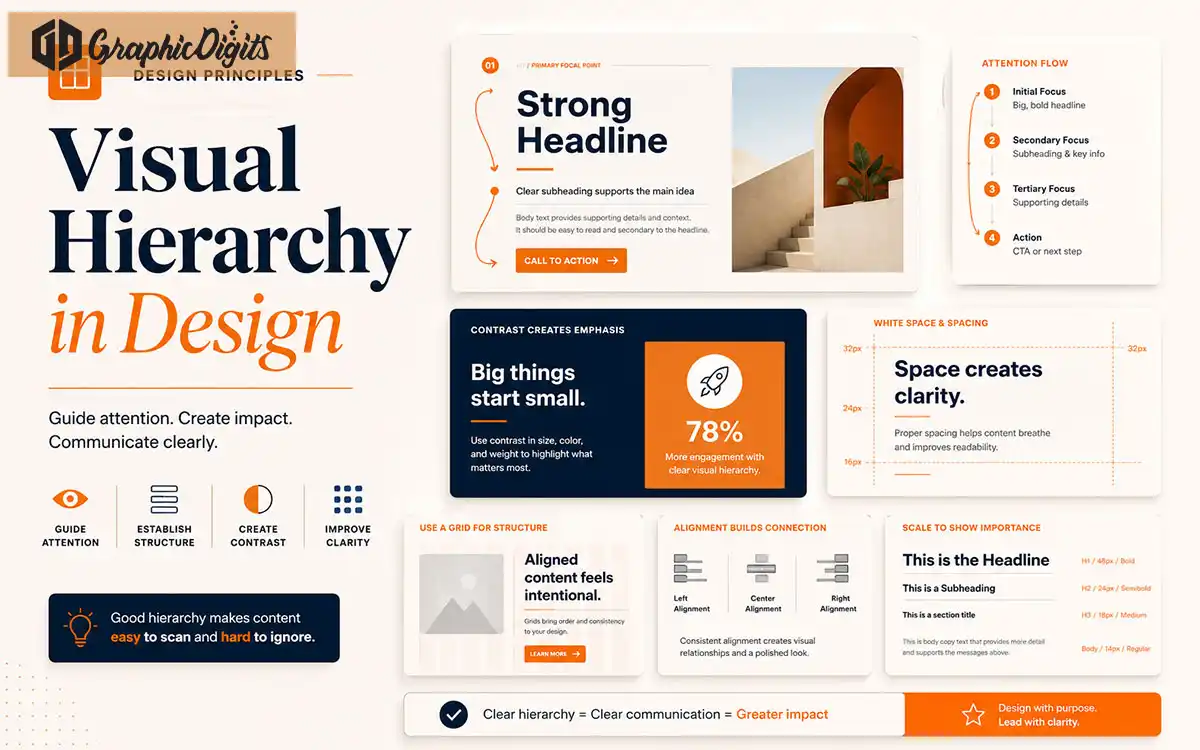
Accessible color choices make your brand more usable for more people. Pair strong palettes with clear layout rules from our visual hierarchy guide.
Section 07
Industry Color Expectations
Different industries often have different color expectations. Healthcare brands may use calming and trustworthy colors. Restaurants may use warm and appetizing tones. Technology brands may use clean blues, greens, or modern dark palettes.
You do not need to copy industry colors, but you should understand what your audience expects.
The best palettes balance familiarity with differentiation.
Section 08
Emotional Impact of Colors
Colors can influence how people feel before they take action. Warm colors can feel active and energetic. Cool colors can feel calm and reliable. Dark colors can feel premium and serious. Light colors can feel open and approachable.
Think about the emotion your audience should feel when they visit your website, see your logo, or view your marketing materials.
Color should support your message, not distract from it.
Avoid These
Common Color Mistakes
These mistakes weaken brand recognition and make designs harder to use.
Choosing colors only because they look trendy
Trends fade quickly. Your palette should support long-term recognition and trust.
Using too many colors
Too many hues make layouts noisy and weaken brand memory.
Ignoring contrast and readability
Low contrast hurts accessibility on websites, buttons, and marketing graphics.
Copying competitors too closely
Your palette should feel familiar to your industry but still distinct.
Not defining exact color values
Without HEX, RGB, or CMYK codes, teams guess colors and create inconsistency.
Using colors inconsistently
Different shades across channels make your brand look unorganized.
Choosing colors that do not match the audience
Colors should align with customer expectations and emotional goals.
Forgetting dark and light background versions
Logos and assets need versions that work on both light and dark backgrounds.
Before You Approve
Palette Selection Checklist
Color associations are useful prompts, not universal rules. Before finalizing a palette, check how it works for your audience and in the places your brand will actually appear.
Review the palette in a logo, a web interface, social graphics, and print-ready materials before treating it as final. That exposes contrast or hierarchy problems that a color swatch alone cannot.
Partner With Us
How GraphicDigits Can Help
GraphicDigits helps businesses build brand color systems that are professional, consistent, and practical across real-world design use.
We can help with logo design, brand identity, color palette creation, website visuals, social media templates, brochures, presentations, and complete brand guidelines.
Whether you are launching a new brand or improving an existing one, our team can help you choose colors that support recognition, trust, and business growth through branding design, website design, social media graphics, brochure design, and presentation design. Discuss your project to get started.
Need a Brand Color Palette That Feels Professional?
Get a strategic color system designed for your logo, website, social media, and marketing visuals.