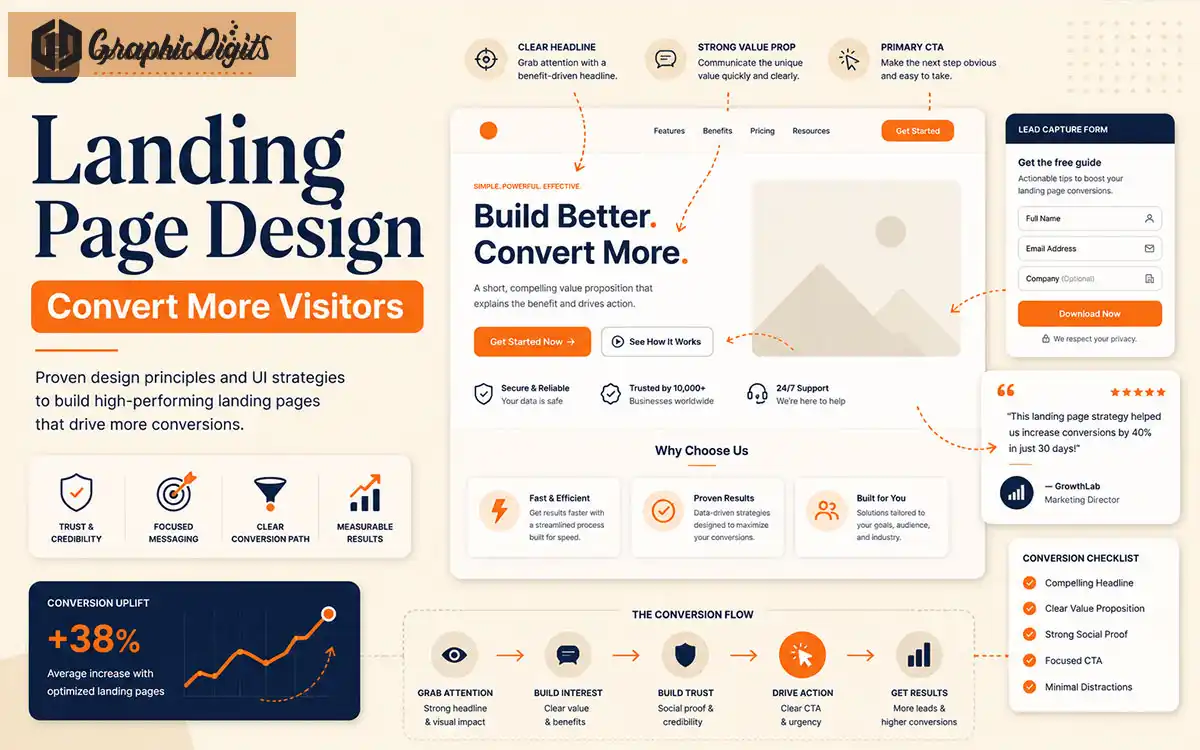
A landing page is designed for one focused goal. That goal may be getting a quote request, booking a call, collecting leads, promoting a service, selling a product, or encouraging users to take a specific action.
Unlike a general website page, a landing page should remove distractions and guide visitors toward one clear next step.
This guide explains the key landing page design principles businesses can use to improve clarity, trust, engagement, and conversions.
- One clear goalEvery section should support a single action, not multiple competing paths.
- Trust + clarityStrong headlines, proof, and visible CTAs reduce hesitation before visitors convert.
- Mobile & speedFast, tap-friendly layouts matter especially for ads and campaign traffic.
Section 01
What Is a Landing Page?
A landing page is a focused web page built around a specific campaign, offer, service, or action.
It usually includes a strong headline, supporting message, benefits, proof, visuals, CTA buttons, and sometimes a form.
The best landing pages are simple, persuasive, and easy to understand.
Section 02
Why Landing Page Design Matters
Landing page design affects how quickly visitors understand your offer and whether they feel confident enough to take action.
A weak landing page can waste ad spend, reduce leads, and make your business look less trustworthy.
A strong landing page supports marketing campaigns by making the message clear, the offer valuable, and the next step easy.
Section 03
Clear Hero Section
The hero section is the first area visitors see. It should immediately explain what you offer, who it is for, and why it matters.
A strong hero section includes a clear headline, short supporting text, visual proof, and a visible CTA.
Clear headline
Benefit-focused subheading
Strong CTA button
Relevant visual or proof
Section 04
Strong Value Proposition
Your value proposition explains why someone should choose your offer instead of another option.
It should be specific, simple, and focused on the customer’s problem or desired result.
Avoid vague claims. Explain the real benefit visitors get by taking action.
Section 05
Conversion-Focused CTA
A call to action tells visitors what to do next. Examples include Get a Quote, Book a Call, Start Your Project, Download the Guide, or Request Pricing.
Your CTA should be clear, visible, and repeated naturally throughout the page.
Use action-focused language and avoid confusing visitors with too many competing buttons. Get a quote when you are ready to discuss your landing page.
Section 06
Trust Signals
Trust signals reduce hesitation. They show visitors that your business is real, reliable, and capable.
Testimonials
Case studies
Portfolio examples
Client logos
Reviews
Secure forms
Clear contact details
Process explanation
Section 07
Simple Forms
Forms should be easy to complete. Asking for too much information can reduce conversions.
Keep fields focused on what you need to start the conversation.
Use clear labels, helpful placeholder text, and a simple submit button.
Section 08
Visual Hierarchy
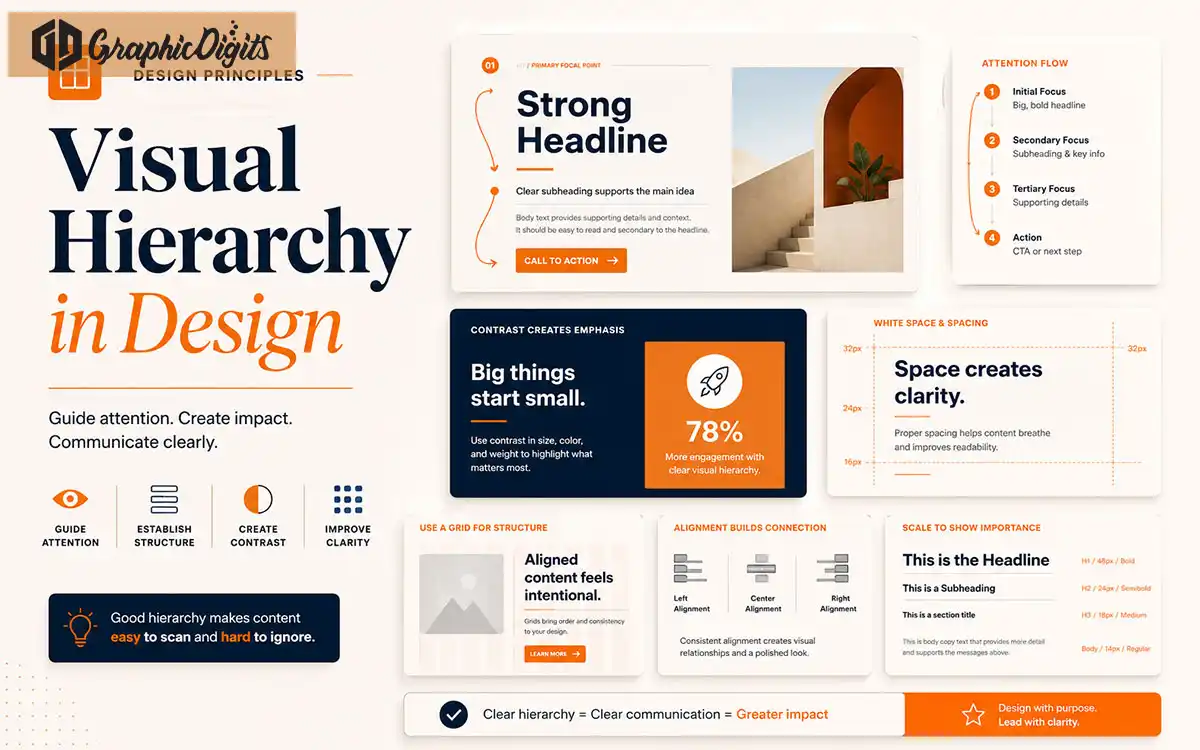
Visual hierarchy guides attention from headline to benefits to proof to CTA.
Use size, spacing, contrast, images, and layout structure to make the most important elements stand out.
A landing page should feel easy to scan, not overwhelming. See our visual hierarchy guide for layout principles.
Section 09
Mobile Responsiveness
Many visitors will view landing pages on mobile devices. The layout should load quickly, stack cleanly, and make CTAs easy to tap.
Forms, buttons, images, and text should be comfortable on small screens.
A mobile landing page should feel just as intentional as the desktop version.
Section 10
Speed and Performance
Landing pages should load fast, especially when used with ads or campaigns.
Large images, heavy scripts, and unnecessary animations can slow down the experience.
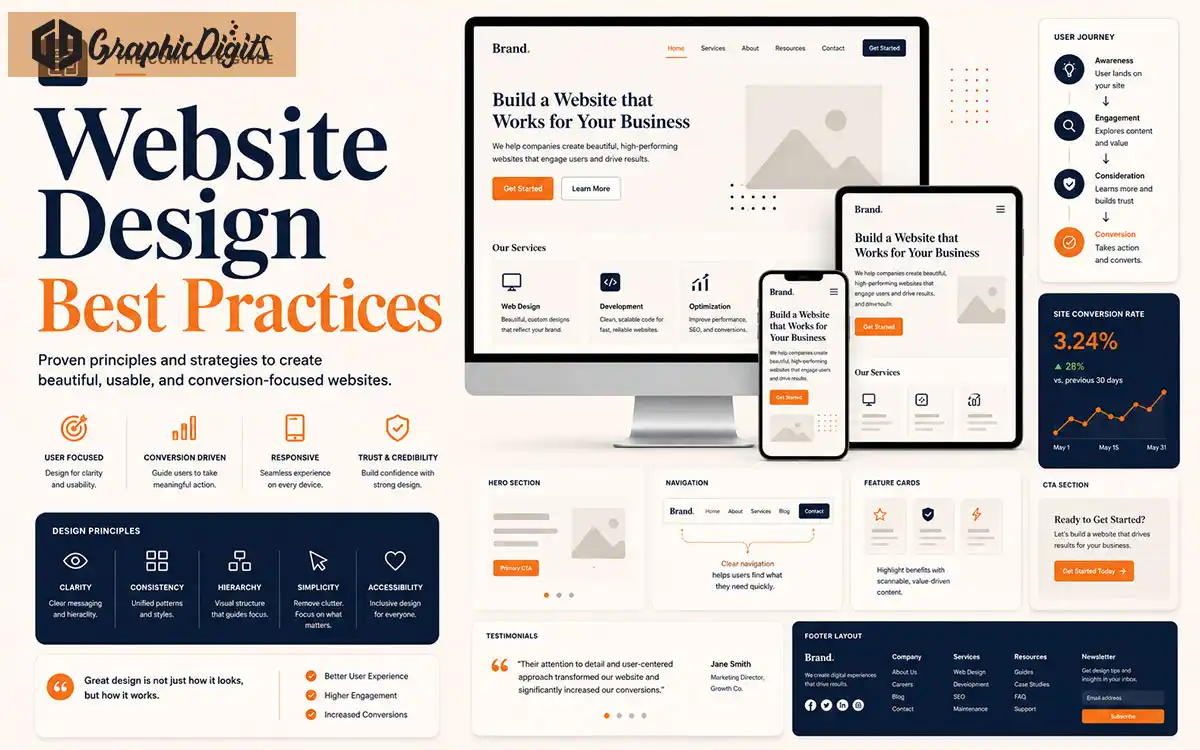
Optimize images, use clean layouts, and keep the page focused. Pair this with broader website design best practices.
Before Launch
Check Campaign Fit and the Primary Path
A landing page is one part of a campaign. Before publishing, make sure the promise, audience, and next step match the ad, email, or social post that brings visitors to the page.
Record what version was approved and what you plan to measure. That creates a useful baseline for future improvements without promising a particular conversion result.
Avoid These
Common Landing Page Mistakes
These issues reduce clarity, trust, and conversion on campaign landing pages.
Too many goals
When a page asks for several actions, visitors often choose none of them.
Weak headline
Vague headlines fail to explain the offer before visitors lose interest.
Hidden CTA
If the next step is hard to find, conversion rates usually drop.
Long confusing forms
Too many fields create friction before a lead is captured.
No trust signals
Pages without proof feel riskier, especially for new visitors.
Poor mobile layout
Crowded mobile sections and small buttons hurt campaign performance.
Slow loading speed
Heavy images and scripts waste ad spend when users leave early.
Too much clutter
Extra links and distractions pull attention away from the main action.
Weak offer explanation
Visitors need to understand the benefit quickly, not guess what you provide.
Inconsistent branding
Mixed visuals and messaging reduce trust and recognition.
Partner With Us
How GraphicDigits Can Help
GraphicDigits helps businesses design landing pages that look professional, communicate clearly, and guide visitors toward action.
We can help with landing page layout, hero sections, CTA design, trust sections, form design, service visuals, campaign graphics, and conversion-focused website design.
Whether you need a new landing page or want to improve an existing one, our team can help create a page that supports your business goals through website design, graphic design services, branding design, social media graphics, and presentation design.
Need a Landing Page That Converts Better?
Get a professional landing page design that improves clarity, trust, and lead generation.