What an anniversary e-card is
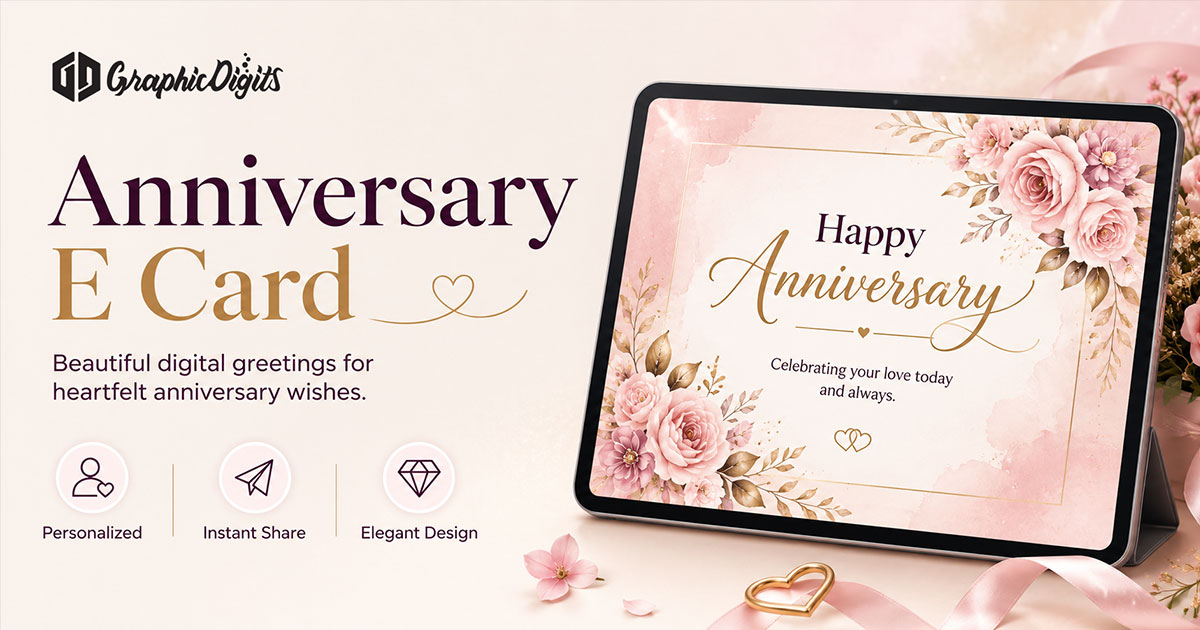
An anniversary e-card is a digital greeting created for a milestone—wedding anniversaries, work anniversaries, client partnership years or company founding dates. Unlike printed stationery, it is usually shared by email, messaging apps or social posts, so hierarchy and mobile readability matter as much as decoration.
This guide focuses on anniversary e-card design ideas: layout, messaging and digital delivery. It is separate from birthday card design and invitation card size guidance. For broader branded card and office collateral services, see stationery design services.
Personal vs business anniversary cards
Personal celebrations
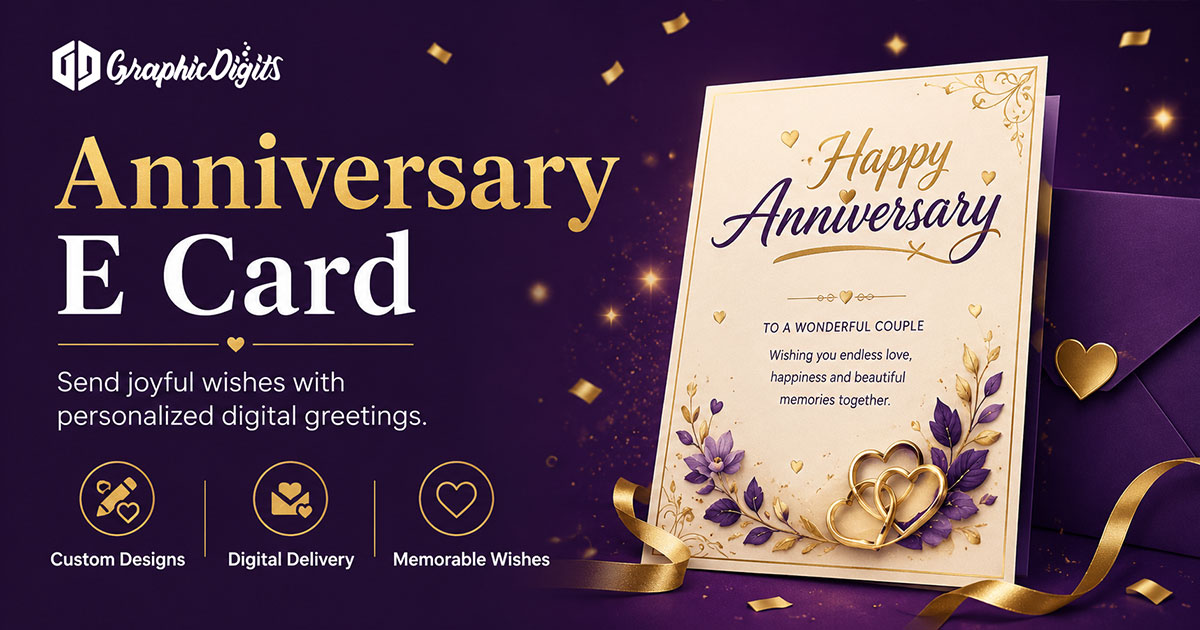
Personal cards can lean warmer: couple photos, soft color, romantic or playful headlines and longer first-person messages. Keep type readable over imagery and leave space for a sincere closing.
Work anniversary and employee recognition
Employee milestones benefit from clear year callouts, professional tone and brand-consistent templates HR can reuse. Avoid packing in promotions or benefits lists—the moment should stay recognition-first.
Customer and company anniversary use cases
Client and company anniversary notes can thank partners for continued collaboration. Use logo placement carefully, keep claims modest and choose a soft sign-off rather than a hard sales pitch.
Layout hierarchy
- Headline celebrating the milestone
- Supporting visual or monogram
- Short body message
- Sign-off / names / optional discreet CTA for business use
Reserve one hero idea per card. Competing headlines, stickers and long paragraphs fight for attention on small screens.
Typography, color and imagery
- Pair a clear display headline with readable body type
- Limit accent colors; match brand colors for business cards
- Choose photos or illustration that support tone without drowning text
- Maintain contrast for mobile brightness levels
Broader greeting formats are covered in the greeting cards guide when you need category-level inspiration beyond anniversary milestones.
Headline and message ideas
Headlines can celebrate a specific year, role or partnership phrase. Supporting copy should stay short—often two to four sentences for email cards. Personalized details (name, team, anniversary year) usually outperform generic stock phrases.
- Personal: gratitude, shared memory, forward-looking wish
- Employee: years of contribution, team impact, appreciation
- Client/company: partnership acknowledgment, continued collaboration
CTA or sign-off placement
Personal cards usually end with names and warmth. Business cards may add a light next step—visit a careers page, reply to HR or connect with an account team—placed after the message so recognition remains primary.
Digital dimensions and delivery
Match the format to the channel. Square works well for many social shares; taller compositions can suit stories; email cards need conservative width and readable type. Export for the actual delivery method rather than designing only for desktop mockups.
- Test on a phone before sending
- Keep file size practical for email attachments or embeds
- Provide a static fallback if animation is used
Animation vs static design
Subtle motion can feel celebratory, but heavy animation can delay load or fail in some email clients. When unsure, prioritize a strong static layout and treat motion as optional enhancement.
Accessibility and readability
- Avoid text locked into busy photo areas without contrast
- Do not rely on color alone to communicate meaning
- Keep minimum body sizes comfortable on phones
- Offer alt text when the card is published on a webpage
Print vs digital differences
Print cards need bleed, trim and paper considerations. Digital anniversary cards need aspect ratio, file format and channel constraints. If a printed companion piece is required later, plan type and logo files so assets can adapt without redesigning from zero.
Common mistakes
- Overstuffing marketing offers into a recognition moment
- Low-contrast text on decorative backgrounds
- Ignoring mobile crop and safe margins
- Mixing birthday or invitation motifs that confuse the occasion
- Sending without proofreading names and anniversary years
Checklist before finalizing
- Audience and tone confirmed (personal vs business)
- Headline, message and sign-off reviewed
- Names, titles and years double-checked
- Brand assets and logo clearspace verified for business use
- Mobile preview and file format ready for the delivery channel
- Optional CTA kept secondary to the greeting
Applied card and collateral quality is easier to review in a design portfolio. When comparing how design work is sequenced, a clear design process overview helps set expectations.
Conclusion
Strong anniversary e-cards succeed through hierarchy, readable messaging and channel-aware formatting—not keyword-filled templates. Decide personal vs business tone first, keep the celebration primary and test the design on mobile before delivery. When you need branded stationery support for related card and print collateral, explore stationery design services.
Frequently asked questions about anniversary e-cards
What should an anniversary e-card include?
Most anniversary e-cards need a clear headline, a short personalized message, supporting visuals and a warm sign-off. Business versions may also include a logo and a discreet next-step line without overcrowding the layout.
How do you design a professional work anniversary e-card?
Keep hierarchy simple, use brand-consistent colors and type, celebrate the milestone by year or role and avoid overly casual imagery. Confirm logo clearspace and tone with HR or brand guidelines before sending.
What size should a digital anniversary card be?
Choose an aspect ratio that matches the delivery channel—square or vertical for social shares, and email-friendly widths for inbox viewing. Test the design at mobile sizes so headlines and photos remain readable.
Can anniversary e-cards be used for business or employee recognition?
Yes. Companies often use digital anniversary cards for work anniversaries, client partnership milestones and company founding days. Keep messaging sincere and brand-aligned rather than sales-heavy.