What a folded card is
A folded card is a printed format that opens along one or more fold lines. The cover does the quick work of occasion and tone; the inside panels carry the longer message, details or signature that a flat card usually cannot hold without crowding.
This guide focuses on format, panel structure and print preparation—not greeting-card occasion types, invitation copy or birthday styles. For broader greeting-card messaging and use cases, see greeting card design. For invitation hierarchy and RSVP content, see invitation card design. For birthday-specific ideas, see birthday card design.
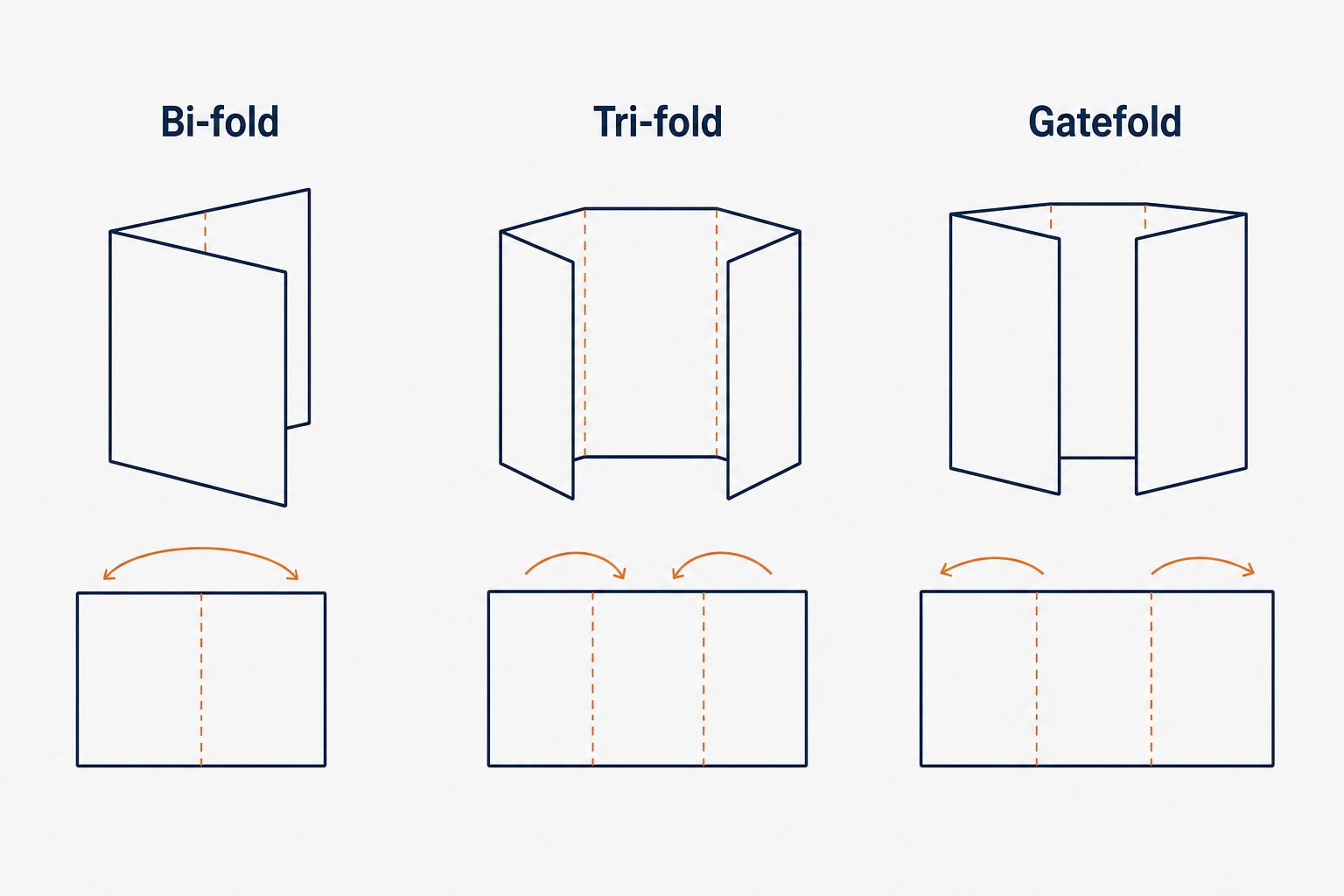
Common fold formats
- Bi-fold — one primary fold; the default for most greeting and thank-you cards
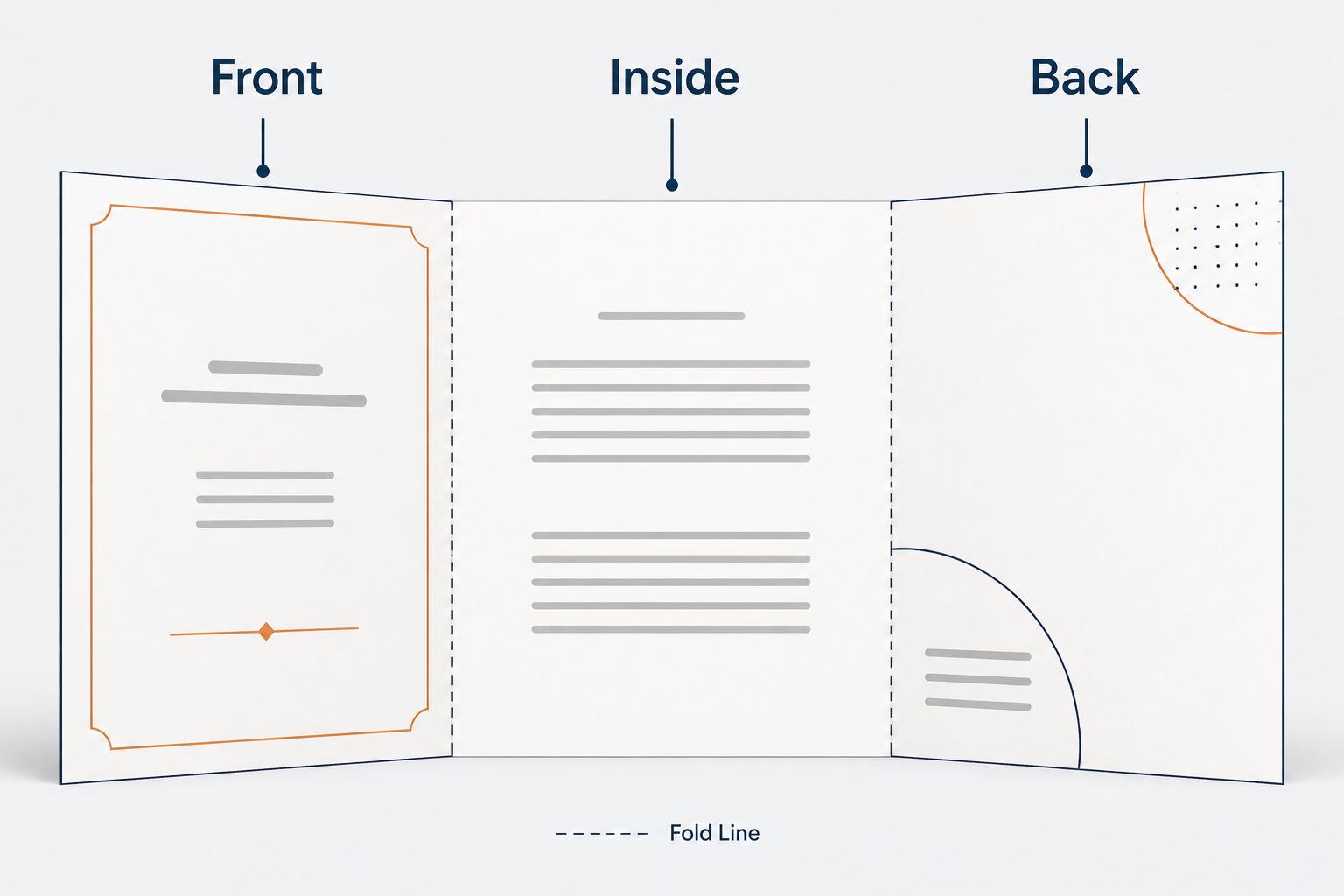
- Tri-fold — three sequential panels for layered details or short programs
- Gatefold — side panels that open from the center for a reveal before the main message
Specialty folds are useful when the reveal supports the message. They are rarely better when they force tiny type, fragile production or awkward mailing.
Front, inside and back panel planning
Plan panels in the order a recipient experiences them:
- Front — occasion cue, visual hook and restrained brand signal when needed
- Inside — primary message, names, details and natural place for a signature
- Back — optional quiet footer: logo, credit or contact for business cards
Assign one clear job per panel. Moving the full paragraph onto the cover usually weakens both the first impression and the opening reveal.
Message hierarchy across panels
Hierarchy should follow the fold sequence. The front needs immediate recognition—what this card is for. The inside holds readable body copy and a clear sign-off. The back stays secondary so it does not compete with the message.
Keep type sizes consistent with reading distance at card scale. Decorative scripts work as accents, not as long paragraphs.
Typography and imagery on folded formats
- Prefer one primary type family plus a restrained accent style
- Leave breathing room around images near the fold
- Avoid placing faces, logos or key words directly on the fold line
- Match photo contrast and color to stock so printed tones stay predictable
Bleed, fold and safe-area considerations
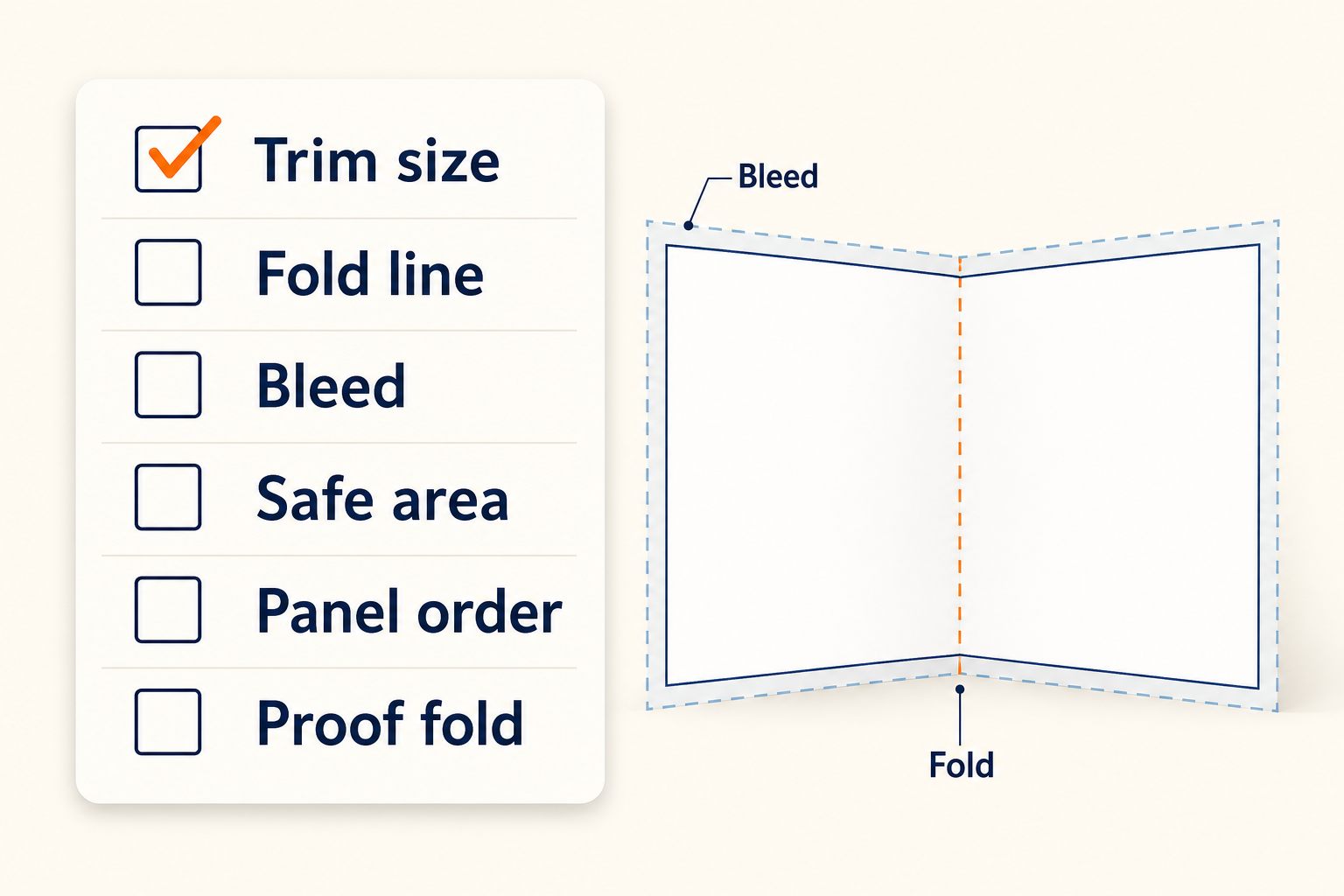
Print-ready folded cards need three related margins: bleed outside trim, a safe area inside edges and a fold gutter where elements should not collide. Critical type, monograms and thin rules near the spine are common failure points after trimming and folding.
Confirm final folded size and orientation early. Landscape vs portrait changes how panels open and how much room the inside message has.
Print and digital versions
Print versions need correct trim, fold marks, paper choice and any finish planned with hierarchy in mind. Digital “folded” presentations are usually flat previews or animated opens; they should keep the same panel order and wording, but they do not replace print proofs for crease and bleed.
If both outputs are required, design for print first, then adapt type contrast and file format for screen sharing.
Practical use cases for the folded format
- Greeting and thank-you notes that need a private inside message
- Invitations where the cover sets mood and the inside holds logistics
- Holiday and corporate greetings with room for names and signatures
- Short event inserts where a tri-fold carries schedule details cleanly
Occasion content still belongs on dedicated guides. Use this page when the deciding factor is how the piece folds and how panels share the load.
Common mistakes
- Dumping the full message on the cover
- Ignoring fold guts so type sits in the crease
- Skipping bleed or placing logos too close to trim
- Choosing complex folds that force unreadable type
- Approving a flat PDF without a folded paper proof
- Mixing panel styles so the set does not feel like one card
Pre-print checklist
- Final folded size and orientation confirmed
- Fold type and panel order documented
- Front, inside and back each have one clear job
- Bleed, safe area and fold gutter applied
- Key elements clear of the crease and trim
- Copy proofed for names, dates and sign-off
- Paper and finish decisions match production method
- A physical fold proof reviewed when possible
Service-oriented folded-card production still lives separately from this educational format guide; when you need broader stationery systems, see stationery design.
Frequently asked questions
What is a folded card?
A folded card is a printed piece that opens along one or more fold lines. The cover sets tone and occasion, while inside panels hold the longer message, details or signature that a single flat panel cannot carry comfortably.
What are the most common folded card formats?
The most common formats are bi-fold (one main fold), tri-fold (three panels in sequence) and gatefold (panels that open from the center). Specialty folds exist, but these three cover most greeting, invitation and event uses.
How should content be arranged across folded card panels?
Put the occasion or visual hook on the front, place the main message and sign-off inside, and keep the back quiet for optional branding or credits. Match hierarchy to the opening sequence so each panel has one clear job.
What bleed and fold margins should be considered?
Use printer bleed outside the trim, keep critical text and logos inside a safe area away from edges and the fold, and leave a small gutter along the fold so artwork and type are not crushed or misaligned when the card closes.