A freelance graphic designer can expand creative capacity quickly—but the relationship works best when businesses understand the model, define scope carefully and evaluate craft the same way they would any serious brand investment. This guide covers what freelancers do, when freelance support fits, how it differs from in-house or agency work and what to clarify before design begins.
What a freelance graphic designer is
A freelance graphic designer is an independent professional who creates visual communication—identity systems, marketing assets, digital graphics, packaging and related design work—outside a permanent employer relationship. Engagements are usually scoped by project, retainer or defined deliverables rather than a full-time role.
That independence is the core advantage and the core constraint: you gain flexible expertise, while owning more of the briefing, coordination and decision-making yourself.
Common freelance graphic design work
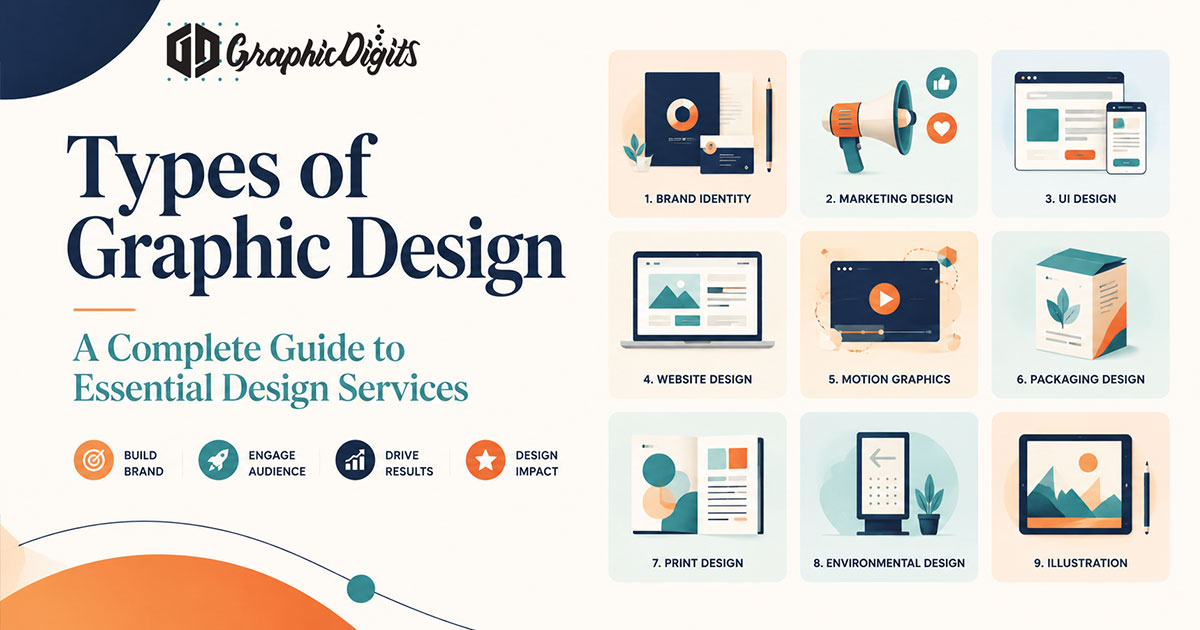
Independent designers often specialize. Looking across types of graphic design helps match your need to the right skill set:
- Logo and brand identity systems
- Print collateral such as brochures, sell sheets and stationery
- Social and digital campaign graphics
- Presentation and pitch decks
- Packaging and product graphics
- UI assets or marketing site layouts (when that is their specialty)
Ask what a designer ships most often. A strong logo portfolio does not automatically mean strong packaging production skills—and vice versa.
When businesses use freelance graphic design
Freelance support tends to make sense when:
- The project is well defined and time-bounded
- You need overflow capacity during a launch or campaign burst
- You want a specialist style without hiring full-time
- An internal marketer can brief and approve work efficiently
- Budget and timeline favor a single focused maker
It is less ideal when brand systems span many touchpoints, several teams need concurrent producers or leadership wants a managed creative process from strategy through production.
Freelance vs agency vs in-house
Choosing a working model is as important as choosing a style. Each option solves a different problem:
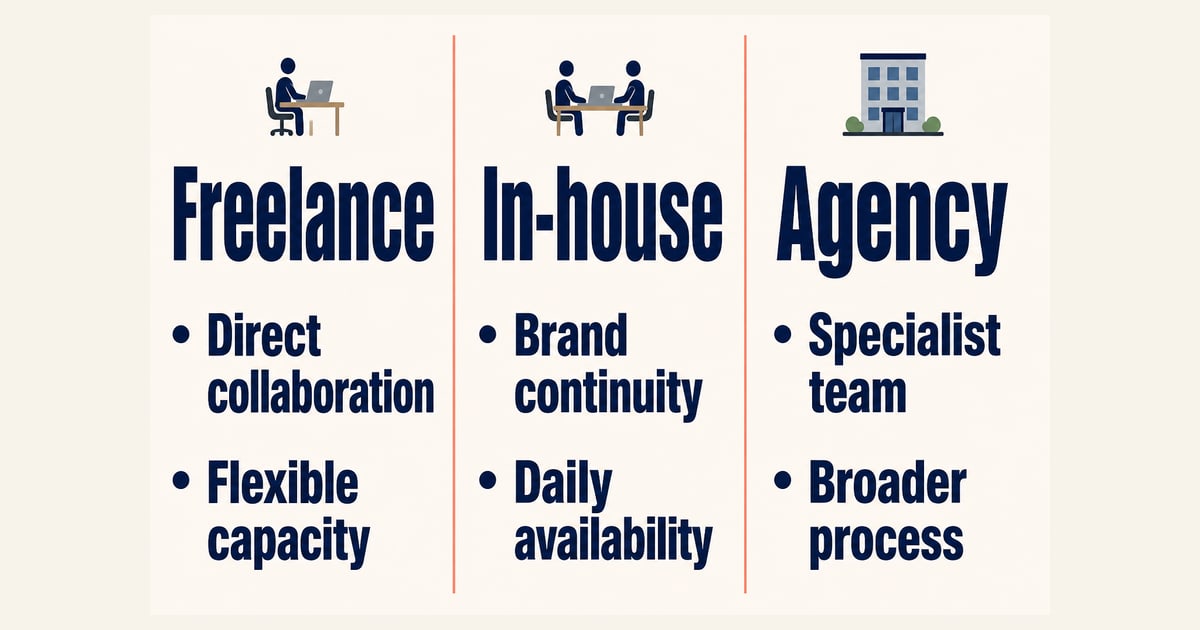
- Freelance: direct collaboration with one designer; strong for clear scopes and specialist craft
- In-house: continuity, institutional knowledge and daily availability; best when design is ongoing and tightly tied to operations
- Agency or studio: multi-role capacity, project management and broader process coverage—see how teams evaluate a graphic design studio or how graphic design studios are typically structured
Commercial pages such as our graphic design agency overview and graphic design firm overview cover ongoing agency-style engagement. This article stays on evaluating independent freelance support.
Benefits and limitations of freelance support
Benefits often include:
- Flexible access to specialized craft
- Shorter communication path between decision-maker and designer
- Ability to staff projects without permanent headcount
- Fit for exploratory or one-off creative work
Limitations to plan for:
- Availability can change with other client commitments
- Backup coverage is usually limited if someone falls ill
- Strategy, research and multi-channel production may need more client-side leadership
- Brand continuity depends on how well assets and guidelines are documented
How to evaluate a freelance graphic designer
Before you commit, review practical signals—not just aesthetics:
- Portfolio relevance: similar problems, industries or formats to your project
- Process clarity: how briefing, concepts, revisions and handoff work
- Communication: response cadence, question quality and status updates
- Tools and files: software used and what you receive at the end
- Availability: realistic start date and weekly capacity
If you want examples of finished brand and marketing systems for comparison while you learn what “good” looks like, browse the design portfolio.
Portfolio review that goes beyond pretty work
Ask:
- What problem was the design meant to solve?
- What constraints shaped the solution?
- Which files were delivered to the client?
- How were revisions handled?
- Can they show work similar to your channel mix?
Case notes and process shots often reveal more than a highlight-only gallery. If answers stay vague, expect ambiguity later on scope and files.
Scope, deliverables and a workable brief
A usable freelance brief usually defines:
- Business goal and audience
- Exact deliverables and sizes/formats
- Brand guidelines, logo files and tone references
- Must-include copy, offers or legal lines
- Decision-maker and feedback timeline
- Number of concept directions and revision rounds
- Milestones and go-live or print date
Ambiguous briefs create revision loops. Clear constraints create better first drafts and fewer surprises.
Communication, feedback and revisions
Agree how feedback will be collected (one consolidated note is better than five parallel threads) and who has final approval. Distinguish “direction change” from “refinement” so revision rounds stay fair. Share brand guidelines early—when they exist—so style decisions do not restart midstream.
A practical freelance design workflow
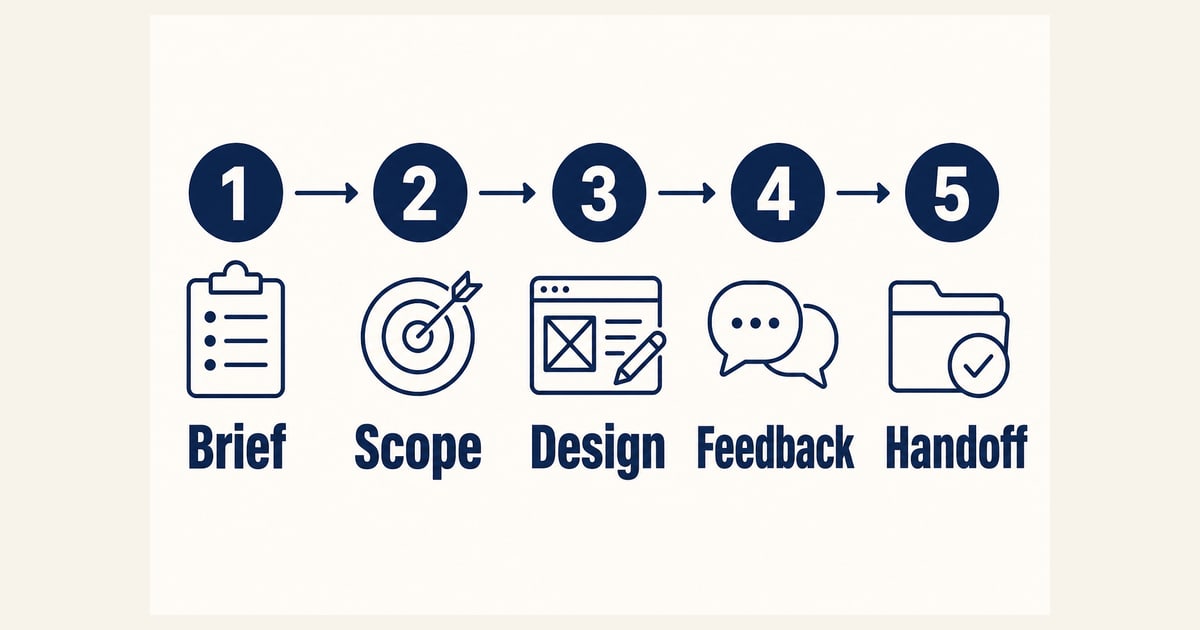
Most successful freelance projects follow a simple path:
- Brief — goals, audience, references and constraints
- Scope — deliverables, timeline, revision structure and file package
- Design — exploration then refinement against brand rules
- Feedback — consolidated, prioritized, decision-ready comments
- Handoff — final exports, source files (if agreed) and usage notes
Files, source files and licensing questions to clarify
Do not assume legal ownership details—clarify them in writing for your jurisdiction and project type. At minimum, ask:
- Which export formats will be delivered (PDF, PNG, JPG, SVG, etc.)?
- Are editable source files included (AI, PSD, Figma, InDesign)?
- What usage rights apply—web, print, packaging, paid ads, resale?
- Are fonts and stock assets licensed for your intended use?
- Who stores the final package after handoff?
Clear file and rights expectations prevent expensive rebuilds when a campaign expands or a vendor needs production-ready artwork.
Red flags to watch for
- Portfolios that cannot explain decisions or deliverables
- Reluctance to define revision rounds or approval owners
- No discussion of file formats or brand guidelines
- Guaranteed “ranking,” “sales lift,” or overnight turnaround promises
- Pressure to start without a written scope
When a studio or agency may be a better fit
Consider a studio or agency model when you need:
- Multiple specialisms on one timeline (brand, web, campaigns)
- Dedicated project management across stakeholders
- Longer retention of brand systems with backup capacity
- Strategy and research alongside production
For how GraphicDigits structures collaboration end to end, see our design process or review our graphic design services.
Practical evaluation checklist
- Relevant portfolio examples reviewed
- Scope and deliverables written down
- Timeline and availability confirmed
- Feedback process and decision owner named
- Revision expectations agreed
- Export package and source-file terms clarified
- Usage rights and asset licensing discussed
- Brand guidelines and reference materials shared
Frequently asked questions
What does a freelance graphic designer do?
A freelance graphic designer is an independent creative who plans and produces visual work—such as logos, brand assets, marketing collateral, social graphics, packaging or presentation design—usually project by project rather than as a full-time employee.
When should a business hire a freelance graphic designer?
Freelance support often fits defined scopes with clear deadlines: a launch campaign, brand refresh piece, overflow production or specialty work where you want a focused maker without building a permanent design team.
What should I review before choosing a freelance designer?
Review portfolio relevance, process clarity, communication habits, availability, revision expectations, deliverable formats and how ownership or licensing will be handled before design work begins.
What is the difference between a freelance designer and a design agency?
A freelancer is usually one primary maker you work with directly. An agency or studio typically brings account structure, multi-specialist capacity and broader process coverage when projects need coordination across several disciplines.