Graphic design is not one skill applied the same way everywhere. It is a set of related disciplines—each with different deliverables, audiences, and production constraints. Understanding the main types of graphic design helps businesses brief projects clearly and helps designers choose where to specialise.
This guide covers ten practical categories, what each typically produces, and where teams use them. For a service-level overview of how these disciplines are delivered commercially, see graphic design services.
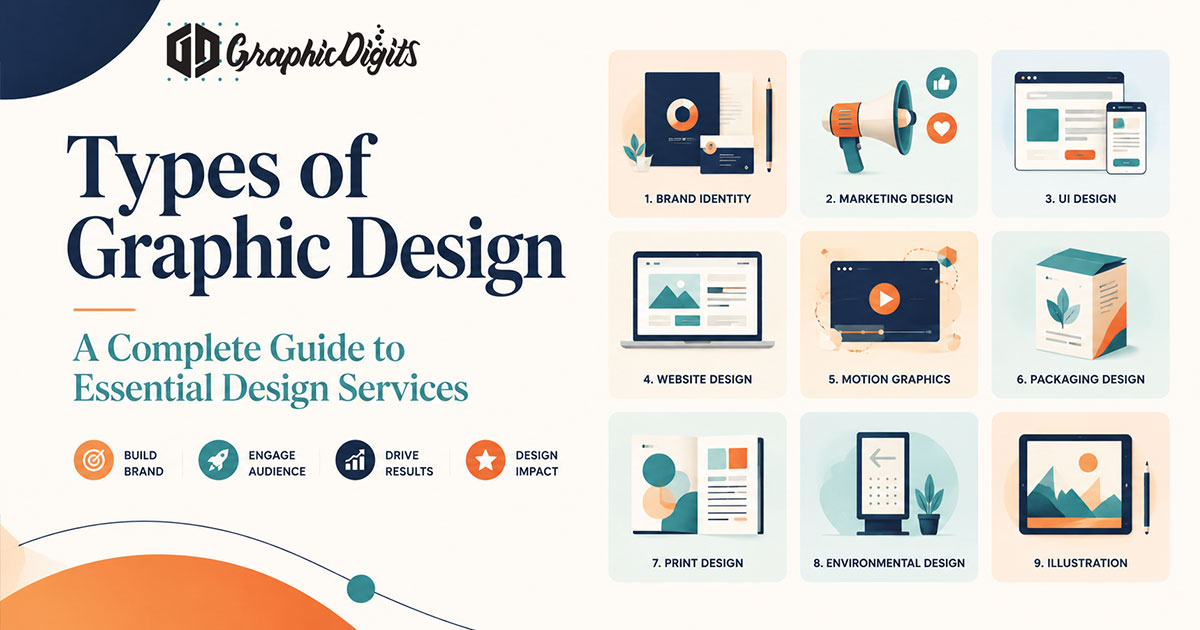
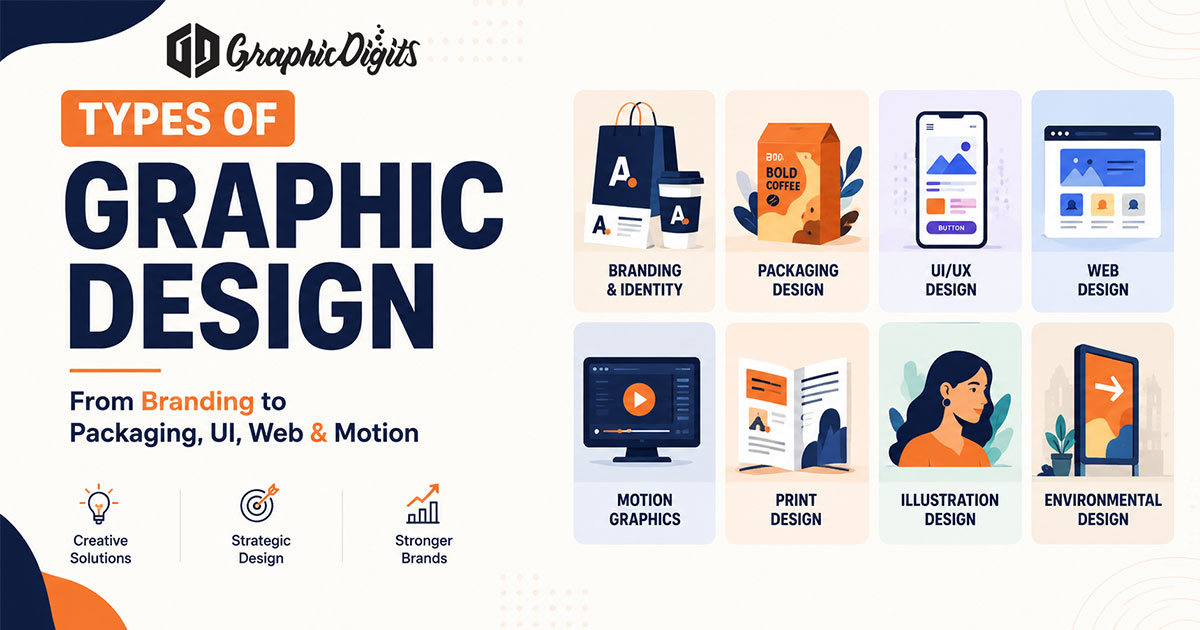
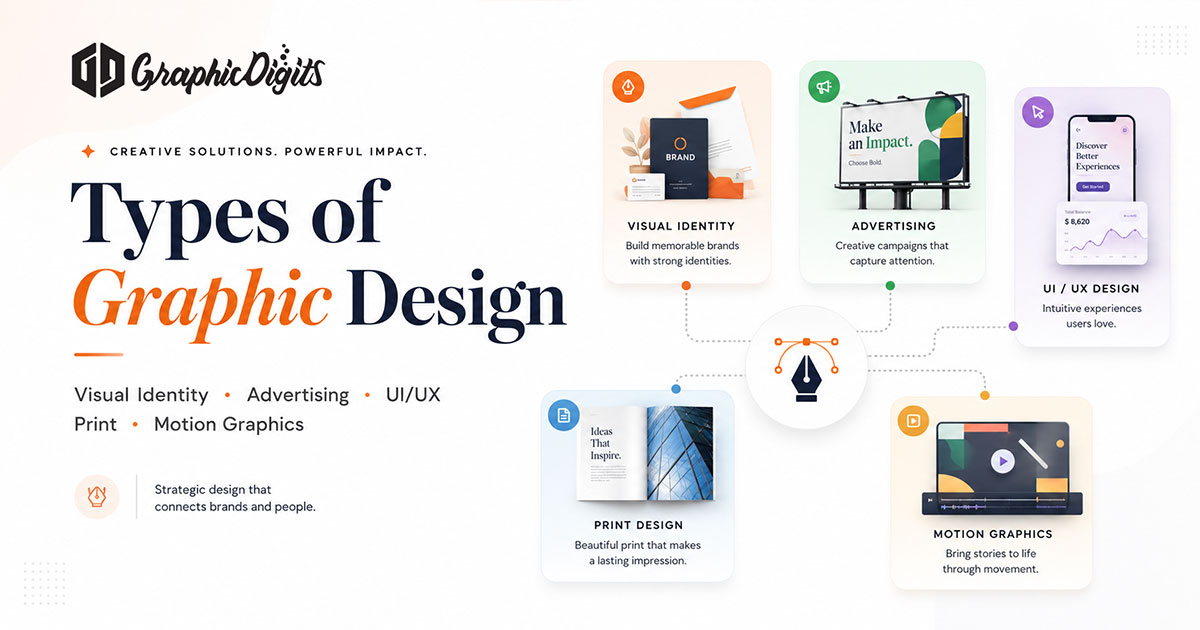
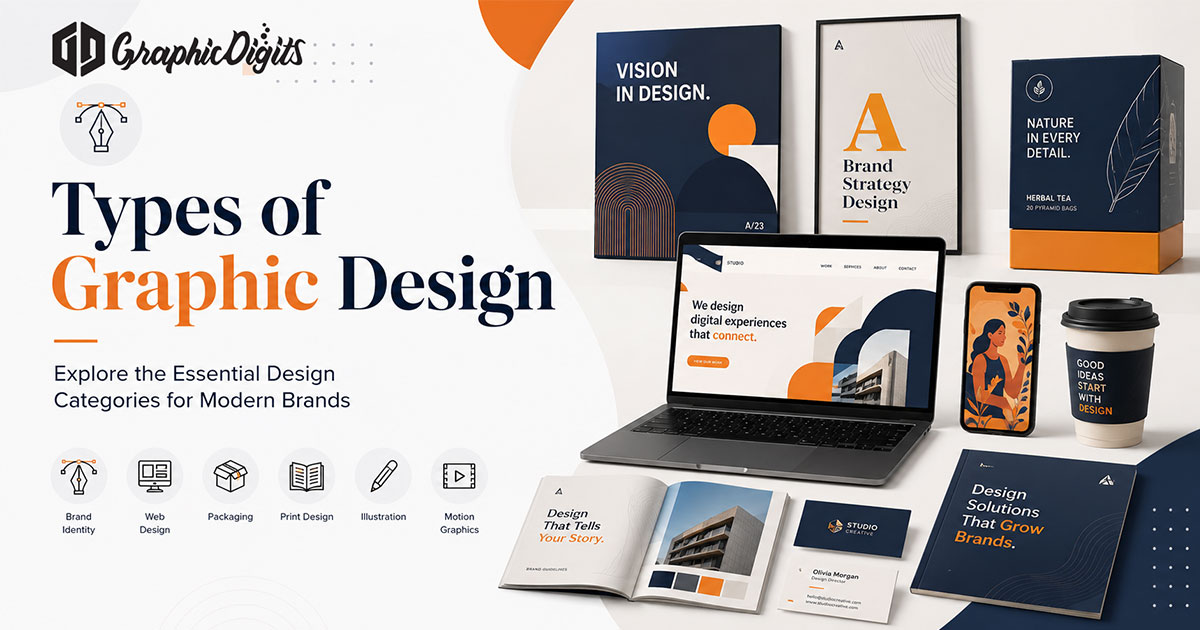
At a glance. The ten types of graphic design covered below are:
- Visual identity and branding design
- Marketing and advertising design
- Publication and editorial design
- Packaging design
- Environmental and signage design
- Motion graphics
- UI and digital interface design
- Illustration and graphic art
- Presentation and infographic design
- Social media design
1. Visual identity and branding design
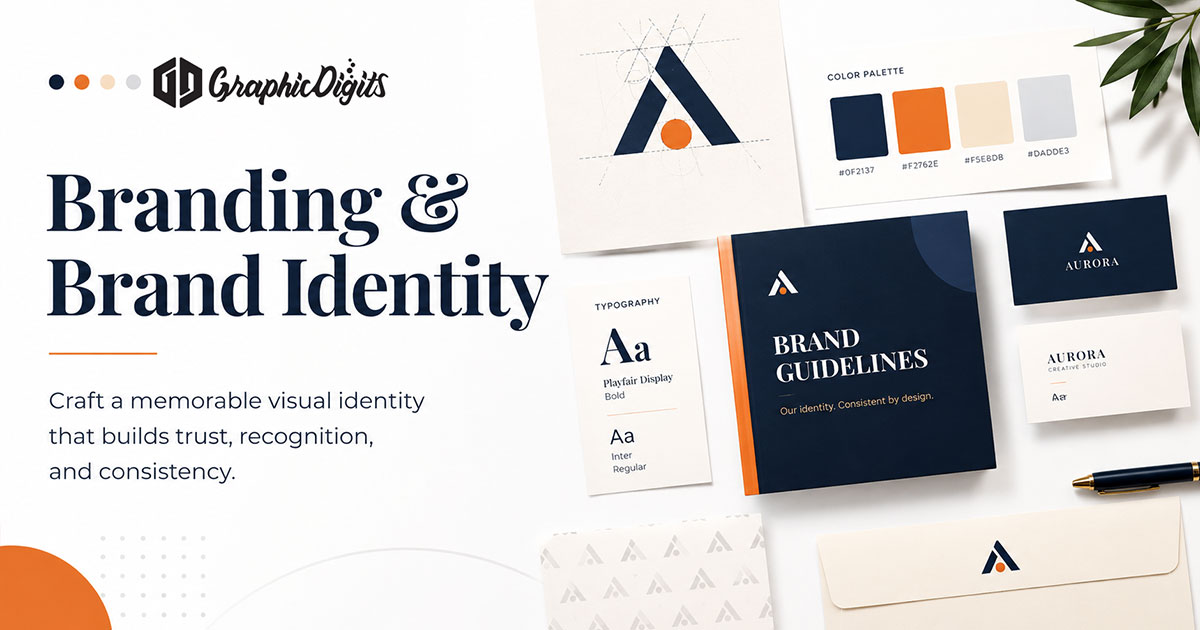
Visual identity design builds the recognisable system behind a brand: logo, colour, type, icon style, imagery direction, and usage rules.
- Typical deliverables: logos, brand marks, colour and type systems, icon sets, brand guidelines
- Common uses: company launches, rebrands, franchise consistency, multi-channel identity control
Identity work is the reference system other design types should follow. Explore applied brand design when you need a durable visual system rather than a one-off asset.
2. Marketing and advertising design
Marketing design creates campaign visuals that promote offers, events, and brand messages across paid and owned channels.
- Typical deliverables: ads, flyers, brochures, banners, email headers, campaign kits
- Common uses: launches, seasonal promotions, lead generation, event marketing
Strong marketing design stays on-brand while adapting hierarchy and messaging for each format and platform.
3. Publication and editorial design
Publication design organises longer reading experiences—reports, magazines, catalogues, newsletters, and books—so content remains readable across many pages.
- Typical deliverables: multi-page layouts, editorial templates, catalogues, annual reports
- Common uses: thought leadership, company reporting, product catalogues, member communications
4. Packaging design
Packaging design combines brand storytelling with structural and print realities: dielines, materials, labels, and retail or unboxing context.
- Typical deliverables: product packs, labels, sleeves, gift packaging, retail display graphics
- Common uses: consumer goods, DTC brands, gifts, limited editions
Production detail matters here more than in most digital formats. See specialised packaging design when shelf and manufacturing constraints are part of the brief.
5. Environmental and signage design
Environmental graphic design shapes how people experience physical spaces through signage, wayfinding, murals, and exhibition graphics.
- Typical deliverables: office and retail signs, wayfinding systems, booth graphics, large-format displays
- Common uses: offices, showrooms, events, campuses, hospitality spaces
6. Motion graphics
Motion graphics add timed movement to logos, explainers, social clips, UI transitions, and video overlays.
- Typical deliverables: animated logos, explainer sequences, lower-thirds, social motion posts
- Common uses: product explainers, launch videos, interface feedback, social campaigns
7. UI and digital interface design
UI design focuses on the look and interactive clarity of websites, apps, dashboards, and product interfaces.
- Typical deliverables: screens, component libraries, icons, style systems for digital products
- Common uses: SaaS products, mobile apps, customer portals, internal tools
UI often overlaps with UX research and product design, but the graphic layer is what users see and tap. For product interfaces specifically, review UI design.
8. Illustration and graphic art
Illustration creates custom imagery that photographs or stock assets cannot express as clearly—characters, conceptual scenes, icons, and editorial art.
- Typical deliverables: custom illustrations, icon systems, mascots, editorial artwork
- Common uses: brand storytelling, education content, product explainers, publications
9. Presentation and infographic design
These formats turn complex information into scannable visuals for meetings, reports, and social or landing-page education.
- Typical deliverables: slide decks, pitch presentations, process diagrams, data infographics
- Common uses: sales pitches, executive updates, fundraising, explainers
Compare formats based on delivery context: live talking points often need presentation design, while shareable one-page explanations may fit infographic design.
10. Social media design
Social media design adapts brand systems to fast platform formats—posts, stories, covers, ads, and carousel templates.
- Typical deliverables: post templates, story sets, profile/cover art, paid social creatives
- Common uses: always-on brand presence, launches, community updates, paid acquisition
Templates and brand-safe variants help teams publish consistently. See social media graphic design when volume and channel fit matter as much as one hero image.
How businesses choose the right design type
Match the category to the job:
- Need recognition and consistency → visual identity
- Need promotion and response → marketing design
- Need a physical product presence → packaging
- Need a usable digital product → UI design
- Need clear explanation of complex ideas → presentations or infographics
- Need ongoing channel presence → social media design
Many projects span more than one type. A rebrand may start with identity, then cascade into marketing templates, packaging updates, and UI refreshes.
How design categories work together
Identity is usually the foundation. Marketing, social, packaging, and UI should inherit its colour, type, and image rules, then adapt composition for each medium. Motion often extends still assets. Publication and presentation design apply the same system to longer information sequences.
Common misconceptions
- “Graphic design is only logos.” Logos are one identity deliverable among many systems and formats.
- “Any designer can do every type equally well.” Tools overlap, but packaging production, motion, and complex UI each have specialised practice.
- “Web design and UI design are identical.” They overlap, but website projects can include broader content and page architecture beyond interface components.
- “Print is obsolete.” Packaging, signage, events, and reports still rely on print-aware layouts.
Conclusion
The different types of graphic design exist because channels, audiences, and production methods differ. Use this map to brief the right specialist, sequence work sensibly, and keep brand consistency across every format you need.
Planning a project across several categories? Request a free design quote from Graphic Digits.
Frequently asked questions about types of graphic design
What are the main types of graphic design?
Common categories include visual identity, marketing and advertising, publication design, packaging, environmental graphics, motion graphics, UI design, illustration, presentation and infographic design, and social media design.
Is web design the same as UI design?
Not exactly. UI design focuses on the visual and interactive interface of digital products. Web design can include broader website structure, page layouts, and content presentation, often overlapping with UI but not limited to interface components alone.
How do businesses choose the right type of graphic design?
Start with the goal and channel: brand recognition needs identity systems, campaigns need marketing design, products need packaging, digital products need UI, and long documents need publication or presentation design.
Can one designer cover every type of graphic design?
Some generalists cover several categories well, but specialised work such as motion, packaging production, or complex UI systems often benefits from designers who focus on those skills and workflows.