What branding means
Branding is how a business shapes the meaning people associate with it over time. It includes purpose, audience understanding, positioning, personality, messaging and the reputation that forms through every interaction—from a first website visit to a support email.
Branding is not only design. Visual work becomes part of branding when it reinforces a deliberate story about who you are for and why that matters. For production support after you clarify direction, see branding design services.
What brand identity means
Brand identity is the visual and verbal system used to express the brand consistently: logo, typography, color, imagery style, layout patterns, tone of voice and the rules that keep those pieces aligned. It is part of the broader branding system—not a replacement for strategy, positioning or experience.
For a practical how-to on building a brand identity system, see the brand identity design guide. For production-focused identity systems, review brand design services.
Branding vs brand identity
Branding covers strategy, perception, positioning, messaging and customer experience. Brand identity is the expression layer—how the brand looks and sounds when those decisions show up in the market. Separating the two helps teams brief the right work: clarify meaning first, then design the system that carries it.
| Topic | Branding | Brand identity |
|---|
| Focus | Meaning, reputation and differentiation | Expression through design and language systems |
| Typical outputs | Positioning, messaging pillars, personality | Logo, type, color, imagery, guidelines |
| Primary question | What should people believe about us? | How do we look and sound when we show up? |
| Success signal | Clear, consistent choice in the market | Recognizable, usable assets across channels |
Teams often use the terms interchangeably. Keeping them distinct helps decide whether a business needs better strategy, better design systems—or both.
Examples in practice
Professional services firm. Branding might position the firm as a calm advisor for mid-market founders, with messaging that emphasizes clarity over jargon and a tone that stays steady under pressure. Brand identity then pairs a restrained wordmark, readable type, a limited palette and layout rules so proposals, decks and the website feel like the same firm.
Healthcare organization. Branding defines who care is for, what patients should trust and how staff speak about outcomes. Brand identity translates that into approachable color, photography guidance, icon rules and signage patterns so clinics, forms and digital portals feel coherent without looking promotional.
SaaS / business platform. Branding clarifies the category claim, primary buyer and product story across onboarding and support. Brand identity locks logo usage, UI-adjacent type and color tokens, product imagery and visual rules so ads, docs and the product UI do not drift apart.
Hospitality brand. Branding sets the guest promise—quiet luxury, neighborhood warmth or efficient stay—and how that promise shows up in service scripts. Brand identity covers the mark, typography, materials palette, imagery mood and layout patterns for rooms, menus and booking touchpoints.
Strategy, positioning and messaging vs visual identity
Brand strategy decisions—purpose, audience, positioning and messaging—explain why the brand exists and what space it owns. Visual identity then turns those decisions into signals people can see and reuse. A new logo without clearer positioning can look polished while still leaving customers unsure what makes the offer unique.
Brand purpose and audience
Purpose answers why the organization exists beyond products. Audience clarity answers who the brand is primarily for and what those people care about. Both guide tone, offers and design priorities so the brand does not try to please everyone with the same message and visual language.
Positioning, personality and voice
- Positioning: the competitive space you choose and the promise you can own
- Personality: human traits that steer how the brand behaves
- Voice and tone: how copy sounds, and how it flexes by channel without losing character
Naming sits nearby when a business is launching or renaming; the name should support the chosen territory without forcing awkward visual or verbal gymnastics later.
Visual identity building blocks
Logo
The logo is a recognition mark, not the entire brand. Plan primary and simplified versions so it works in navigation bars, favicons, packaging and social profiles.
Typography and color
Typefaces set formality and rhythm; color carries emotion and hierarchy. Limit the palette and document usage so presentations, websites and print materials stay coherent.
Imagery and visual system
Photography style, illustration rules, iconography and layout patterns complete the system. Together they make new assets faster to produce because creators are not inventing a new look for every campaign.
Applied identity work is easier to evaluate in a design portfolio. When you need a production partner for visual systems, start with brand design; for broader packages and rollout, see branding design.
Brand guidelines and consistency
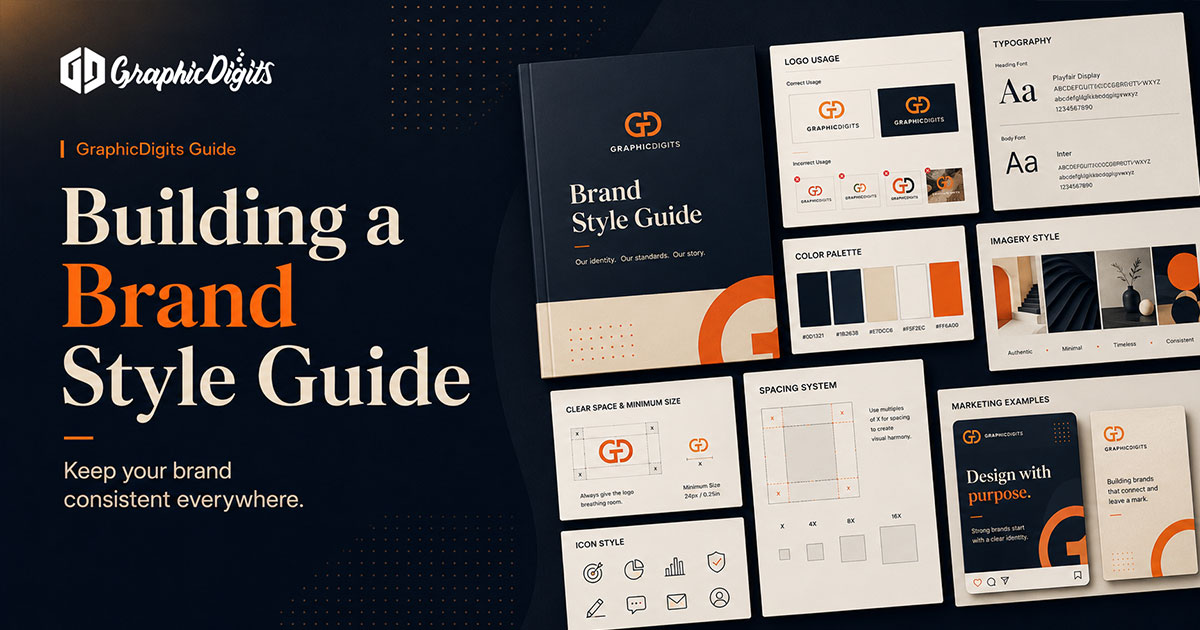
Guidelines (or a style guide) document how strategy and identity show up day to day: logo clear space, color values, type scales, do/don't examples and basic messaging cues. For building that document, see the brand style guide guide.
Internal consistency matters as much as external polish. Sales decks, support replies and hiring pages all teach customers (and candidates) what the brand stands for.
Customer touchpoints
Identity should travel across websites, social profiles, packaging, proposals, signage and email. Map priority touchpoints first so the system solves real application problems rather than living only as a presentation deck.
How branding and brand identity work together
Strategy without identity stays abstract. Identity without strategy becomes decoration. The strongest brands use branding decisions to brief design, then use identity to make those decisions visible and repeatable. Because identity sits inside branding, drift in either layer shows up as inconsistency— even when customers cannot name the cause.
When you are ready to move from definitions into system-building, follow the brand identity design guide for how to assemble logos, type, color and rules into a usable system.
A practical sequence
- Clarify purpose, audience and positioning
- Define personality, voice and core messaging
- Develop visual identity against that brief
- Document guidelines and roll out to priority channels
- Review real-world use and refine where application breaks
Collaboration rhythms for multi-step work are outlined in our process.
Common misunderstandings
- Assuming a new logo alone will fix weak positioning
- Treating brand guidelines as optional after launch
- Letting every team invent its own colors and templates
- Confusing trend-chasing visuals with durable differentiation
- Skipping audience clarity before visual exploration
When a business needs a brand refresh
A refresh may be due when materials look dated, channels no longer match each other, the offer has changed, or the brand no longer fits the customers you want. A full rethink is more likely when positioning is unclear—not only when the logo feels tired.
When identity-only work may be insufficient
If teams disagree on who you serve, what you promise or how you sound, redesigning visuals alone will not settle those debates. Resolve strategy and messaging gaps first, then update identity so design has a stable brief. If you are comparing partners for that broader work, the best branding agencies evaluation guide covers selection criteria without ranked lists.
Practical checklist
- One-sentence purpose and primary audience defined
- Positioning statement and proof points drafted
- Personality and voice notes approved
- Logo system, type, color and imagery direction established
- Guidelines drafted with do/don't examples
- Priority touchpoints listed for rollout
- Owners assigned for ongoing brand consistency
Conclusion
Branding shapes meaning; brand identity makes that meaning recognizable and usable. Keep both in view so strategy and design reinforce each other across every customer touchpoint. For visual identity systems, review brand design services. For broader branding packages and rollout support, start with the branding design hub rather than treating identity as a logo-only task.
Frequently asked questions about branding and brand identity
What is the difference between branding and brand identity?
Branding is the broader practice of shaping how people understand, remember and choose a business—strategy, positioning, messaging and experience. Brand identity is the visual and verbal system that expresses that strategy through logos, type, color, imagery, voice and guidelines. Identity is part of branding, not a separate substitute for it.
Is a logo the same as a brand identity?
No. A logo is a core mark within brand identity, but identity also includes typography, color, imagery, layout patterns, tone of voice and rules for applying those elements consistently across channels.
What usually comes first, brand strategy or visual identity?
Strategy and positioning usually come first so design choices have a purpose. Visual identity then translates those decisions into recognizable, usable assets. Skipping strategy often leads to attractive systems that do not support clear differentiation.
When does a company need branding work versus identity work?
Choose broader branding work when positioning, audience focus, messaging or experience feel unclear. Choose identity-focused work when strategy is solid but logos, type, color, imagery and guidelines are inconsistent or incomplete. Many projects need both: clarify meaning first, then express it consistently.