What “best branding agencies” should mean
There is no universal best branding agency. The right partner depends on your business need, scope, expertise required, process fit, and how well the team can collaborate with your stakeholders. People searching this topic are rarely looking for an unsupported global ranking—they want a framework to evaluate fit.
This guide explains how to evaluate agencies: what branding work typically includes, which capabilities matter, how to compare proposals and which red flags to watch for. It is not a ranked Top 10. When you need professional visual identity execution after evaluating fit, see brand design services.
Branding agency vs brand identity agency vs creative agency
Firms use these labels inconsistently. Use them as buyer clarity—not as guarantees of scope:
- Branding agency: broader brand strategy, identity, positioning, messaging, and rollout support depending on the engagement.
- Brand identity agency: focuses more specifically on visual identity systems such as logo, typography, color, imagery, and guidelines.
- Creative agency: may support campaigns, content, advertising, design, and communications beyond core identity work.
- Brand strategy specialist: focuses more heavily on positioning, research, audience, architecture, messaging, and strategic direction.
Always confirm deliverables in writing. A “creative agency” may do deep identity work; a “branding agency” may still be visual-only.
What a branding agency does
A branding agency helps define how a business is understood and expressed—through strategy, visual systems and consistent application. Strong partners connect research and positioning to practical deliverables teams can use every day.
Strategy vs visual identity
Strategy clarifies audience, positioning and personality. Visual identity turns that thinking into logos, color, type and graphic language. Skipping either usually produces assets that look finished but lack direction. For fundamentals, read branding and brand identity.
Research and discovery
Discovery may include stakeholder interviews, competitive context, audience notes and current-asset audits. Ask what inputs the team needs from you and how findings influence creative decisions.
Positioning, naming and messaging
Not every project includes naming. Messaging and tone guidance are common when the brand story must stay consistent across sales, website and internal communication. Confirm whether copywriting is in scope or a separate workstream.
Visual identity, guidelines and systems
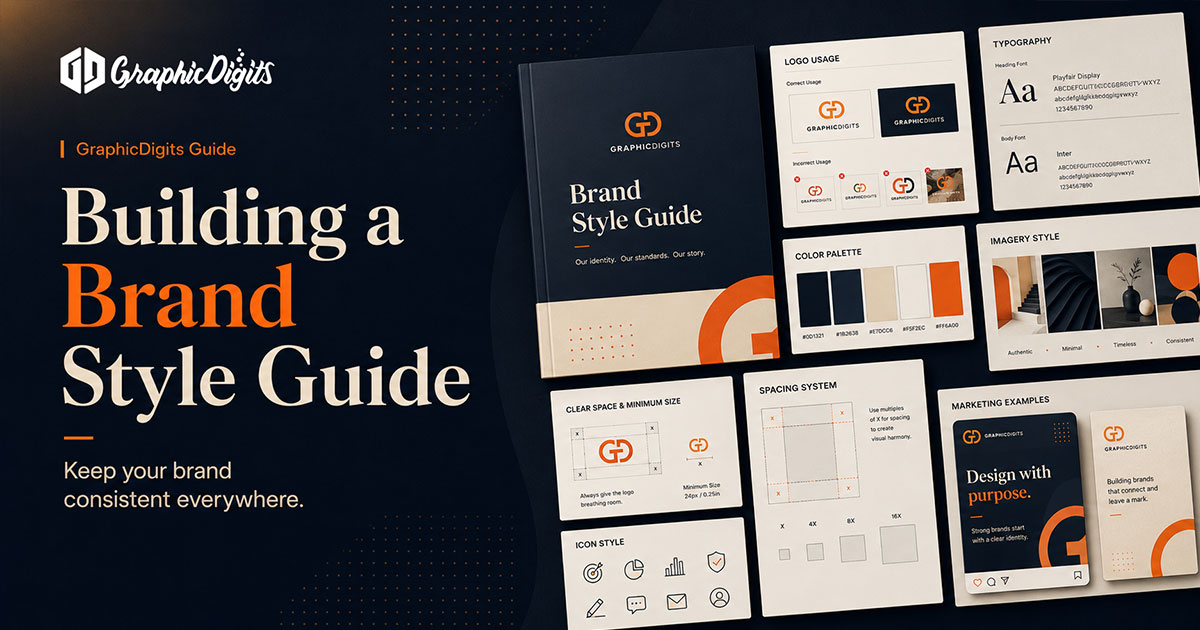
Beyond a logo mark, useful identity work includes usage rules, color and type systems, layouts and examples that reduce guesswork. Style guides help teams stay consistent; see building a brand style guide.
Rollout, digital and website application
Brands only work when they travel: website UI, social templates, decks, packaging or stationery. Ask how implementation support is handled after the core identity is approved. Bundled rollout and package-style engagements may fit branding design packages when that is the structure you need—distinct from focused identity execution.
How to define project scope before you hire
- Business stage: launch, refresh, full rebrand or system cleanup
- Must-have deliverables: logo, full identity, guidelines, templates
- Channels that need immediate application
- Decision makers and review process on your side
- Budget range and preferred timeline (without forcing guarantees)
- Engagement model: project, phased, retainer, or ongoing design support
Clear scope makes proposal comparison fair. Vague briefs invite mismatched quotes and later change orders. Prefer partners who show relevant problem-solving for your industry or business model—not only superficial sector logos in a deck.
How to Prepare a Brief Before Contacting a Branding Agency
A useful brief gives agencies enough context to propose realistic phases—without over-directing the creative solution. Capture these items before outreach so discovery calls stay comparable:
- Business and audience context—what you do and who you serve
- Current brand problem and what triggered the project now
- Objectives and how you will judge success internally
- Scope and required deliverables (identity, guidelines, templates, rollout support)
- Existing brand assets, even if outdated
- Decision-makers and stakeholders who approve creative
- Timing expectations for phases and launch
- Budget or engagement expectations where appropriate (ranges, not rigid guarantees)
- Success criteria and any legal, regulatory or co-branding constraints
Reference brands you admire are helpful when you note what you like—not copy requests. Attach current files so partners can see what exists before proposing a refresh or rebuild.
A practical buyer scoring framework
Use the same criteria for every firm on your shortlist so “best” becomes a scored fit outcome—not a marketing claim. Rate each partner on:
- Strategic fit — Do they ask about audience and goals before showing concepts?
- Portfolio relevance — Can they explain process and outcomes, not only polish?
- Process clarity — Are discovery, concepts, refinements and handoff phased in writing?
- Deliverable clarity — Which files, guidelines and applications are included?
- Collaboration — Who does the work after the pitch, and how do reviews run?
- Scalability — Will the system travel across teams, channels and future growth?
- Ongoing support — Does the engagement end at handoff or include rollout help?
- Ownership / handoff — Which assets and IP will you own, and in what formats?
Keep scoring simple and comparable. Avoid invented numeric SEO scorecards or unsupported competitor leaderboards.
How to evaluate portfolios
Look for relevant problem-solving, not only aesthetic polish. Assess whether case stories show the problem solved, system thinking across applications, consistency of the identity, and quality of rationale—not merely visual style. Review applied work in a design portfolio and ask which examples match your industry complexity—even if the category is adjacent rather than identical.
Process transparency and collaboration
Ask how a typical engagement moves from discovery to concepts to refinements to handoff. Transparent partners explain workshops, review rounds, file formats and who owns each milestone. Use a clear design process overview as a reference when you compare how other teams phase discovery, design and handoff.
Deliverables, ownership and file handoff
- Source files (vector/logo packages) and approved export formats
- Color values, type licenses and usage notes
- Guideline documents or component systems
- Template files your team can edit
- Clear IP/ownership and licensing language in the proposal
- Who owns rollout after handoff versus optional ongoing support
Confirm deliverables, editable or source files where applicable, ownership, guideline documentation, and rollout responsibilities before you sign. This is practical scope clarity—not legal advice.
Distinguish brand design and identity deliverables from printing, fabrication or physical production. Many engagements are design-not-print: agencies deliver systems, guidelines and print-ready or digital files, while paper, quantities, vendors and press runs usually stay with you or your printer unless production is explicitly in scope.
Revision rounds and approval expectations
Before you compare proposals, clarify how feedback will work. Ask each agency to define included concept directions, revision rounds, the approval process, how scope changes are handled and any process or cost for additional revisions. Clear rounds protect timeline and quality; vague “unlimited” promises often hide undefined scope.
Timelines, pricing and scalability
Brands take iteration. Prefer estimated ranges tied to phases over absolute promises. When comparing cost, ask what is included in research, design rounds, meetings and post-delivery support. Lowest quote is rarely the cheapest outcome if key deliverables are missing.
Ask whether the system can scale across teams, channels, products and future growth—and whether the engagement ends at handoff or includes rollout and ongoing design support.
How to compare branding agency proposals
- Match scope line by line against your brief
- Score discovery depth and strategy outputs
- Check revision rounds and decision checkpoints
- Confirm ownership, handoff and rollout support
- Assess communication fit with your stakeholders
- Weigh total investment against usable deliverables
Red flags
- Vague “growth guarantees” or revenue promises
- No clarification of who does the work
- Portfolio that cannot explain process or outcomes
- Unclear ownership of logo and brand files
- Pressure to start without a written scope
- Template-only solutions presented as custom strategy
Questions to ask a branding agency
- What does discovery include, and who participates?
- How many concepts and revisions are included?
- What files and guidelines will we receive at the end?
- How do you handle website and marketing application?
- Who is on the day-to-day team?
- What do you need from us to stay on schedule?
Agency vs freelancer vs in-house
Freelancers can work well for focused visual updates. In-house teams suit ongoing production when systems already exist. Agencies are often useful when strategy, multi-stakeholder alignment and a broader identity system must move together. Choose based on complexity—not labels.
For related identity design depth, see brand identity design.
Checklist for choosing a branding partner
- Written goals and success criteria for the project
- Shortlist based on relevant portfolio quality
- Discovery call with decision makers present
- Side-by-side proposal comparison (scope + process)
- Reference questions about communication and handoff
- Signed agreement covering ownership and phases
Conclusion
Finding the best branding agencies for your business means evaluating fit: strategy quality, clear process, useful deliverables and collaborative communication. Skip unsupported rankings and scorecards that lack transparent methodology. When you want professional identity execution after running this checklist, explore professional brand identity design.
Frequently asked questions about choosing branding agencies
How do you evaluate a branding agency?
Compare strategy depth, relevant portfolio work, process clarity, proposed deliverables, ownership of files, communication style and realistic timelines. The best fit is the partner that matches your scope—not the one with the biggest claims.
What is the difference between a branding agency and a brand identity agency?
A branding agency often covers broader strategy, positioning, identity, messaging and rollout depending on scope. A brand identity agency focuses more specifically on visual systems—logo, typography, color, imagery and guidelines. Labels vary, so confirm deliverables rather than relying on the firm name alone.
What services should a branding agency provide?
Most branding engagements cover discovery, positioning, visual identity, messaging support where needed, guidelines or systems and a planned rollout to key channels. Confirm exactly what is included before comparing proposals.
What questions should you ask before hiring a branding agency?
Ask who will do the work, how decisions are made, what is included in each phase, how revisions work, which files you will own, and how the brand will transfer to your website and marketing teams after delivery.
How do you compare branding agency proposals?
Score proposals on scope clarity, research depth, deliverables, collaboration model, file handoff and total investment—not on vague promises. Prefer transparent phases over lowest price alone when long-term brand use is the goal.
What should you prepare before contacting a branding agency?
Write business context, the current brand problem, desired outcomes, scope and must-have deliverables, channels that need immediate application, decision makers, timing and engagement expectations. Attach existing assets so agencies can propose realistic phases.
How should revision rounds be compared between agencies?
Compare included concept directions, feedback rounds, the approval process and how scope changes are handled. Unlimited free revisions often hide vague scope; clear rounds, change-request rules and any additional revision costs protect timeline and quality.