What good table tent design solves
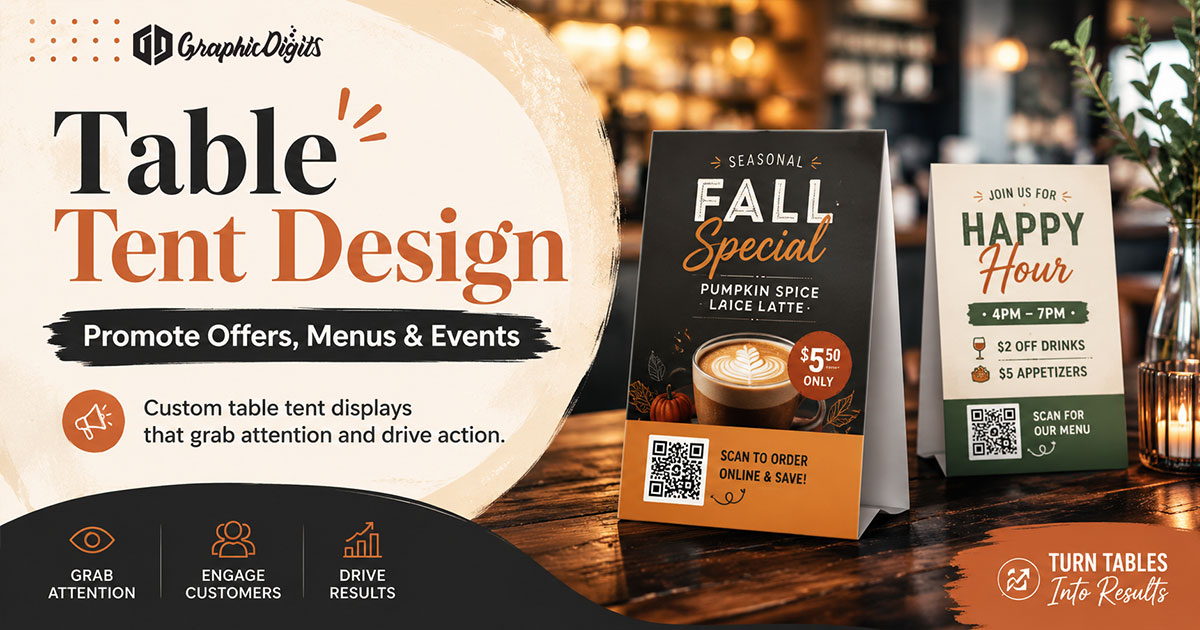
Table tent design sits between signage and print collateral: a compact, two-sided message that stays in the guest's sightline. Strong cards communicate one offer or instruction quickly, then send people to a next step—scan, ask staff, order a special or visit a landing page.
This article is a planning guide. For restaurant and hospitality collateral that may include table tents as part of a larger package, review menu design services.
Where table tents perform well
- Restaurants and cafés highlighting specials or seasonal items
- Bars promoting featured drinks with high-contrast layouts
- Hotels and venues directing guests to amenities or events
- Trade shows and reception desks with short QR or schedule prompts
- Waiting areas that need quiet, readable instructions
Sizes, folds and reading distance
Start with viewing distance, not a random template. Closer tabletops can support denser hierarchy; farther or dimmer spaces need larger type and stronger contrast. Common fold styles include tented (inverted V), pyramid and angled standees—each changes how much content each face can carry.
- Confirm finished face size before writing copy
- Leave safe margins away from the crease and base
- Avoid placing critical text across a fold line
- Proof at actual size under typical room lighting
Hierarchy, offers and QR placement
- Lead with one headline a guest can grasp in a couple of seconds
- Support with one short benefit, price cue or detail line
- Close with a clear action: ask staff, scan, order or visit
- Keep QR codes large enough to scan and paired with a reason to scan
Related short-form print planning also appears in flyer design and brochure work when offers spill beyond a single tent face.
Materials, coatings and durability
Food service and bar environments punish soft stock. Ask printers about heavier card, soft-touch options and wipeable coatings when spills or frequent handling are expected. Match production choices to campaign length—short promos can stay lighter; reusable station cards often need tougher finishes.
Print-ready checklist
- Final dimensions and fold diagram approved
- Bleed and safe area included in the file
- Fonts embedded or converted appropriately
- Images high enough resolution for print
- Colors defined for the print method (CMYK or printer profile)
- Physical proof reviewed when contrast or lighting is uncertain
For broader process context around reviews and handoff, see our process.
Common table tent design mistakes
- Too many offers on one face
- Low contrast type in dim rooms
- QR codes without context or scannable size
- Brand colors fighting photos on both panels
- Designing for desktop preview only and skipping physical proofs
How table tents relate to menu systems
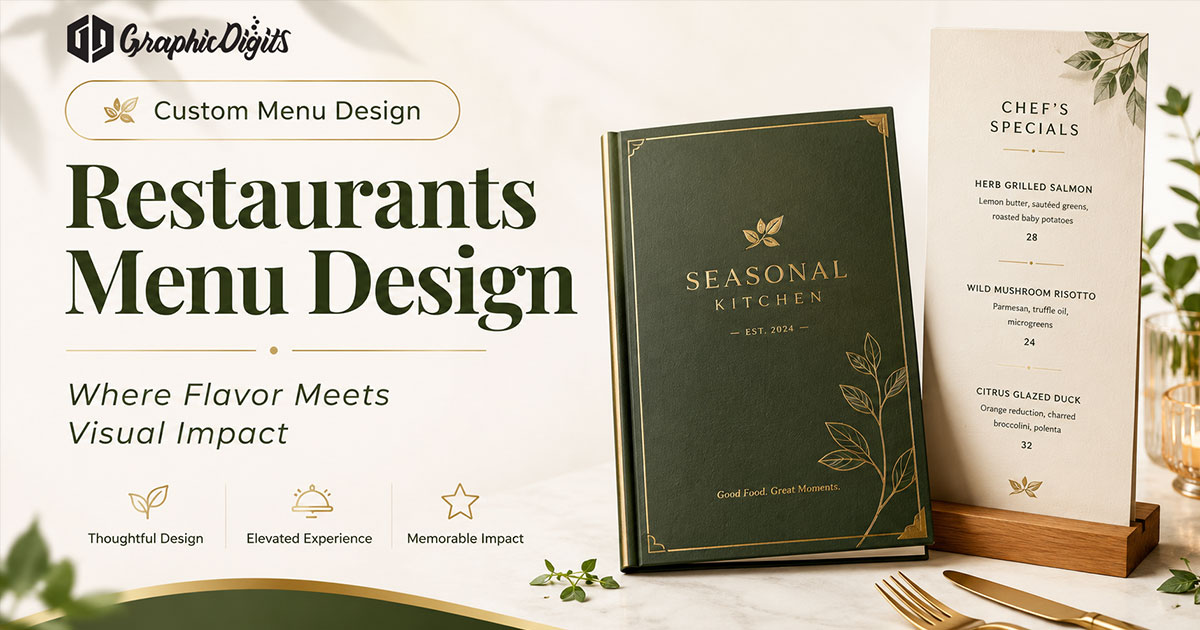
Table tents work best when they extend a larger visual system—menus, specials boards and digital assets—not when they invent a one-off look. If you need restaurant menu systems with supporting collateral, use the commercial menu design page, and compare related restaurant menu guidance on restaurant menu design.
Conclusion
Effective table tent design is planning work: one message, readable hierarchy, sensible folds and production choices that survive the room. Use this guide to brief stakeholders, then move to menu and print services when you need designed files ready for your printer.
Frequently asked questions about table tent design
What is a table tent used for?
A table tent is a small folded display that stands on a table or counter to promote a menu item, offer, event, QR destination or short brand message without relying on a staffed pitch.
What sizes work best for table tent design?
Common starting sizes include roughly 4×6 and 5×7 inches per face, but the right size depends on viewing distance, table clutter and how much text you need. Larger faces help bars and dim interiors; smaller cards work for short promotions.
What should be on each side of a table tent?
Lead with one primary message, support it with a short proof point or offer, and end with a clear next step. Keep the reverse side complementary—full details, allergen notes, hours or a QR path—rather than repeating the front panel verbatim.
How do I prepare a table tent for print?
Confirm finished size, fold direction, bleed, safe margins and coating needs with the printer. Export print-ready PDFs with embedded fonts or outlined type, and proof a physical sample when lighting or wipeable finishes matter.