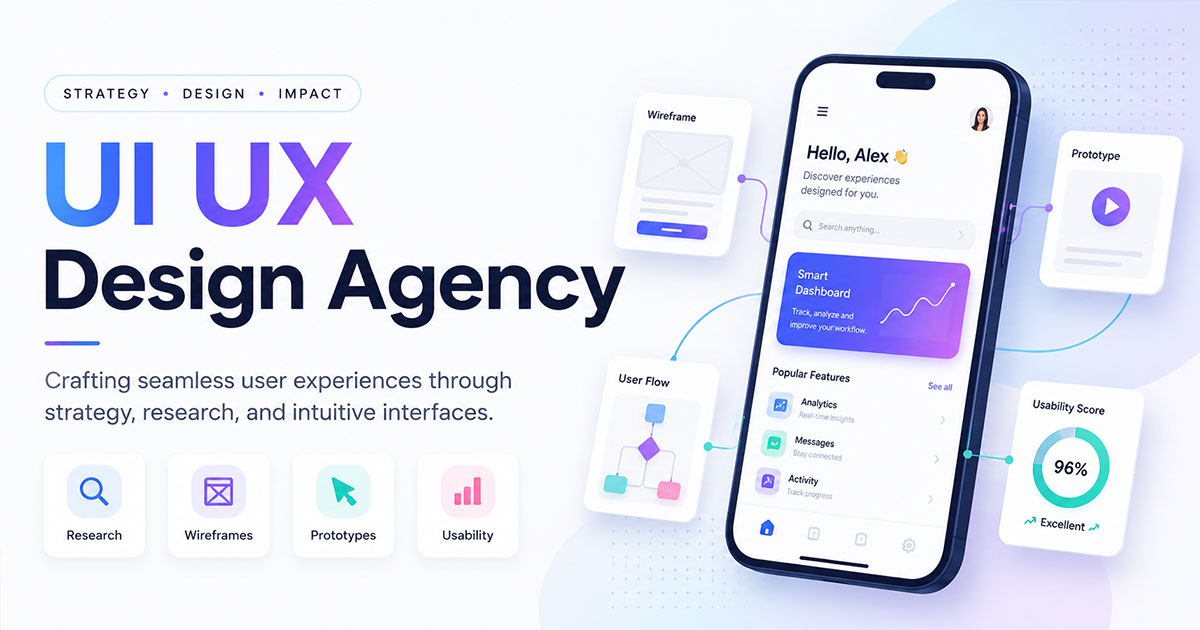
A UI/UX design agency helps teams define how a digital product should work and how its interface should look before development. Depending on scope, the agency may work on user flows, information architecture, wireframes, prototypes, interface design, design systems, usability review and design handoff.
Choosing the right agency means evaluating relevant work, process, deliverables, collaboration and whether the team is clear about what is included—and what remains with development or internal product teams. This article is an explainer and evaluation guide—not a ranked agency list or a generic hire page.
What is a UI/UX design agency?
A UI/UX design agency is a design partner focused on the structure, usability and interface of digital experiences. Teams may describe the same partner as a UI agency, UX agency, interface design agency or user interface agency depending on whether they emphasize screens, journeys or both.
Scope varies by project and platform. Some engagements emphasize UX structure first; others start closer to visual UI polish once flows are stable. For service-package evaluation (scope checklists across vendors), see how to evaluate UI/UX design services.
UI vs UX: how agencies usually split the work
UI covers interface hierarchy, screens, components, states, typography, color, visual consistency and how interactions are presented.
UX covers user needs, task flows, information architecture, structure, wireframes, usability, validation and iteration.
Many agencies combine both disciplines, but the exact balance depends on scope. Deeper role and workflow context lives on our UI and UX design guide. If you need interface fundamentals rather than agency selection, start with user interface design.
What a UI/UX design agency may deliver
Depending on scope, deliverables may include:
- Discovery inputs and problem framing
- User and task flows
- Information architecture
- Wireframes
- Clickable prototypes for key paths
- UI screens and component patterns
- Design-system foundations and shared design language
- Interaction and state specifications
- Responsive layout planning
- Accessibility-aware design notes (contrast, hierarchy, usable states)
- Developer handoff files
Not every engagement includes every item. Prototypes are a common agency workflow deliverable; focused prototyping services live on the commercial prototyping page when that is the primary need.
How agencies typically work
As evaluation context—not a competing process guide—many engagements move through:
- Understand product and audience
- Map flows and structure
- Create wireframes
- Prototype key interactions
- Design the interface
- Review and validate critical paths
- Iterate
- Hand off to development
Some engagements include lightweight research or usability review; others do not. Treat research and testing as scope options—not assumptions every agency (or every project) will run.
How to evaluate a UI/UX design agency
Use practical criteria instead of vanity rankings:
- Relevant experience — products and platforms like yours
- Portfolio reasoning — why screens look the way they do, not only polish
- Process clarity — how decisions move from structure to UI to review
- Deliverables — what “done” means in writing
- UI/UX balance — whether you are buying structure, visual systems, or both
- Design-system and responsive thinking — reusable patterns that survive growth
- Collaboration — how they work with product and development
- Validation approach — reviews, usability checks or other scoped methods
- Handoff quality — files and notes developers can implement
- Scope transparency — what is out of scope (code, ads, print, unlimited revisions)
What to look for in a portfolio
Look beyond polished screens. Consider:
- Problem and context
- Structure and flow
- Interaction and consistency
- Responsive behavior
- Design-system or shared patterns
- Evidence of iteration
- Clarity of final handoff
Avoid assuming outcomes that are not shown.
What to include in a UI/UX agency brief
- Product or business goal
- Primary users and jobs to finish
- Platform: web, iOS, Android—or an honest subset
- Existing product, screens or flows
- Required features and critical paths
- Content and brand assets
- Research already available
- Technical constraints
- Stakeholders and approvers
- Timeline
- Expected deliverables
- Existing design system, if any
A clear brief shortens quotes and reduces wasted rounds. Mood boards alone are not a brief.
When to hire a UI/UX agency
- Launching a new digital product
- Confusing user flows or task drop-off
- Inconsistent interfaces across screens
- Planning a redesign
- Scaling product patterns or design-system foundations
- Needing external design capacity
- Needing structured handoff for development
Not every business needs an agency for every interface change.
Platform boundaries: where commercial work lives
This Blog explains agencies. Commercial UI/UX work at GraphicDigits is organized by platform—not by this article:
- Mobile app design scope → custom mobile app design
- Mobile UI screens and visual systems → mobile app UI design
- Mobile UX flows and wireframes → mobile app UX design
- Web/SaaS/product interfaces → web app design
- Marketing websites → website design services
Digital UI design as a craft is broader than agency selection. Keep this page for evaluation; use the UI fundamentals guide when you need deeper interface principles.
Design vs development
UI/UX agency work covers structure, interface design, prototypes and handoff. Development covers frontend and backend coding, app engineering, React/HTML/CSS implementation and platform or server work. GraphicDigits designs interface and experience files from this guide—we do not ship production code or submit apps to stores.
Conclusion
A strong UI/UX design agency relationship starts with clear expectations: what they deliver, how they work, how you evaluate portfolios and what you bring to the brief. Use this guide to frame those decisions, then open the commercial page that matches your platform when you are ready to discuss a scoped design engagement.
Frequently asked questions about UI/UX design agencies
What does a UI/UX design agency do?
A UI/UX design agency helps define how a digital product should work and how its interface should look—often covering flows, information architecture, wireframes, prototypes, interface design and design handoff. Exact scope varies by project and platform.
What deliverables can a UI/UX agency provide?
Depending on scope, deliverables may include flows, wireframes, clickable prototypes, UI screens, component patterns, design-system foundations, responsive layouts, accessibility-aware design notes and developer handoff files. Not every engagement includes every item.
How do I choose a UI/UX design agency?
Evaluate relevant product or platform experience, portfolio reasoning, process clarity, deliverables, UI/UX balance, collaboration with product and development, validation approach, handoff quality and scope transparency. Prefer partners who can name what is out of scope.
What should I include in a UI/UX design brief?
Include product goals, primary users, platform, existing screens or flows, required features, content and brand assets, available research, technical constraints, stakeholders, timeline, expected deliverables and any existing design system.
Does a UI/UX agency also develop or code the product?
Not from this guide. UI/UX agency work covers structure, interface design, prototypes and handoff. Frontend or backend coding, app engineering and implementation stay with your developers or a separate build partner.
When should a business hire a UI/UX agency?
Common triggers include a new digital product, confusing flows, inconsistent interfaces, a redesign, scaling product patterns, limited internal design capacity or a need for structured handoff. Not every team needs an agency for every change.