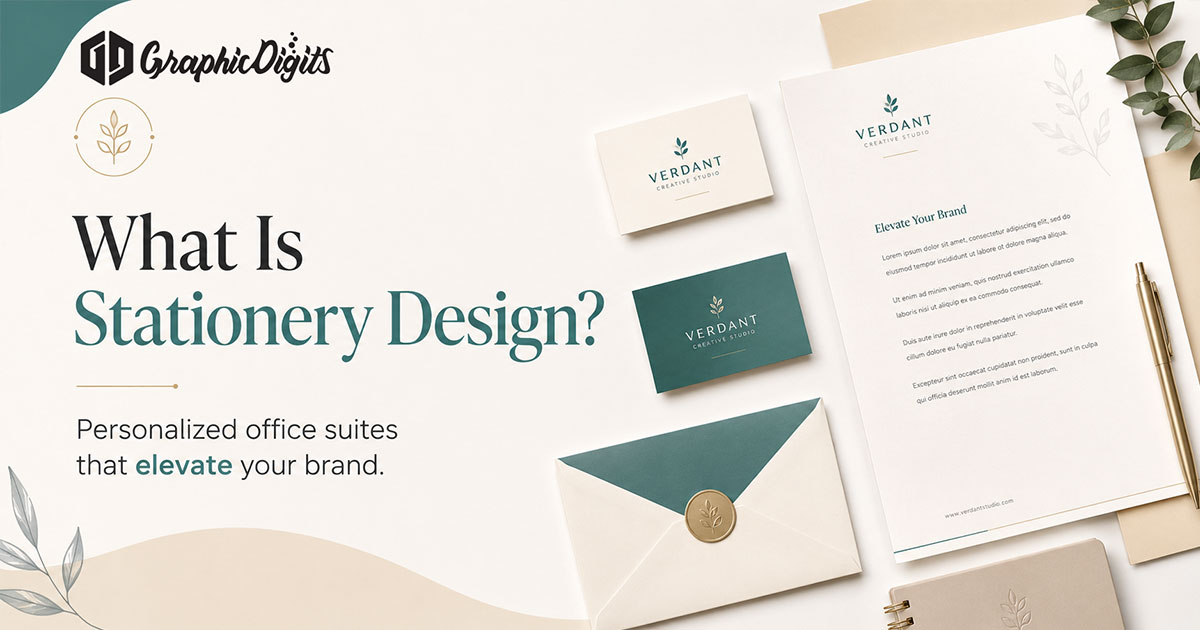
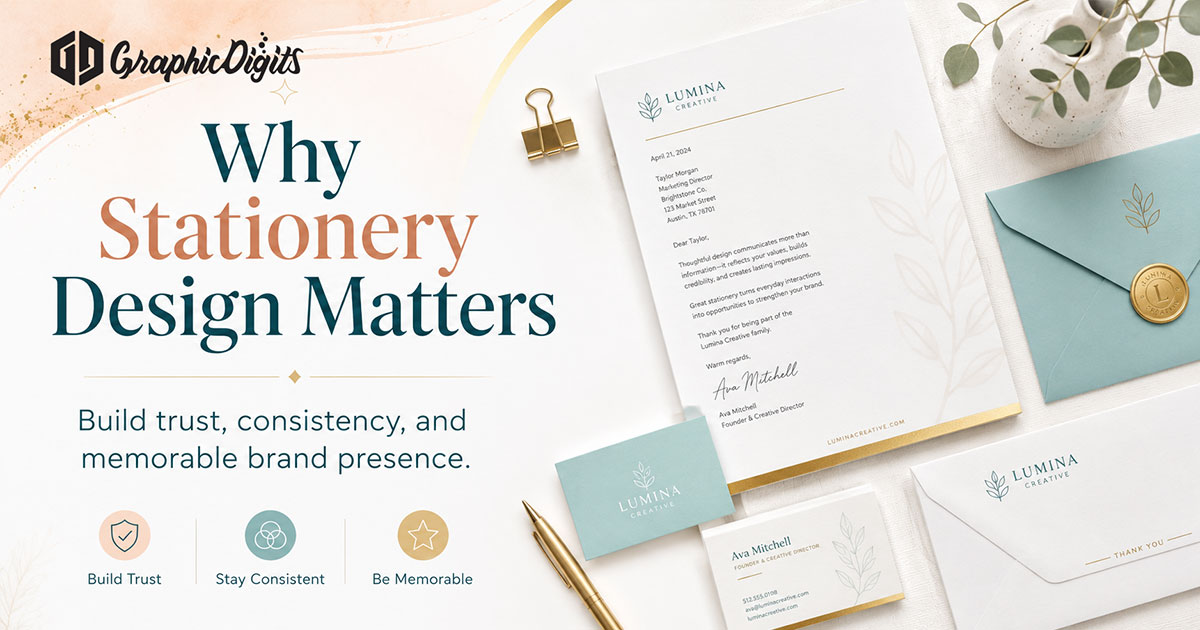
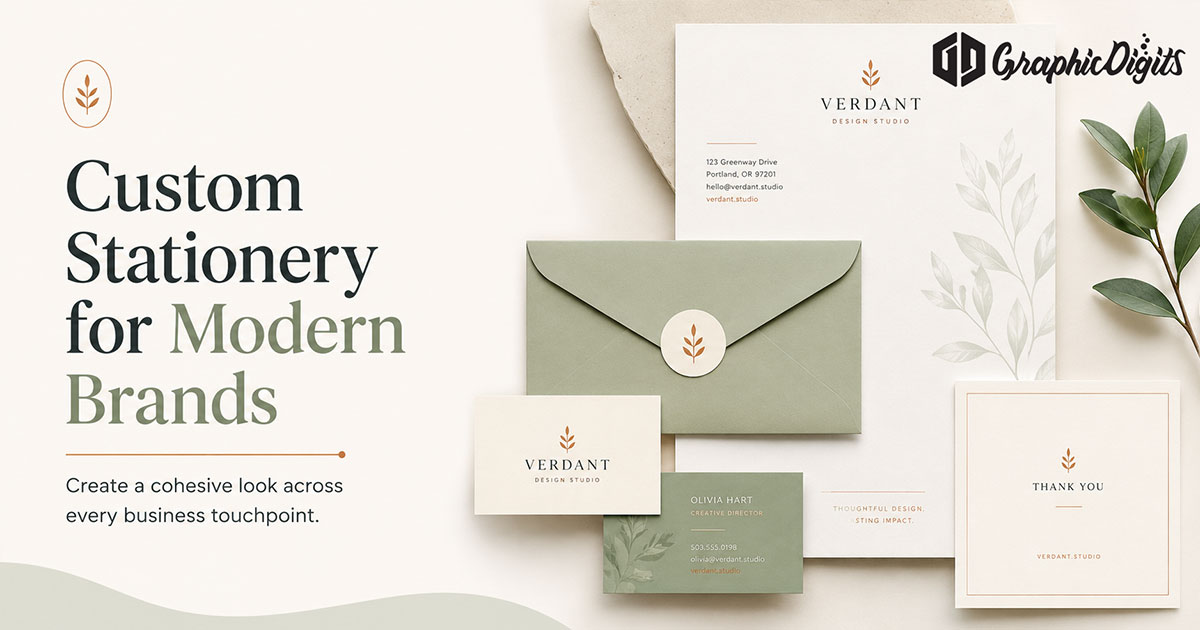
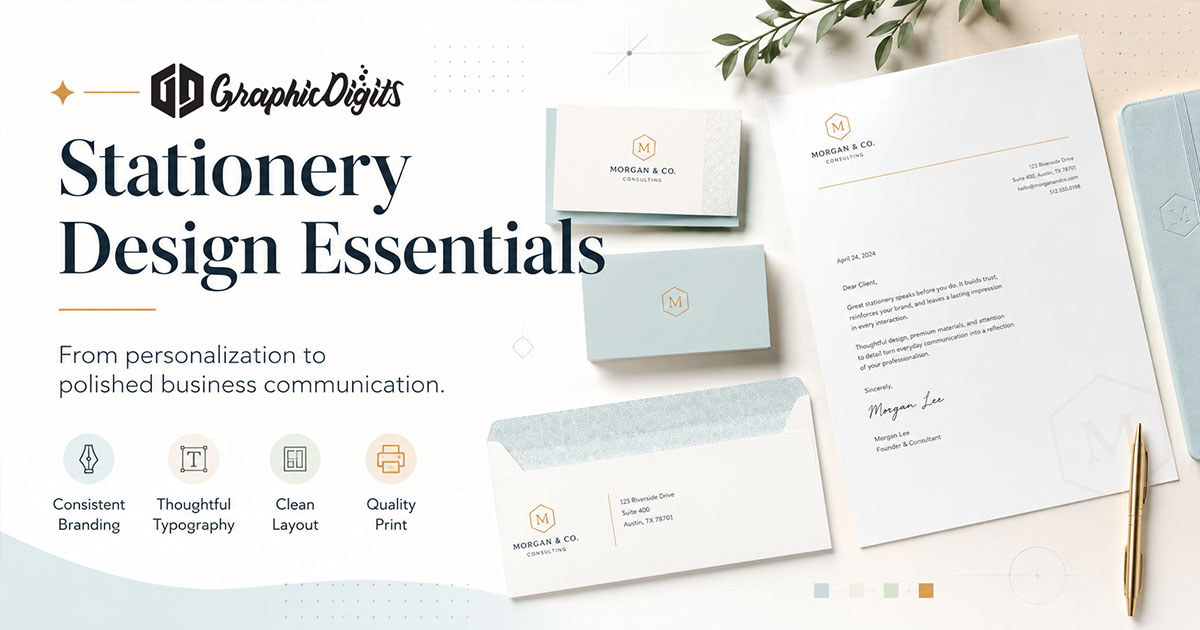
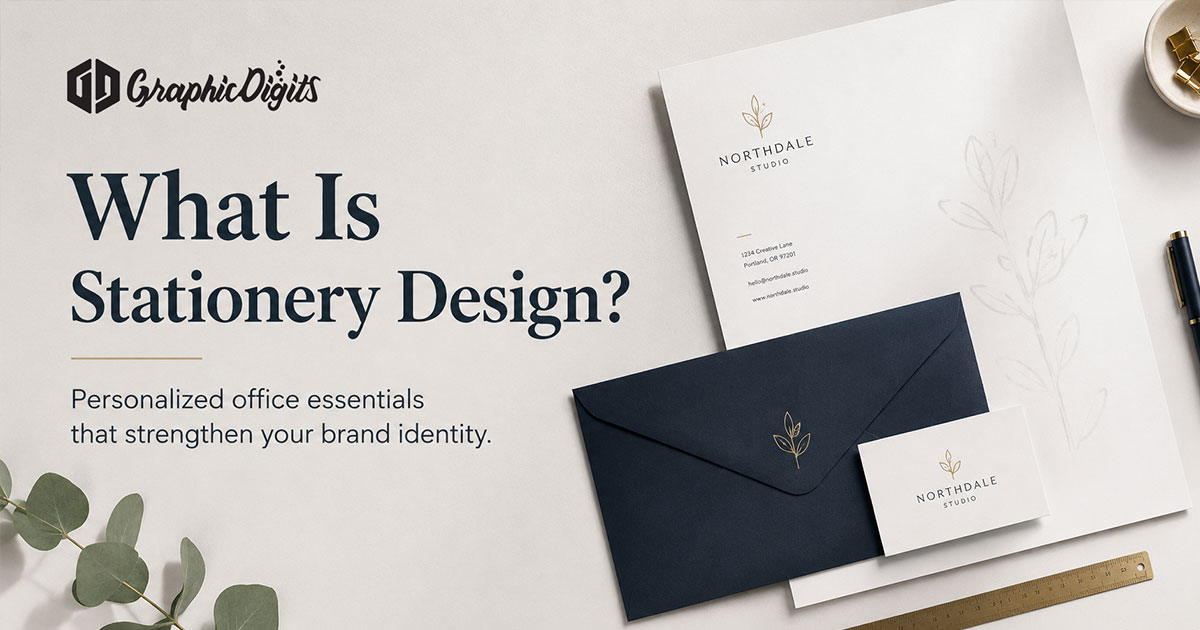
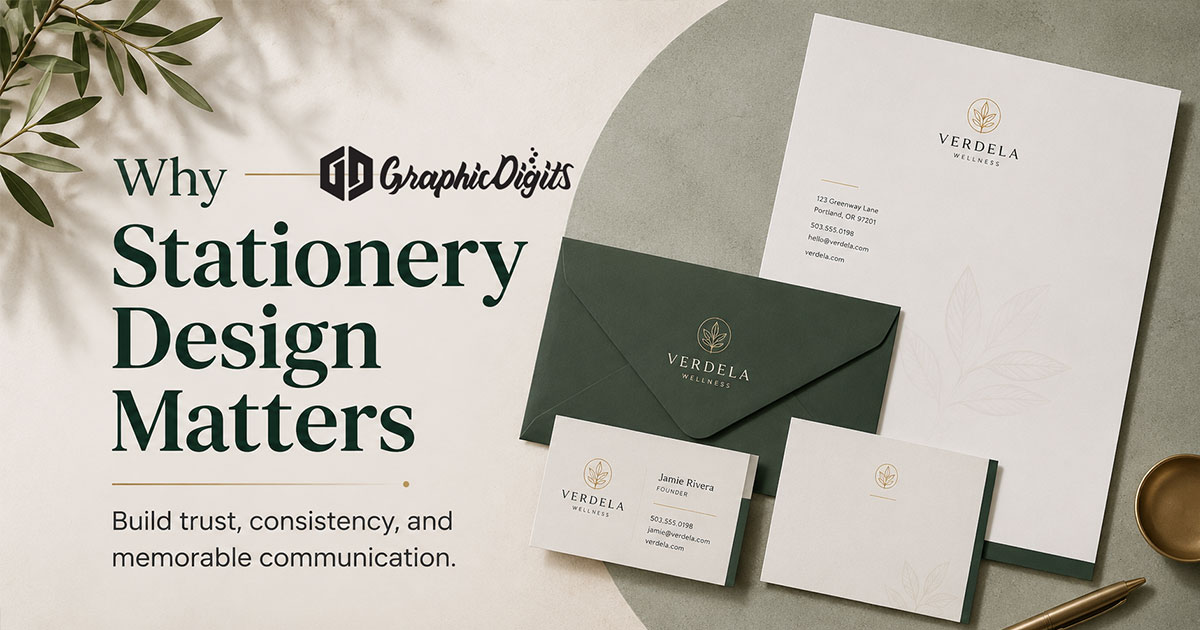
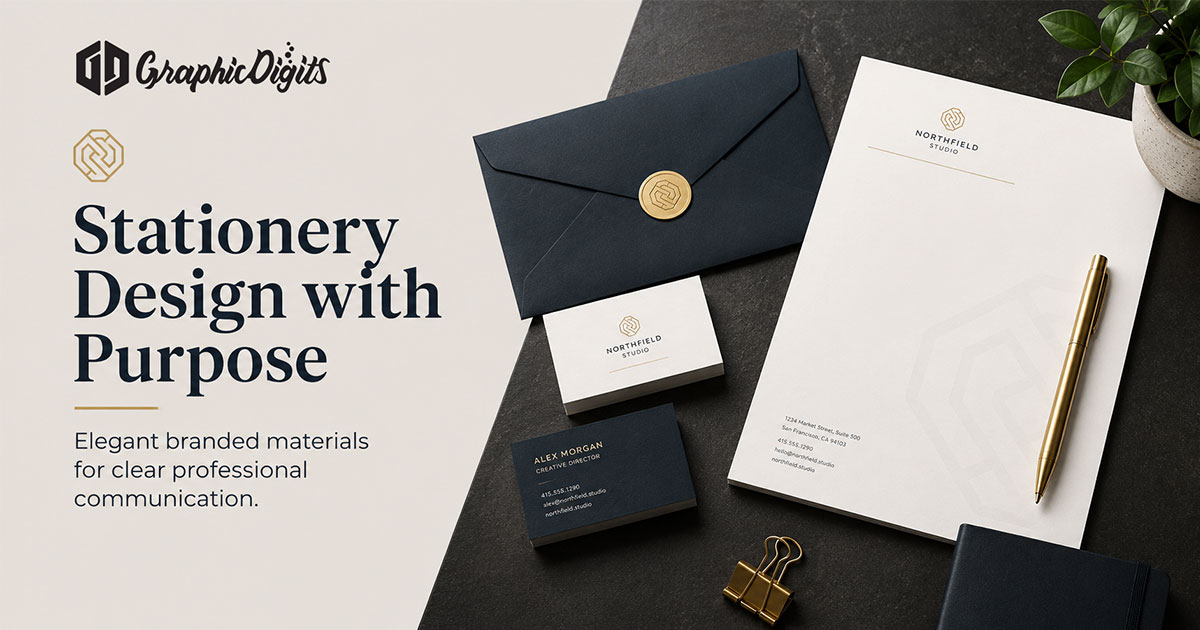
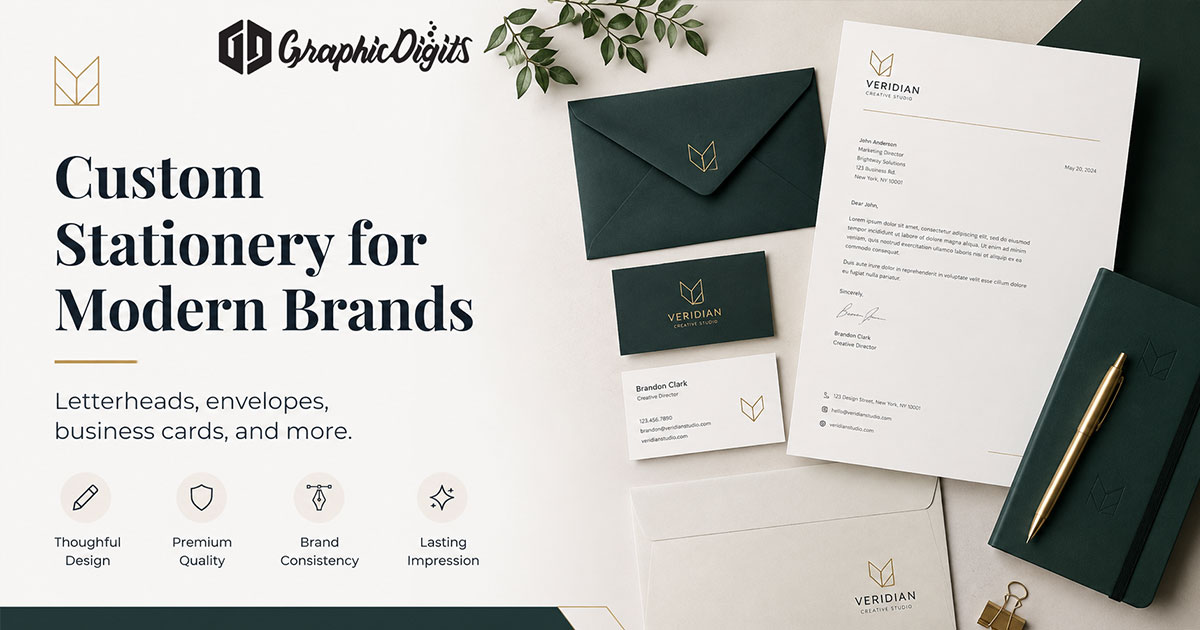
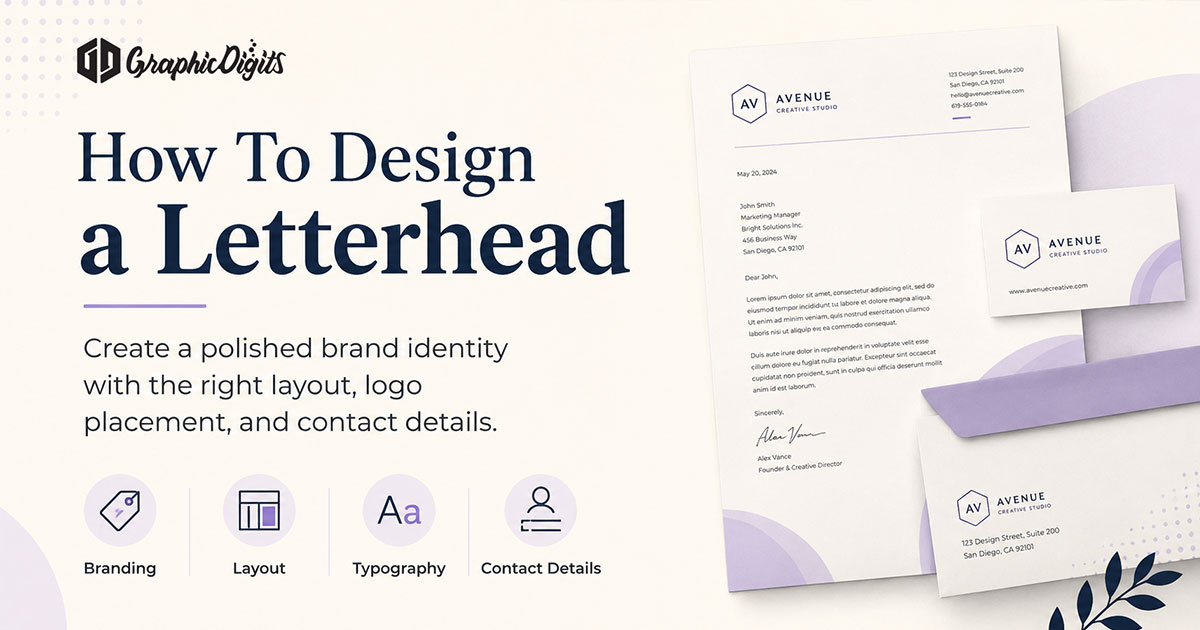
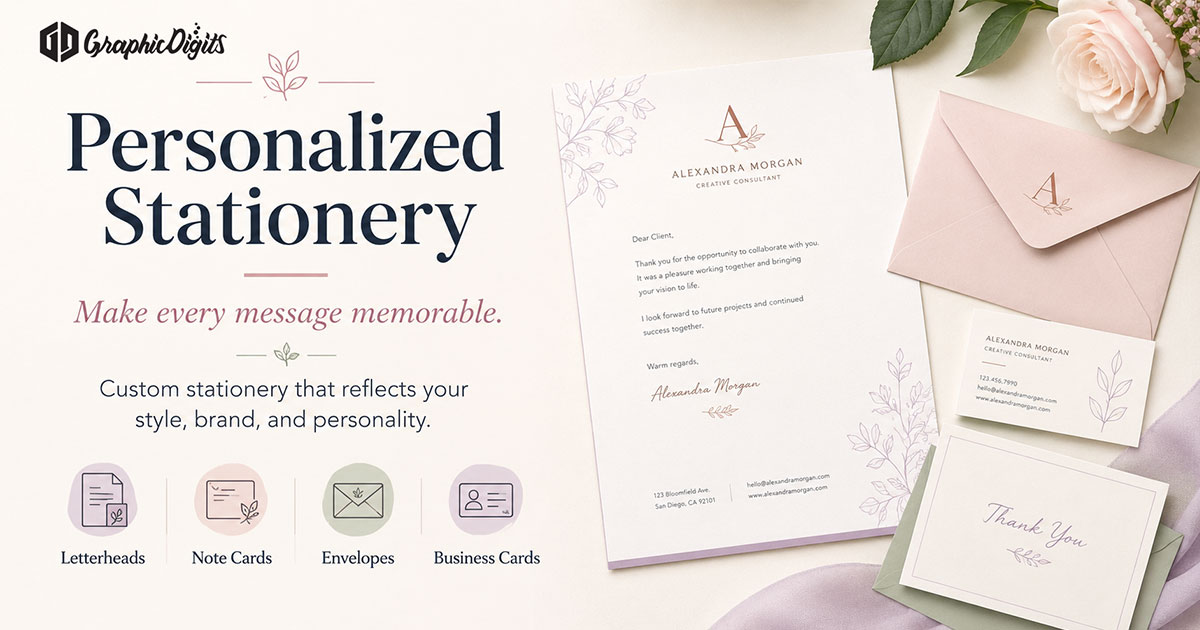
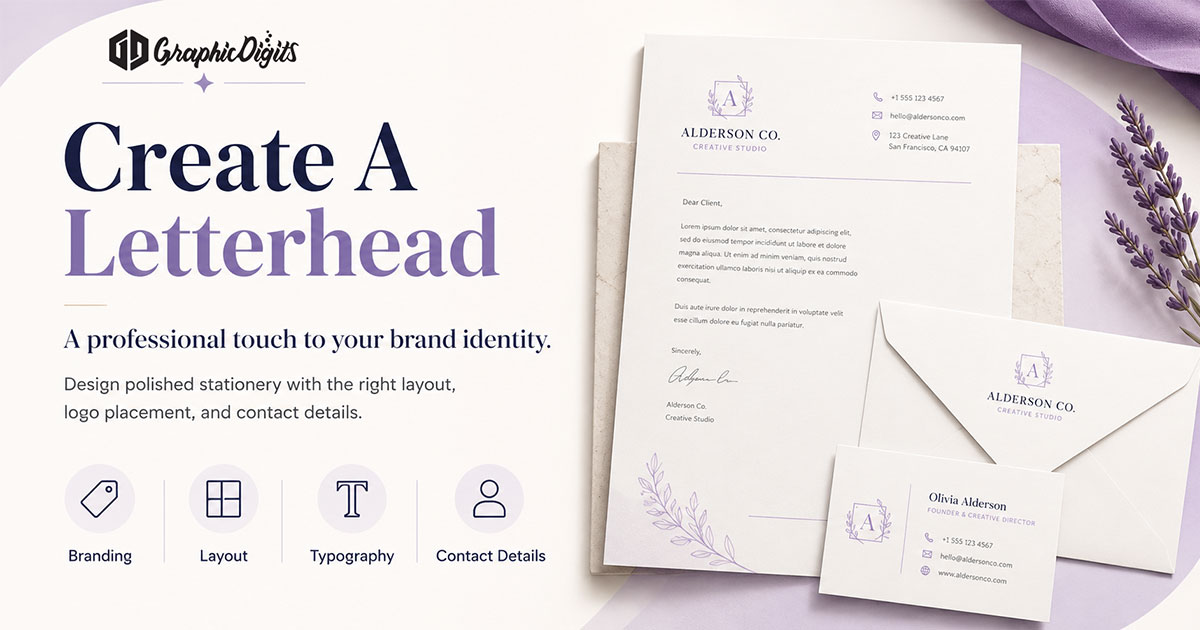
Stationery design is the creation of cohesive printed and complementary digital materials that help a person or business communicate professionally. In practice, it covers items people touch and see every day—business cards, letterheads, envelopes, notepads, presentation folders—and the visual system that keeps those pieces looking like they belong together.
A strong stationery system is not decoration alone. It carries your logo, typography, colours, and contact details in a way that feels deliberate on paper and easy to produce at print-ready quality. That combination of brand clarity and practical specification is what separates useful stationery from a one-off template.
Why stationery design matters for businesses
Business stationery is often the first physical proof of your brand. A client may see your website first, but the card they pocket, the letter they receive, or the folder they open during a meeting still shapes trust. Clear, consistent stationery design supports proposals, invoices, onboarding packs, and day-to-day correspondence without asking your team to reinvent the look each time. For choosing and planning a business stationery set, use the items and uses guide.
It also protects brand consistency when multiple people send materials. Shared templates, approved colours, and print specs reduce cheap-looking mismatches between sales, operations, and leadership. For a wider operational view of how these pieces work together, see our guide to business stationery design.
Corporate stationery design usually starts with a core set of pieces, then expands based on sales and client workflows:
Business cards — still one of the highest-frequency brand touches. Detail and finish matter at this size; explore dedicated custom business card design when you need print-ready cards that match the rest of the set.
Letterheads — formal letters, quotes, and official correspondence. A good letterhead design leaves room for content while keeping contact details and branding clear.
Envelopes — the first exterior impression before anything is opened. Matching envelope design keeps mailing looks consistent with your letterhead.
Notepads — useful for meetings, client gifts, and internal notes. Branded custom notepads extend recognition beyond formal documents.
Presentation folders — hold proposals, contracts, and leave-behinds so a pitch feels organized rather than assembled at the last minute.
Email signatures — not printed stationery, but they should follow the same logo, colour, and type rules so digital and physical touchpoints feel aligned.
If you want to see how cards and complementary items support each other in a full suite, our overview of business cards and stationery covers that relationship in more detail.
Core stationery design elements
Effective branded stationery depends on a small set of decisions applied consistently:
Logo — sized and placed for readability on small cards and larger letter pages without crowding content.
Typography — fonts that stay legible in print, with clear hierarchy for names, body copy, and fine contact details.
Colours — brand colours specified for print (often CMYK or pantone where needed) so output matches digital guidelines as closely as possible.
Spacing and layout — margins, alignment, and whitespace that keep materials easy to scan and suitable for printers.
Print specifications — bleed, safe area, paper stock, coating, and finishing choices that affect feel as much as look.
When these elements stay locked to brand guidelines, every piece reinforces the same identity—whether someone receives a card at an event or opens a letter weeks later.
Brand consistency across the stationery suite
Brand consistency means recipients can recognise your company without reading the company name twice. That usually requires shared colours, type rules, logo clear-space, and recurring layout habits across the suite. It also means avoiding “close enough” designs from different freelancers or tools that slowly dilute the brand.
Personal touches—such as a foil accent, emboss, or distinctive paper texture—can still fit inside a system when they are intentional. The goal is recognition and clarity, not identical decoration on every item.
Stationery design examples and practical uses
Examples of stationery design in everyday business include:
A startup founder handing out a clean card set that matches the company’s website and pitch deck.
A professional services firm sending proposals on branded letterhead inside a matching folder.
A clinic or local business mailing client updates in envelopes that use the same colours and mark as their exterior signage.
An operations team using branded notepads in workshops so takeaways stay associated with the company.
In each case, stationery design works because it supports a real moment of communication—it is not designed in isolation from how the business operates.
Common stationery design mistakes
Treating each item as a separate project instead of one branded system
Using website-only RGB colours that print dull or inaccurate
Logo files that are too low-resolution for print
Crowding business cards with too much text or weak hierarchy
Ignoring envelope windows, folds, and printer safe margins
Choosing novelty fonts or finishes that hurt readability
Skipping a practical review of how teams will edit letterhead templates later
When to hire a professional for stationery design
Many businesses can start with basic templates, but professional stationery design is worth it when brand standards matter in high-stakes conversations—fundraising, enterprise sales, multi-location rollouts, packaging-adjacent print, or a full rebrand. A designer can also prepare print-ready files, recommend stocks and finishes, and keep the suite aligned with wider brand guidelines.
If you already have a logo and brand colours but your current cards, letters, and folders do not look related, that is usually a signal to rebuild the stationery system as one project rather than patching items one by one.
Stationery design trends worth considering
Useful current directions include restrained layouts with stronger typography, eco-conscious paper choices, tactile finishes used sparingly, and QR codes or short URLs when they help recipients take a clear next step. Trends should support clarity and production quality—not overwrite your brand personality.
Conclusion
Stationery design is the practice of turning everyday business materials into a reliable brand system. Define the items you need, lock the core visual elements, avoid the usual print mistakes, and upgrade when inconsistent or outdated materials start costing you trust.
Frequently asked questions about stationery design
What is stationery design?
Stationery design is the planning and visual design of printed and digital business materials—such as business cards, letterheads, envelopes, and notepads—so every item looks consistent, professional, and on-brand.
Why does stationery design matter for businesses?
Well-designed stationery reinforces brand recognition, builds trust in everyday communication, and makes proposals, invoices, and introductions feel more polished and credible.
What items are included in business stationery design?
Typical business stationery includes business cards, letterheads, envelopes, notepads, presentation folders, and often complementary digital pieces such as email signatures.
When should a business hire a professional stationery designer?
Hire a professional when you are launching or refreshing a brand, preparing investor or client-facing materials, scaling print across locations, or when existing stationery looks inconsistent, outdated, or poorly specified for print.
Need help with branding or design?
Let's discuss your project and bring your vision to life.