Business stationery items, uses and planning
Business stationery includes the branded materials a company uses for everyday communication, such as business cards, letterheads and envelopes. This guide explains which items may be useful, what each one is for and how to plan a practical stationery set without adding unnecessary pieces.
What is business stationery?
In short, business stationery is the set of printed—and sometimes digital—materials that carry your company name, contact details and visual identity during routine communication. For a fuller definition of what stationery design is, see that overview; this page focuses on which items to include and how to plan them.
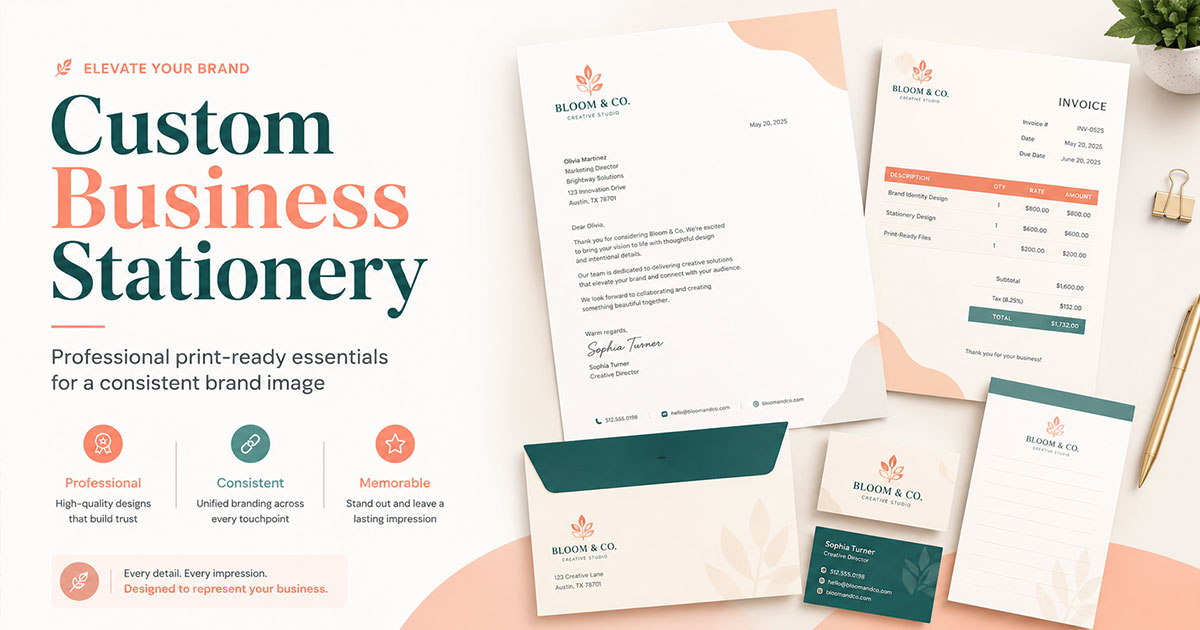
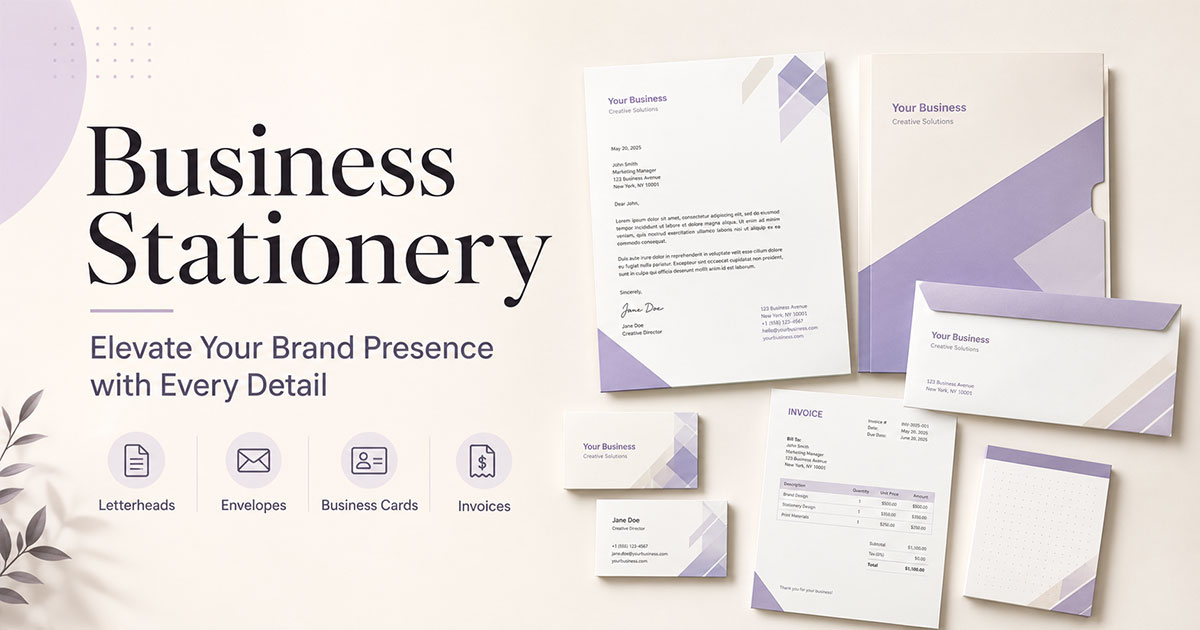
A typical set may include:
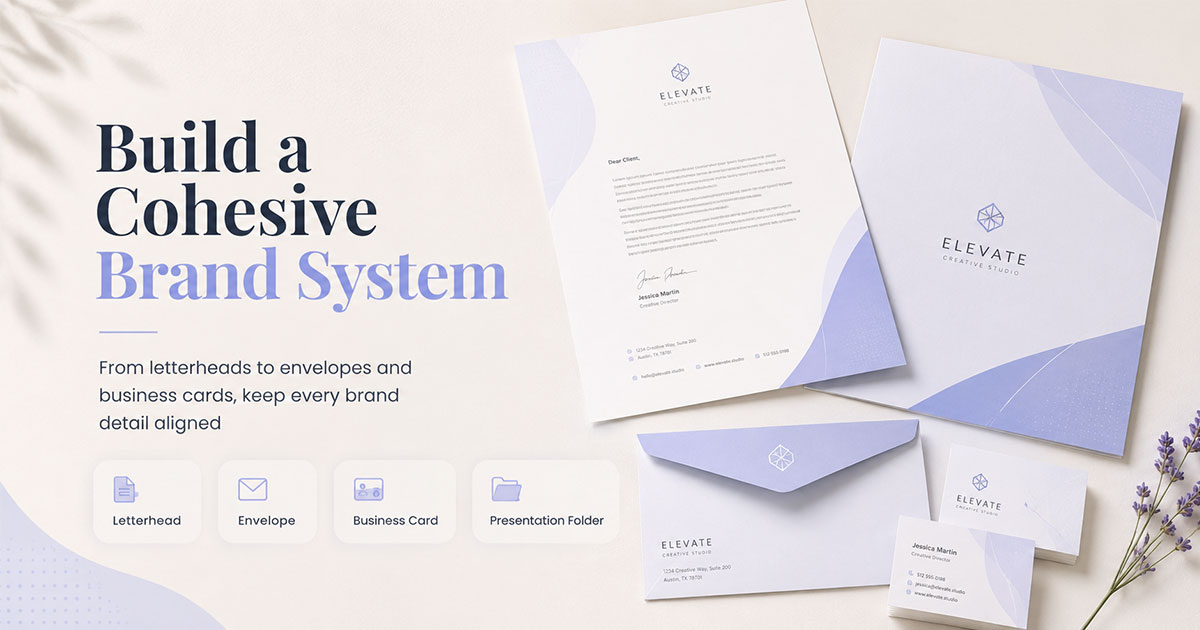
- Business cards — core for introductions at meetings and events; usually one of the first pieces to produce.
- Letterheads — core for formal letters, proposals and onboarding documents that need a clear sender identity.
- Envelopes — core when you mail correspondence; they close the loop with letterhead and cards.
- Presentation folders — optional when you regularly hand over multi-page leave-behinds or proposals.
- Notecards — optional for thank-yous, short client notes or follow-ups that do not need full letterhead.
- Invoices and receipts — optional or context-dependent when billing still happens on paper or branded PDFs.
- Labels — optional for packages, filing or product-adjacent mail where a branded sticker is already useful.
- Digital stationery — optional templates such as e-letterheads or email-signature blocks when teams send files and messages more than print.
Depending on how the business communicates, you do not need every item above on day one. Choose pieces that support real workflows, then expand when a new use case appears.
Why branded stationery items still matter
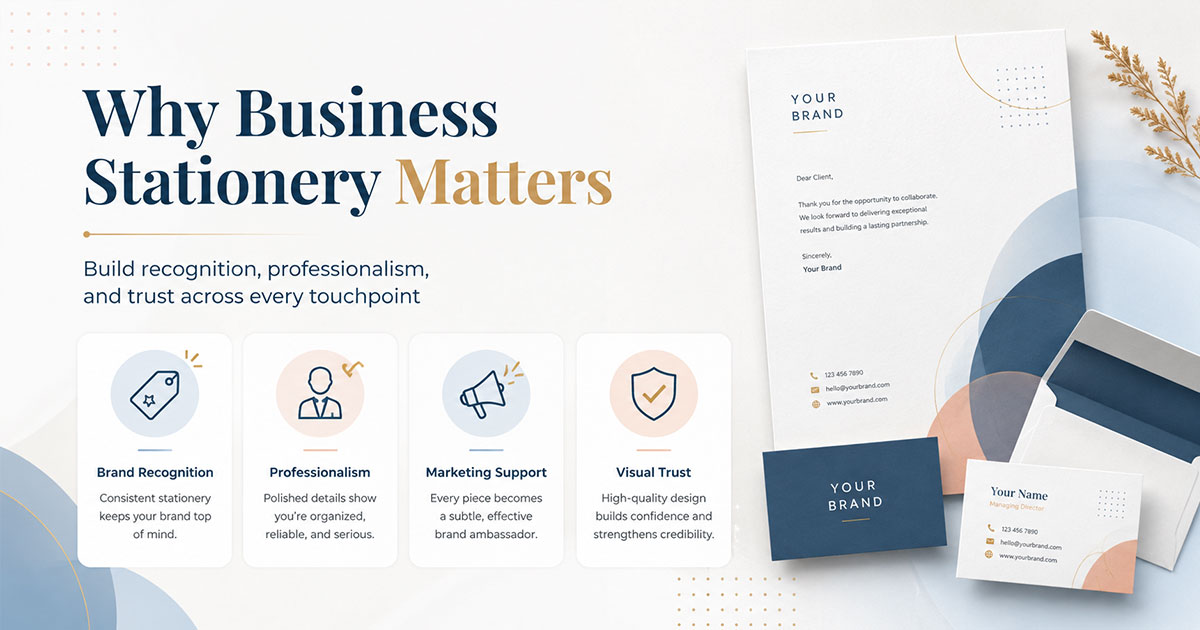
Your business stationery with logo works best when logo, colours and typography stay consistent across the pieces you actually use. For a deeper look at professional business stationery design and suite consistency, use that checklist guide. On this page, the focus is selecting items and planning the set.
- Helps recipients recognise the same company across cards, letters and mail
- Keeps approved contact details and brand marks in one place for staff
- Supports proposals, contracts and introductions without reinventing layout each time
- Makes it clearer which pieces are worth producing now versus later
Well-chosen stationery supports everyday interactions: letterhead for contracts and onboarding, matching cards for networking, and envelopes when you still mail documents. For how cards and stationery relate as a coordinated identity system, see the relationship guide—keep this article for item selection and planning.
Essential versus optional stationery by communication needs
Needs vary by industry and workflow. A finance or legal firm may rely heavily on letterhead and envelopes; a retail or events-led team may lean on cards and folders; healthcare or education teams may need clear contact blocks more than decorative extras. Use your real communication moments—not a generic template list—to decide what belongs in the set.
Core / commonly needed: business cards, letterheads and envelopes cover most introductions and formal correspondence for many organisations.
Optional / context-dependent: some organisations may also need folders, notecards, invoices, labels or digital templates when proposals, thank-yous, billing or email-first workflows already call for them.
Postpone pieces that have no clear owner or use case. Adding every format at once often creates unused inventory and inconsistent updates when contact details change.
How to plan a practical business stationery set
A simple planning sequence:
- List the communication moments you already have (meetings, mail, proposals, billing, email)
- Mark which moments need print, digital or both
- Prioritise core items first; schedule optional pieces only when a workflow needs them
- Prepare approved logo files, colours, typography and contact information before design starts
- Keep one approved company-details block so cards, letterheads and envelopes stay aligned
That preparation keeps planning on this page; suite consistency checks belong on the design guide linked above. When you need help producing a matching suite, stationery design services cover professional file preparation for the pieces you choose.
Digital versions—such as PDF letterheads and branded email signatures—can sit alongside print when teams send more files than paper. Decide that requirement up front so you do not design print-only assets that never get used.
Final thoughts: plan the set you will actually use
Your stationery image is part of how clients experience the company day to day. Start with the items that support real communication, keep approved brand and contact details ready, and expand only when a new use case appears—rather than collecting every format “just in case.”
Stationery is more than paper: it is a planned set of tools for introductions, correspondence and leave-behinds. Choose the pieces that earn a place in that set, then keep them consistent over time.
Ready to turn your item list into production-ready files? Contact us to discuss a customised business stationery suite.
Frequently asked questions about business stationery
What items are commonly included in business stationery?
Business stationery commonly includes business cards, letterheads and envelopes, plus supporting pieces such as presentation folders, notecards, invoices, labels and digital letterhead or email-signature templates when those formats are already in use. Exact needs vary by how the business communicates.
Which business stationery items should a company prioritise first?
Depending on how the business communicates, many organisations start with business cards, letterheads and envelopes because those pieces cover introductions and formal correspondence. Folders, notecards, invoices, labels and digital templates can wait until a real workflow needs them.
How do you plan a business stationery set?
List the communication moments you already have, prepare approved logo, colours, typography and contact details, then choose only the pieces that support those moments in print, digital or both. Postpone optional items until they earn a clear use.