What a branding agency does
A branding agency helps a company decide how it should be understood in the market, then builds the system that keeps that understanding consistent. For Dallas-area teams, that usually means clarifying positioning and messaging first, then designing identity marks, guidelines and the applications customers actually see.
This article explains services and deliverables in educational terms. For commercial hire intent— strategy, identity and branding services for Dallas businesses—see our Dallas branding agency page.
Strategy vs design execution
Strategy defines audience, offer differentiation and messaging priorities. Design execution turns those decisions into visual and verbal tools. When strategy is skipped, teams argue about taste instead of communication. When design is skipped, strategy stays theoretical. Most useful branding engagements connect both.
For a deeper look at the strategy layer, read the brand strategy overview.
Common branding deliverables
- Discovery findings and positioning direction
- Messaging foundations and tone notes
- Primary logo and supporting marks
- Color, typography and graphic-element systems
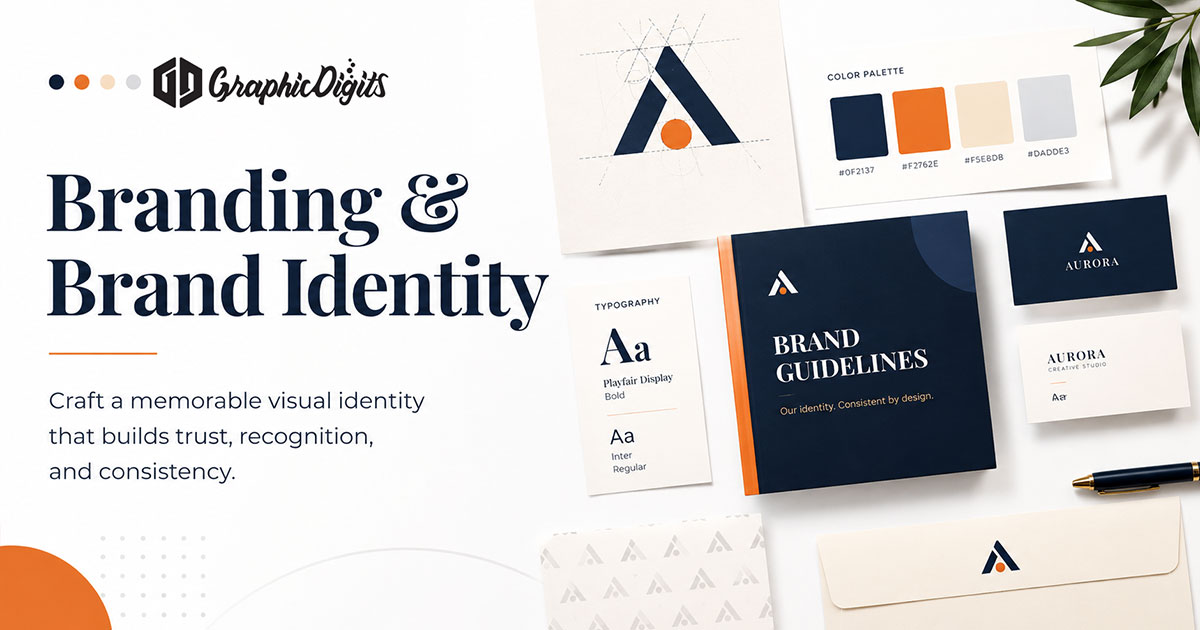
- Brand guidelines or practical usage rules
- Priority applications: digital profiles, decks, stationery or packaging cues
- Organized source and export files for ongoing use
Commercial service groupings for identity programs are outlined under branding design.
Identity systems and logo work
An identity system is more than a single mark. It shows how the logo, wordmark, icon and supporting graphics behave at different sizes and on different backgrounds. Strong systems remain legible in app icons, social avatars, presentations and print.
Logo-only work may be enough for a temporary placeholder. Full branding is usually needed when multiple channels must stay coherent after the launch file leaves the designer’s desk.
Brand guidelines and messaging
Guidelines document how color, type, logo clear space and photography should work. Messaging notes cover positioning statements, proof points and tone. Together they reduce reinvention when vendors, freelancers or new staff produce assets later.
Digital consistency and marketing collateral
Digital profiles, websites and ads often launch fastest—and fall out of sync first. Branding programs often include templates or sample applications so social posts, sales decks and brochures share hierarchy and style. Portfolio evidence of applied systems matters more than isolated mockups; review examples in the design portfolio.
Rebranding versus a first-time brand
A first-time brand starts with a blank slate. A rebrand decides what equity to keep—name recognition, a mark or a familiar color—and what to replace. A refresh may update type and applications while preserving recognizable cues. Name that distinction early so scope and timeline stay realistic.
Typical engagement stages
- Discovery: goals, audiences, competitors and current assets
- Strategy direction: positioning and messaging foundations
- Creative concepts: identity and system explorations
- Refinement: selected direction developed across applications
- Guidelines and handoff: usage rules and reusable files
For a clearer picture of collaboration sequencing, see our process.
What businesses should prepare before starting
- Business goals for the next 6–18 months
- Primary audiences and how they currently find you
- Competitors and adjacent brands in your space
- Existing logos, colors, websites and sales materials
- Channels that matter most now (web, sales, events, social)
- Who approves work—and who can consolidate feedback
Logo-only work vs a full branding program
Choose logo-only when you need a temporary mark or a narrow asset update. Choose a branding program when inconsistency is already costing trust, when a launch needs aligned messaging and visuals, or when multiple people will produce brand assets after the project ends.
When outside branding support makes sense
Outside support is useful before a website rebuild, funding or partner pitch, market expansion or multi-channel campaign where mismatched visuals would be expensive to unwind. Lightweight template edits may not need a full program; foundational identity usually does.
Conclusion
For Dallas businesses, a branding agency’s value is a usable system—strategy, identity, guidelines and applications—not a stack of location buzzwords. Use this guide to understand what engagement typically includes, then review commercial scope on the branding support for Dallas businesses page when you are ready to discuss a project.
Frequently asked questions about branding agency services
What does a branding agency do?
A branding agency clarifies how a business should be understood, then builds the tools that keep that story consistent—positioning, messaging, identity systems, guidelines and priority applications across digital and print.
What does a branding project typically include?
Most engagements include discovery, strategy direction, logo and visual identity, core brand guidelines and a first set of applications such as digital profiles, presentations or sales collateral. Exact deliverables should be written in the scope.
Is branding more than logo design?
Yes. A logo is one mark. Branding also covers messaging, color and type systems, usage rules and how the brand appears across customer touchpoints over time.
What should a business prepare before starting?
Prepare goals, audiences, competitors, current assets, preferred channels and decision owners. Clear examples of brands you admire—and ones you want to avoid—help focus strategy and design rounds.