What content writing is for
Content writing turns business information into clear pages and messages people can use. Strong copy explains who you help, what you offer, and what to do next—without stuffing keywords or making claims the page cannot support.
Design and writing work best together. Layout, hierarchy, and visuals help people scan; writing carries the meaning. For page structure that supports readable content, see website design best practices.
Common content writing types
- Website pages: homepage, about, services, and contact messaging
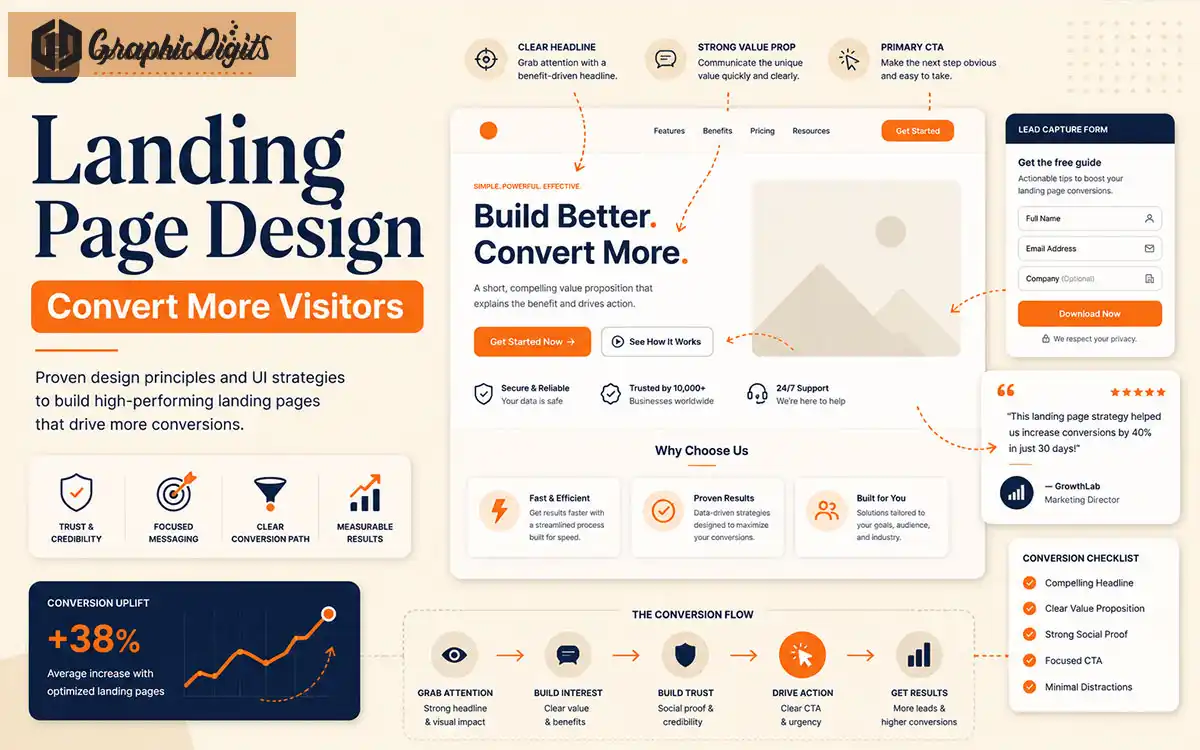
- Landing pages: focused campaign pages with one primary action—see landing page conversion guidance
- Blog and educational articles: answer questions and support topical coverage
- Product and offer descriptions: benefits, specs, and proof in scannable form
- Email and newsletter copy: subject-aligned body content; design tips live in the email newsletter design guide
- Social and campaign captions: short supporting copy for posts and ads
SEO basics for content writing (without ranking promises)
Search-friendly writing starts with intent: what the reader is trying to learn or decide. Useful structure helps both people and crawlers, but no writing process can guarantee rankings.
- Match intent: informational, commercial, or transactional—write for that job
- Clear headings: one H1, logical H2/H3 sections that mirror the topic
- Primary topic focus: use the main phrase naturally; avoid stuffing
- Helpful depth: answer the questions a serious reader would ask next
- Internal links: point to related services, guides, or proof pages when useful
- Readable paragraphs: short blocks, concrete language, one idea at a time
Brand voice and conversion clarity
Tone should match the audience and offer. Formal professional services often need calm, precise language; consumer brands may sound warmer. Either way, keep one primary CTA and avoid stacking competing asks.
- Define voice traits (direct, friendly, technical, premium)
- List words to use and avoid
- State the single next step for each page
- Separate claims you can prove from aspirational marketing language
Content writing brief checklist
Before drafting, gather:
- Audience and their main question or objection
- Page goal and primary CTA
- Required facts, offers, and proof points
- Target phrase and related terms (if any)
- Tone notes and competitor examples to avoid copying
- Word-count range and must-include sections
- Reviewers and approval process
Common content writing mistakes
- Writing for keywords instead of the reader's decision
- Vague headlines that do not state the offer
- Unsupported ranking or growth claims
- Long walls of text with no section structure
- Multiple CTAs that compete on the same page
How GraphicDigits can help
GraphicDigits can support content writing for websites, campaigns, and brand materials—often alongside design so message and layout stay aligned. Discuss your project with goals, page list, and any existing brand voice notes.
Frequently Asked Questions about Content Writing
What is content writing?
Content writing is creating purposeful written material—such as website pages, blogs, product copy, and emails—so readers understand an offer and can take a clear next step.
Why is content writing important for businesses?
Clear content explains services, builds trust, supports search visibility through useful structure, and helps visitors decide whether a business is a fit.
What types of content writing do businesses usually need?
Common types include homepage and service pages, blog articles, product descriptions, email campaigns, landing-page copy, and social captions that support a campaign.
How does content writing support SEO?
SEO-minded writing clarifies the topic, uses helpful headings, answers search intent, and supports internal links. Rankings still depend on competition, technical health, and overall site quality.
What should I include in a content writing brief?
Include audience, page goal, primary message, required keywords or phrases, proof points, tone notes, and the action you want readers to take.