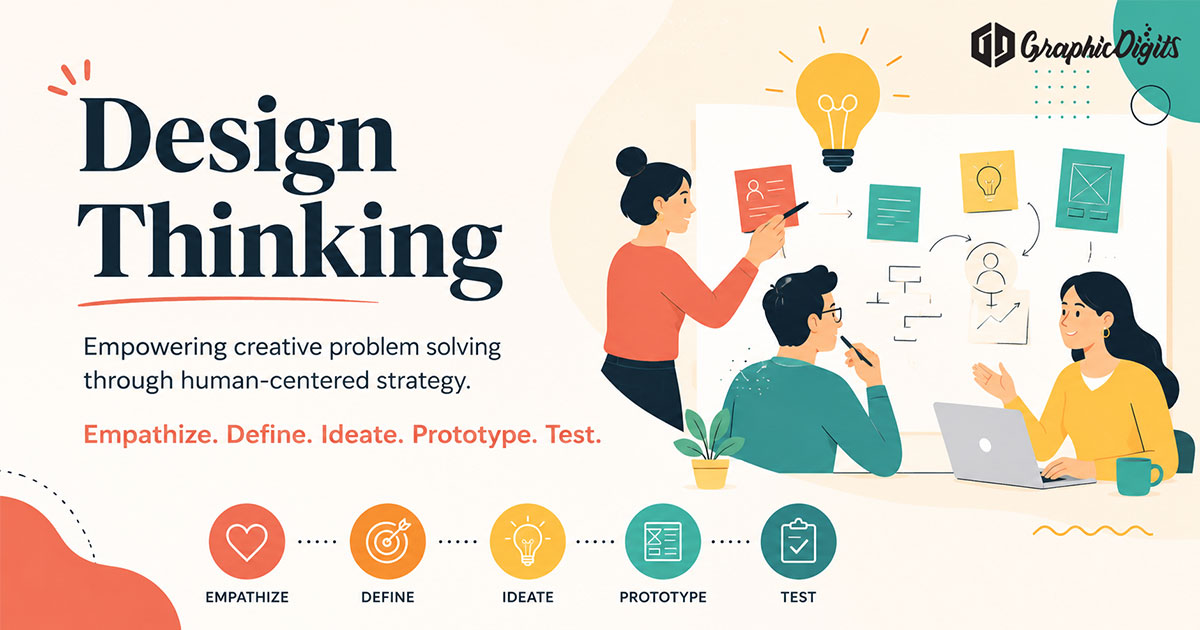
Design thinking is both a way of approaching problems and a structured method. As a design thinking mindset, it means staying user-centered, questioning assumptions, exploring alternatives, testing ideas and learning from feedback before committing to a final solution.
This article focuses on that mindset and its principles—not another checklist and not a full methodology deep-dive. For the five-stage design thinking process, see the process guide. For a quick numbered sequence, use the design thinking steps companion. GraphicDigits does not sell “design thinking” as a product—when you need production design after direction is clear, browse design services.
Is design thinking a mindset?
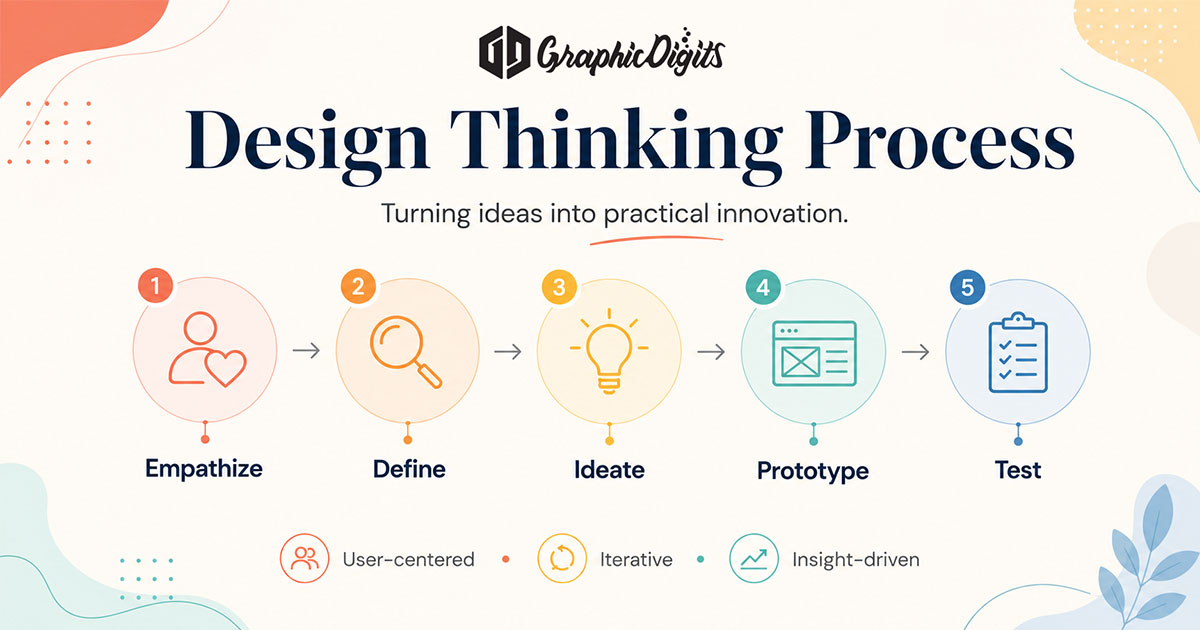
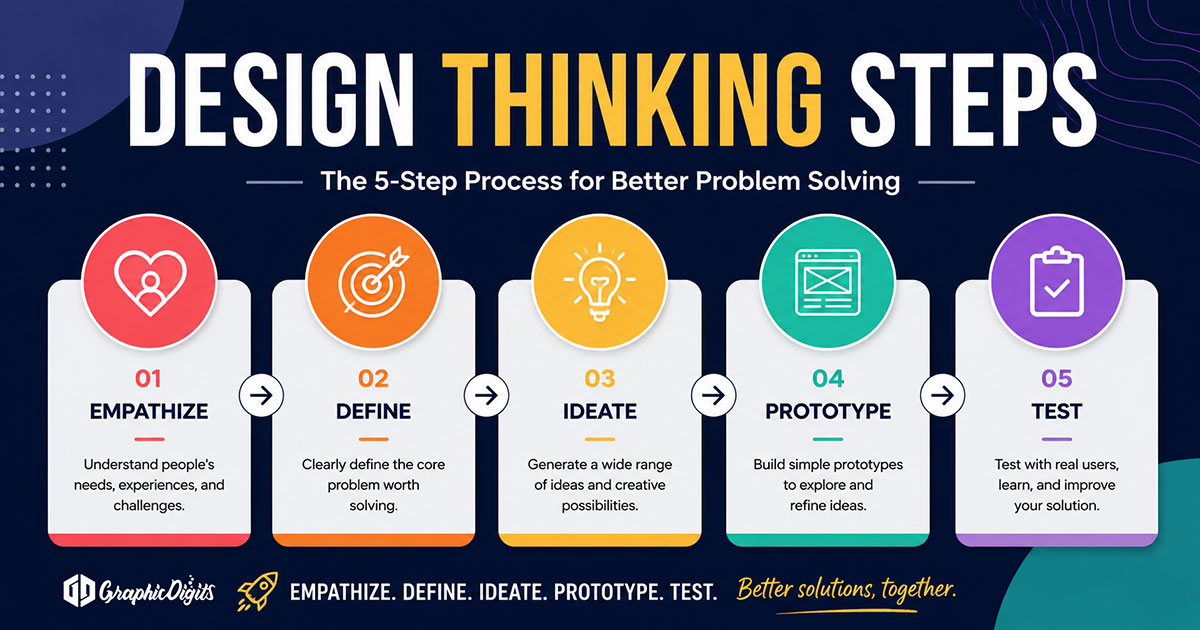
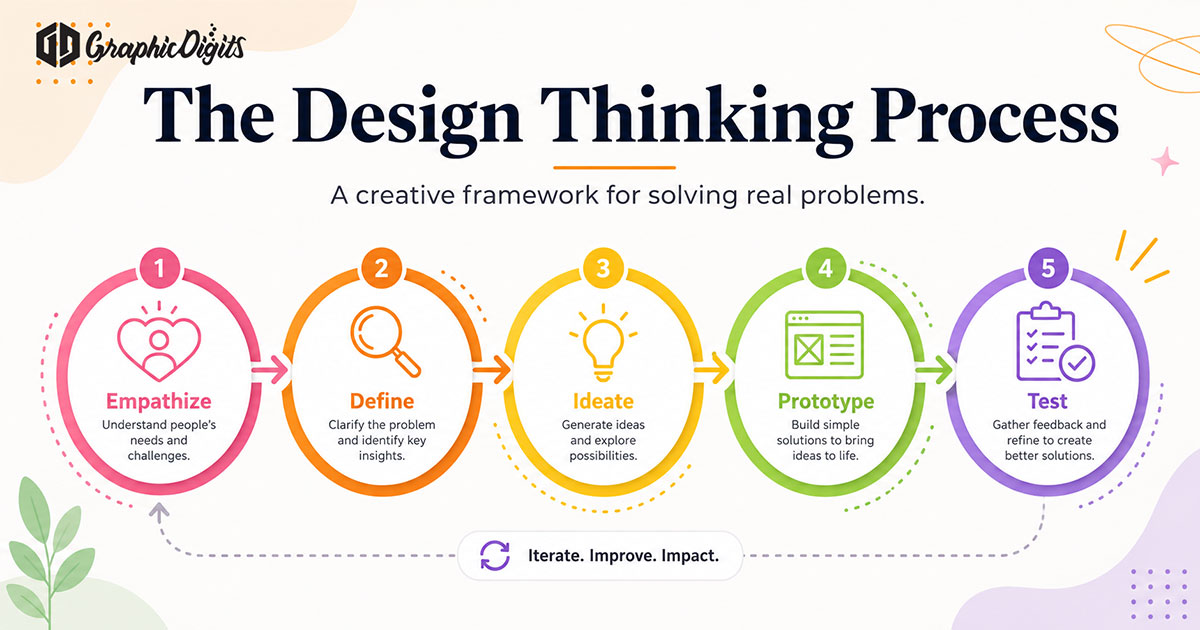
Yes. Design thinking can be understood as both a mindset and a process. The mindset is how you approach fuzzy problems: people first, evidence over ego, options before commitment. The process is the structured Empathize→Define→Ideate→Prototype→Test method. The steps companion is a practical checklist of that sequence.
- This page — mindset, principles, and when to use (or skip) the approach
- Design thinking process — how the methodology works, including stage loops and workflow
- Design thinking steps — quick numbered checklist
Core design thinking mindsets
Teams often talk about design thinking mindsets as practical habits—not slogans. A designer mindset is not only aesthetic taste; it involves inquiry, reframing, testing and learning.
- People first — needs and constraints before aesthetics or internal preference
- Problems before solutions — a clear frame beats a pretty wrong answer
- Curiosity before certainty — ask what you do not know before defending a favorite idea
- Experimentation — try more than one direction before locking visuals or messaging
- Iteration — treat early work as learning, not a one-shot finish
- Reframing assumptions — change the problem statement when evidence says you framed it wrong
- Collaboration — share artifacts so research, design and stakeholders learn together
- Learning from evidence — drafts exist to be tested, not defended
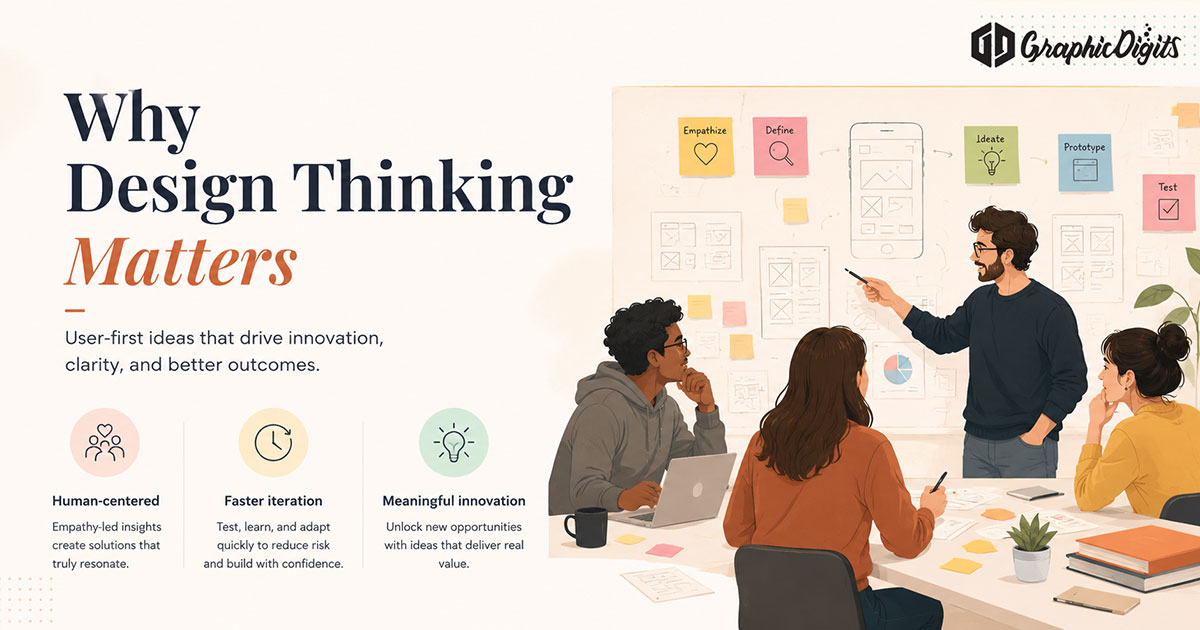
How the mindset changes problem solving
A common reaction to a vague request is to jump straight to a solution. A design-thinking mindset slows that leap:
- Traditional reaction: “We need a new homepage.” → open the design file.
- Mindset response: “What user problem are we actually solving?” → clarify people and context → explore alternatives → test assumptions → learn before polishing.
That sequence is conceptual. For how Empathize, Define, Ideate, Prototype and Test work as a connected methodology—including graphic-design application—read the design thinking process guide rather than duplicating stage-by-stage depth here.
When to use design thinking
Reach for the mindset when uncertainty is the real risk—not when you already know the job and only need execution.
- The problem is unclear or the brief is vague (“make it modern”) with no audience or outcome
- User or audience needs are uncertain
- Several plausible solutions exist and early learning beats early polish
- Assumptions need testing before heavy production investment
- Cross-functional input matters and stakeholders disagree on the problem—not just the palette
When not to force it
Not every design task needs a full Design Thinking approach. Forcing a discovery ceremony onto known work wastes time.
- The task is straightforward production against fixed, known requirements
- You are applying an existing brand system to a standard template or format
- The change is a small correction, resize, or channel adaptation
- Execution speed matters more than discovery and there is no meaningful ambiguity
- Stakeholders only need craft quality—not a new problem frame
In those cases, craft alone is enough: move straight to production design. Typography, systems and files still need skilled branding design—the mindset simply is not required for every request. Keep print vendor choices separate unless printing is in scope—most studio work is design-not-print.
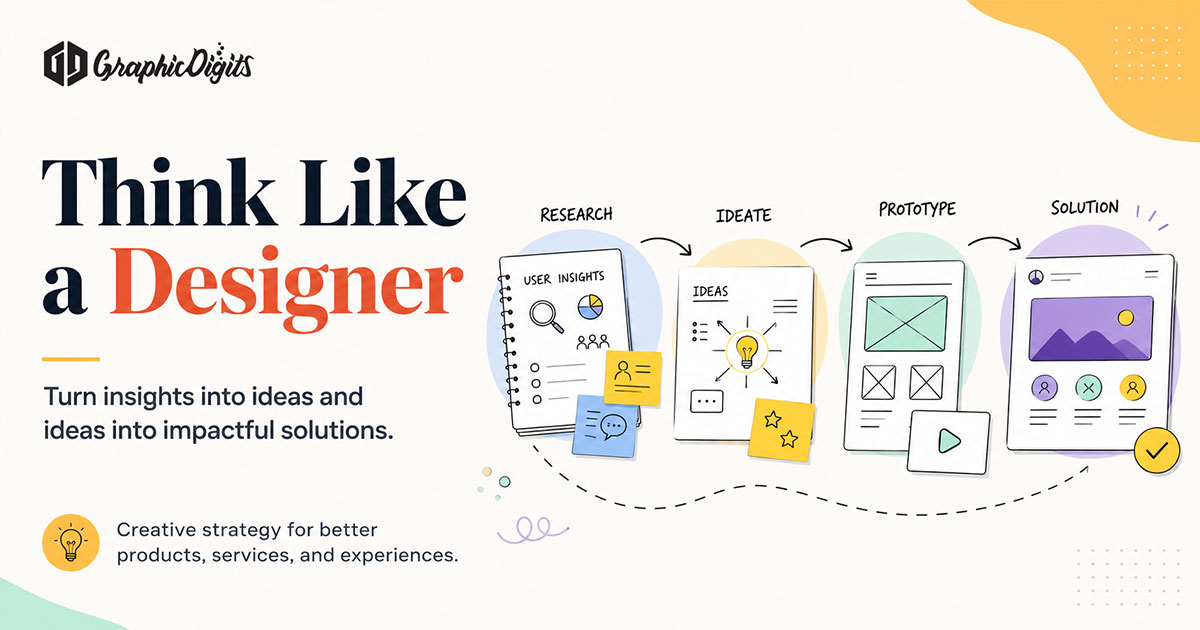
Mindset vs process vs steps vs studio delivery
These ideas often get collapsed into one phrase. Keeping four roles distinct avoids duplicate content and clearer decisions:
- This page (mindset) — how you think: principles and when the approach is worth using
- Design thinking process — how the methodology works (stages, loops, workflow)
- Design thinking steps — quick numbered checklist / practical sequence
- Our process — how GraphicDigits scopes, reviews and delivers client projects (studio workflow—not the DT method)
Use the mindset to decide if research and iteration belong in the plan. Use the process article when you need the full stage methodology. Use the steps companion for a short sequence. Use studio process when you hire for branding or marketing design after the frame is clear.
Mindset in practice (brief examples)
In brand or campaign work, the mindset shows up as better briefs—not as a slide titled “Ideate.” Before locking a direction, ask who must understand it, what confusion you are removing, and what a lightweight draft could prove this week.
- Assumption: “We need a new homepage.” Mindset: clarify the user problem; evidence may reveal a different barrier than a redesign.
- Assumption: “We need blue.” Mindset: write a problem statement that is not secretly a preferred solution.
- Assumption: “Polish this one concept.” Mindset: sketch multiple routes, then test comprehension before production files.
Frequently asked questions about the design thinking mindset
What is design thinking as a mindset?
A design thinking mindset is a human-centered way of approaching problems: stay curious about people and context, question assumptions, explore alternatives, test ideas early, and learn from feedback before committing to a final solution. It is how you think—not a deliverable you buy.
Is design thinking a mindset or a process?
Both. Design thinking can be understood as a mindset (how you approach problems) and as a structured method with stages. This page focuses on the mindset and principles. The design thinking process article covers Empathize→Test methodology; the steps guide is a quick numbered checklist.
What mindsets are important in design thinking?
Common design thinking mindsets include user-centeredness, curiosity before certainty, problems before solutions, experimentation, iteration, reframing assumptions, collaboration, and learning from evidence. A design mindset is inquiry and learning—not aesthetic taste alone.
When should teams use design thinking?
Use it when the problem is unclear, user needs are uncertain, several solutions are plausible, assumptions need testing, cross-functional input matters, or early learning is more valuable than early polish.
When is design thinking unnecessary?
Skip a full mindset loop for straightforward production, fixed known requirements, routine adaptations of an established system, or when execution speed matters more than discovery and there is no meaningful user or problem ambiguity.
Does GraphicDigits sell design thinking as a service?
No. Design thinking is a problem-solving approach, not a package we sell. After direction is clear, we deliver scoped branding and marketing design. Revision rounds are defined in the proposal—not unlimited.